- Home

Can an Aluminum Outdoor Sofa Set Handle Coastal Projects?
Views: 0 Author: Site Editor Publish Time: 2026-07-19 Origin: Site


Coastal environments present aggressive testing grounds for exterior furnishings. These zones combine continuous salt spray, high humidity, intense UV radiation, and variable wind loads. Specifying inappropriate materials for coastal properties leads to rapid structural degradation, elevated maintenance overhead, voided warranties, and premature replacement cycles. Project managers and property owners need reliable solutions that withstand these harsh elements without constant repair.
While aluminum is frequently marketed as rust-proof, its actual performance in marine environments depends entirely on the alloy grade, fabrication methods, and coating integrity. Standard retail furniture often fails within a single season when exposed to heavy salt air. This guide evaluates the technical viability of Outdoor Sofa Sets for coastal applications. You will learn how to identify marine-grade materials, evaluate structural integrity, and implement maintenance protocols that extend the lifespan of your coastal furniture investments.
Key Takeaways
Aluminum does not rust (create iron oxide), but it is highly susceptible to galvanic corrosion and pitting in salt-heavy environments if not properly finished.
Marine-grade aluminum (5000 or 6000 series alloys) paired with multi-stage, electrostatically applied powder coating is the baseline requirement for coastal viability.
Weight is a critical vulnerability; lightweight extruded aluminum requires strategic anchoring or heavier gauge construction to withstand coastal wind loads.
Long-term success relies on strict maintenance protocols to remove salt accumulation and immediate remediation of any chips in the powder coating.
The Coastal Environment Challenge for Outdoor Sofa Sets
Establishing the baseline environmental stressors is the first step in specifying furniture for beachfront or near-coastal zones. Coastal atmospheres carry high concentrations of chloride ions. These microscopic salt particles settle on exterior surfaces, drawing in moisture from the humid air. While ferrous metals like iron develop red rust, aluminum undergoes a different destructive process. When bare aluminum meets salt and moisture, it oxidizes rapidly. This creates localized pitting that compromises the structural integrity of the metal.
Beyond salt, high-velocity coastal winds and continuous ultraviolet radiation pose dual threats. UV rays aggressively degrade surface finishes, causing powder coats to chalk, fade, and eventually lose their protective seal. Simultaneously, strong winds exert immense structural stress on large furniture footprints. A lightweight frame can easily become a dangerous projectile during a sudden coastal squall. We see this frequently on elevated decks where wind shear multiplies the force applied to the furniture frames.
Microclimates further complicate material selection. A high-rise condo balcony experiences severe wind shear and rapid temperature fluctuations. In contrast, ground-level beachfront placements deal with direct sand abrasion and concentrated salt spray. Humidity also plays a major role. Trapped moisture beneath cushions or inside poorly sealed weld joints accelerates degradation. Furniture must feature designs that promote rapid airflow and prevent water from pooling in hidden crevices. If water sits on a flat metal seat pan, the resulting capillary action will hold moisture against the powder coat for days, eventually causing blistering.
To fully grasp the coastal challenge, consider the specific exposure zones. Zone 1 is direct beachfront, where salt spray physically hits the furniture. Zone 2 is within one mile of the coast, where airborne ambient salt still settles daily. Zone 3 is up to five miles inland, where high humidity and occasional salt carryover still dictate material choices. Each zone requires a specific approach to frame thickness and coating quality.
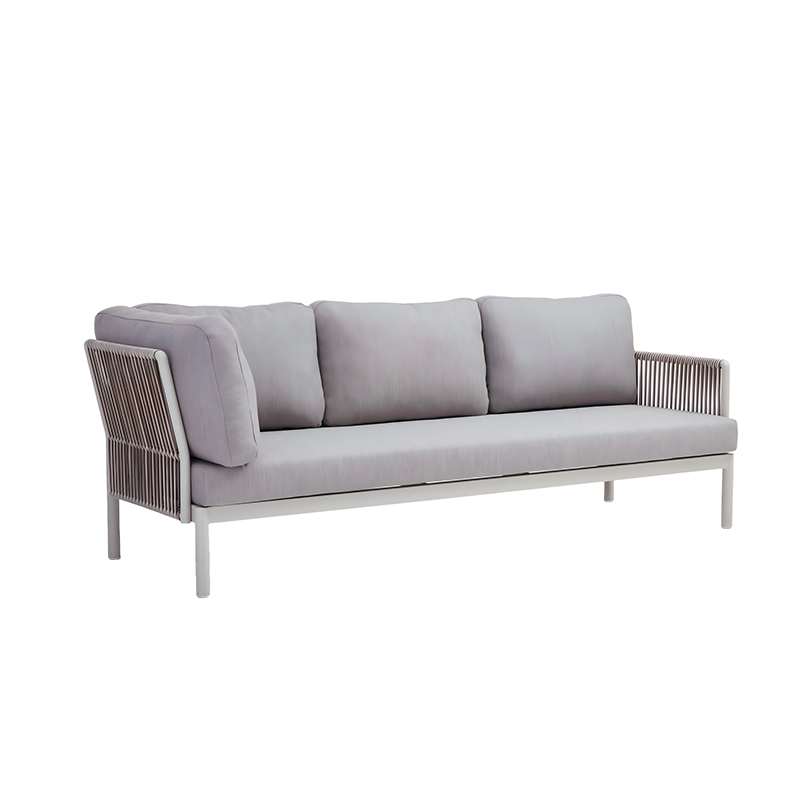
Evaluating Aluminum as a Base Material
Not all aluminum is created equal. The manufacturing process dictates the material's suitability for harsh environments. Extruded aluminum involves forcing heated metal through a die to create hollow shapes. This results in a lightweight profile that is easy to move but vulnerable to high winds. Cast aluminum involves pouring molten metal into molds. This produces a solid, significantly heavier structure. For coastal areas prone to strong gusts, cast aluminum often provides the necessary heft to remain stationary.
The specific alloy composition is equally important. Standard commercial aluminum lacks the necessary resistance to saline environments. Coastal projects require marine-grade alloys, specifically the 5000 or 6000 series. These alloys contain specific ratios of magnesium and silicon. This chemical composition inherently resists corrosion better than standard retail-grade metals, which often fail prematurely when exposed to continuous salt spray. For instance, 6061-T6 aluminum offers an excellent strength-to-weight ratio and superior corrosion resistance, making it a staple in marine construction.
Structural integrity relies heavily on fabrication quality. When evaluating an aluminum frame outdoor sofa, inspect the welds closely. TIG (Tungsten Inert Gas) welding generally provides cleaner, stronger joints than MIG (Metal Inert Gas) welding for aluminum. Demand full-circumference welds. Spot welds leave microscopic gaps. In a humid coastal environment, moisture and salt air will penetrate these gaps, entering the hollow frame and causing internal corrosion that remains invisible until catastrophic failure occurs. We always reject frames on site if we can slide a piece of paper between the welded joints.
Wall thickness of the extruded tubes also dictates longevity. A minimum wall thickness of 1.5mm to 2.0mm is required for commercial coastal applications. Thinner walls will dent easily. Once a tube is dented, the internal structural geometry is compromised, and the exterior powder coat stretches and cracks, inviting immediate salt ingress.
Aluminum Type
Manufacturing Method
Coastal Performance Profile
Extruded 6061 Alloy
Forced through dies into hollow tubes
High strength, lightweight. Requires heavy anchoring in wind. Excellent salt resistance.
Cast Aluminum
Molten metal poured into solid molds
Very heavy, highly stable in wind. Excellent salt resistance. Prone to cracking if dropped.
Standard 3003 Alloy
Rolled or extruded
Poor salt resistance. Will pit and degrade rapidly in marine environments. Avoid.
The Critical Role of Finishes in an Aluminum Patio Sofa Set
Even marine-grade aluminum requires a robust protective barrier. Powder coating is the industry standard, but the application process determines its effectiveness. A high-quality finish involves a multi-step process: rigorous cleaning, chemical pre-treatment, electrostatic powder application, and high-temperature curing. For salt resistance, a chromate conversion coating or an advanced zirconium-based pre-treatment is an absolute necessity. This layer bonds chemically with the aluminum, preventing oxidation if the outer powder coat is breached.
Coating thickness matters. Coastal applications demand specific micron thickness standards to ensure adequate protection. Look for finishes that meet or exceed AAMA (American Architectural Manufacturers Association) 2604 or 2605 standards. These rigorous specifications guarantee superior resistance to weathering, salt spray, and UV degradation. AAMA 2605, for example, requires a 10-year color retention and chalk resistance performance, which is mandatory for properties facing direct southern sun exposure.
Despite advanced coatings, physical damage remains a primary vulnerability. A single scratch from a dropped heavy object can expose bare metal. Once salt air reaches this breach, sub-surface corrosion begins. This causes the surrounding powder coat to bubble and delaminate. Hardware is another common failure point. An aluminum patio sofa set must use 316 marine-grade stainless steel screws and bolts. Using standard steel or lower-grade stainless hardware leads to galvanic corrosion, a destructive reaction that occurs when dissimilar metals interact in a saltwater environment.
Ignore commercial claims of zero-maintenance or impervious coatings. No finish is entirely immune to physical damage or the relentless nature of a high-salinity environment. Routine care is always required. We frequently see property managers assume "powder-coated" means "invincible," leading to neglected frames that blister within two years.
Design and Structural Considerations for Coastal Projects
Mitigating the lightweight nature of aluminum is essential for coastal safety. Strategies include integrating weighted bases, utilizing floor-mounting brackets, or selecting highly aerodynamic frame designs that allow wind to pass through rather than pushing against flat surfaces. On high-rise balconies, we often specify hidden steel plates bolted to the underside of the aluminum frames to lower the center of gravity.
High-traffic areas require robust configurations. When specifying an aluminum modular outdoor sofa, assess the locking mechanisms. Modular pieces must connect securely to prevent separation during heavy use or strong winds. Ensure that all connection brackets and locking pins are manufactured from corrosion-resistant materials, matching the durability of the main frame. Flimsy plastic clips will snap under the lateral load of a shifting sofa.
Condo balconies and resort spaces demand optimized layouts. Modular designs offer the versatility needed for tight footprints. They allow for easy reconfiguration and efficient off-season storage. At high elevations, the structural wind load increases significantly, making secure anchoring systems non-negotiable. We use stainless steel tether cables attached to structural columns for extreme wind zones.
Aesthetic integration ensures a cohesive property design. A modern aluminum lounge sofa should coordinate seamlessly with dining elements, side tables, and accent pieces. Manufacturers often offer comprehensive collections to maintain consistent design themes across expansive outdoor spaces. Clean lines and minimal ornamentation also reduce the surface area where salt can accumulate.
Cushion design directly impacts frame longevity. The myth of a naturally mold-resistant frame ignores the reality of capillary action. Moisture easily becomes trapped between thick cushions and flat metal seat plates. High-performance textiles, such as solution-dyed acrylics, paired with reticulated fast-dry foam, are essential. Furthermore, the frame itself must feature slatted or mesh designs that promote rapid water shedding and prevent pooling under the seating areas.
Design Element
Coastal Requirement
Risk of Non-Compliance
Frame Weight
Cast aluminum or weighted bases
Furniture becomes airborne in high winds
Hardware
316 Marine-Grade Stainless Steel
Rapid galvanic corrosion at joint connections
Seat Decking
Slatted or open mesh design
Trapped moisture leading to mold and localized oxidation
Cushion Foam
Reticulated fast-dry foam
Water retention causing prolonged moisture exposure to frame
Material Alternatives: Aluminum vs. Competing Options
Selecting the right material requires comparing aluminum against other common outdoor options. Teak is a traditional maritime favorite. It possesses natural oils that resist rot and insects. However, teak requires heavy maintenance to retain its original color, otherwise weathering to a silvery gray. Compared to the rigid, uniformly coated finish of aluminum, teak demands significantly more labor to maintain its aesthetic appeal. Sanding and oiling teak on a commercial scale requires dedicated maintenance staff.
Wrought iron and standard stainless steel present distinct challenges. Iron is incredibly heavy, solving wind issues, but it inevitably rusts in salt air, requiring constant scraping and repainting. Even 304-grade stainless steel will tea-stain and pit near the ocean. Upgrading to 316-grade stainless steel offers better resistance but comes at a steep premium and still requires regular polishing to maintain its finish. Aluminum provides a much more stable, hands-off finish when properly powder-coated.
High-Density Polyethylene (HDPE), often called marine-grade polymer, offers absolute immunity to salt and moisture. It is heavy and will never rot or oxidize. However, HDPE lacks the structural rigidity of metal, requiring bulkier designs. Aluminum provides a sleeker, more refined aesthetic and superior structural strength for spanning longer seating distances without sagging. A three-seat sofa made of HDPE often requires a center support leg, whereas an extruded aluminum frame can span the distance cleanly.
Implementation Risks and Maintenance Protocols
Routine cleaning is the most effective defense against coastal degradation. Establish a mandatory cleaning schedule to remove corrosive salt deposits. A weekly or bi-weekly gentle wash with fresh water and a pH-neutral soap is sufficient. Strictly avoid abrasive cleaners, stiff brushes, or high-pressure power washers, as these will scratch or strip the protective powder coating.
Regular visual inspections are critical for catching damage early. Create a protocol to check for chips or scratches, particularly around joints and feet. When a coating breach is identified, immediate remediation is necessary. Sealing the scratch prevents salt air from reaching the bare metal and initiating oxidation.
Follow these specific steps for coating remediation:
Isolate the damaged area and wipe it down with a mild degreaser to remove surface oils and salt.
Lightly scuff the exposed metal and the immediate surrounding powder coat with fine-grit sandpaper (400 grit).
Wipe away all dust with a clean, damp microfiber cloth and allow it to dry completely.
Apply a manufacturer-approved, color-matched exterior touch-up paint using a fine-tip brush.
Allow the paint to cure fully according to the manufacturer's specifications before returning the furniture to service.
Winterization and storm preparation protect the physical investment. During the off-season, store furniture indoors or in a dry, covered area. If outdoor storage is unavoidable, use high-quality, breathable covers that prevent moisture accumulation. For hurricane preparation, all lightweight aluminum pieces must be moved indoors or securely cabled to permanent structural anchors to prevent wind damage.
Conclusion
Aluminum is highly viable for coastal projects only if specified correctly. Success requires demanding marine-grade alloys, rigorous multi-stage powder coating processes, and 316 stainless steel hardware. Generic rust-proof claims are insufficient for the realities of beachfront environments.
Buyers must demand technical specification sheets from vendors. Verify the exact alloy grades and coating standards before finalizing any order. Do not accept vague marketing terminology when outfitting a coastal property.
To move forward effectively, follow these actionable steps:
Request physical material and finish samples to test locally before placing bulk orders.
Review the fine print of coastal warranty exclusions, paying close attention to proximity-to-water clauses.
Calculate the required mandatory maintenance labor hours to ensure your team can support the cleaning schedule.
Specify 316 stainless steel for all replacement hardware and anchoring systems.
FAQ
Q: Will aluminum outdoor furniture rust in salt air?
A: Aluminum does not contain iron and cannot rust. However, it can oxidize and pit if the protective powder coating is compromised by salt and moisture.
Q: What is marine-grade aluminum?
A: Marine-grade aluminum refers to the 5000 and 6000 series alloys. These contain specific levels of magnesium and silicon for enhanced corrosion resistance in saline environments.
Q: Is cast aluminum or extruded aluminum better for windy coastal areas?
A: Cast aluminum is generally better for windy areas due to its heavier weight and solid construction, which resists high wind loads far better than hollow extruded frames.
Q: Is an aluminum frame outdoor sofa suitable for high-rise condo balconies?
A: Yes, but weight and wind risks must be managed. Modular sets must be heavily weighted or securely anchored to the deck to prevent them from blowing away at high elevations.
Q: How do you fix chipped powder coating on aluminum furniture?
A: Lightly sand the chipped area, clean it with a non-abrasive solvent, and apply a color-matched, exterior-grade touch-up paint to reseal the metal against salt air.
Q: What hardware should be used on coastal outdoor sofa sets?
A: Always specify 316 marine-grade stainless steel to prevent galvanic corrosion between the aluminum frame and the metal fasteners.
Q: How often should you wash aluminum patio furniture at the beach?
A: Recommend a weekly or bi-weekly rinse with fresh water and mild soap to prevent salt and chloride accumulation on the frame.