- Home

How Can a Modular Outdoor Sofa Be Reconfigured?
Views: 0 Author: Site Editor Publish Time: 2026-08-11 Origin: Site


The primary advantage of modular outdoor furniture is adaptability. Yet, many buyers underestimate the mechanical, spatial, and aesthetic realities of actively reconfiguring these pieces season over season. Transforming a patio requires more than simply pushing boxes across a deck. Buyers frequently invest in high-end modular systems only to discover severe functional limitations later. Directional armrests restrict layout options. Connection clips degrade and snap in harsh weather. Asymmetrical cushion patterns look disjointed when shifted into new arrangements. Sometimes, the modules are simply too heavy for a single person to safely maneuver without assistance.
This guide breaks down the engineering behind modular seating. We detail how to evaluate connection mechanisms and identify structural criteria. You will learn exactly what is required to ensure your investment remains truly adaptable over its entire lifespan. By understanding the hardware and spatial dynamics, you avoid common pitfalls and maximize the utility of your outdoor living area.
Hardware dictates adaptability: The ease of reconfiguration depends entirely on the connection system—U-clips, alligator clips, or latch-and-hook mechanisms—and their resistance to rust and UV degradation.
Module symmetry is critical: Universal armless chairs and symmetrical corner pieces offer exponentially more layout combinations than left- or right-facing specific modules.
Weight vs. Stability trade-off: Heavier frames (like teak or wrought iron) resist wind but require two people to reconfigure, whereas lightweight aluminum requires robust locking mechanisms to prevent shifting.
Aesthetic continuity enables flexibility: Opting for neutral colors or non-directional fabric patterns ensures that reconfigured modules still look visually cohesive, regardless of the layout.
Scalability requires standardization: Long-term value relies on the manufacturer’s commitment to maintaining consistent dimensions, allowing you to purchase add-on modules years later.
Framing the Decision: Why Modularity Matters in Outdoor Sofa Sets
Traditional fixed-frame outdoor sofas lock you into a single footprint. You place them once, and they dictate the flow of traffic permanently. Contrast this rigid footprint with the dynamic capabilities of modular systems. A well-engineered setup allows you to transform a single patio into multiple functional zones. You can host a large summer barbecue one weekend and create an intimate fire pit circle the next. The ability to adapt your environment directly correlates to how often you actually use the space.
When evaluating Outdoor Sofa Sets, establishing baseline requirements prevents costly mistakes. True modularity relies on strict success criteria. We look for specific engineering choices that guarantee long-term flexibility.
Tool-less assembly: If you need a wrench to move a chair, you will never move it.
Symmetrical module dimensions: Pieces must align perfectly regardless of orientation.
Weather-resistant connection hardware: The system must survive seasonal shifts without rusting or snapping.
Visually cohesive cushion designs: Prevents the furniture from looking like a mismatched garage sale find when rearranged.
Purchasing fixed sectionals carries significant spatial risks. Evolving outdoor spaces demand flexibility. If you move to a new home, a fixed left-facing sectional might block a critical walkway or door. Adapting a massive fixed frame to a smaller urban footprint is physically impossible. Accommodating varying guest capacities requires agile seating. A rigid sofa seats exactly three people. Modular units can be scattered to accommodate a dozen standing and sitting guests comfortably.
We also see issues with uneven patio surfaces. Poured concrete offers a flat plane, but stamped concrete or natural stone pavers create ridges. Fixed frames wobble on uneven surfaces. Modular pieces adapt better because each smaller unit finds its own level footing. You can adjust individual leveling feet on a single armless chair much easier than leveling a massive 120-inch continuous frame.
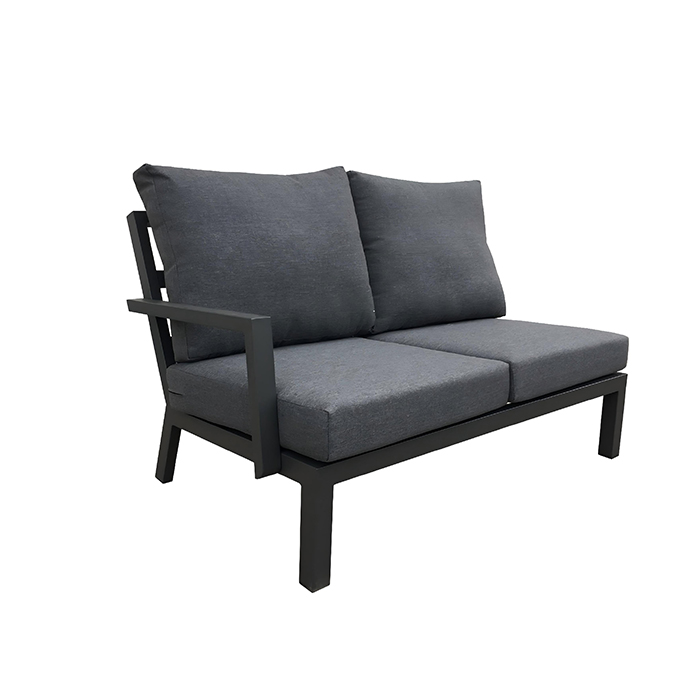
Core Components of a Modular Patio Sofa Set
Understanding the anatomy of a modular patio sofa set begins with the corner modules. These pieces act as the anchors of any configuration. They define the perimeter and dictate the angle of the seating arrangement. Symmetrical corners are the gold standard. They allow you to place the module on the left or the right side of the layout without any awkward overhangs. Directional corners force a specific orientation. A left-facing corner will always be a left-facing corner, severely crippling your future layout options.
Armless slipper chairs serve as the primary extension units. They provide the necessary volume to lengthen a sofa along a wall or deck edge. Their true value lies in their ability to mix-and-match seating capacities. You can easily combine several units into a sprawling three-seater and a separate two-seater. When pulled away from the main configuration, armless chairs function perfectly as standalone seating for casual mingling.
Ottomans and chaises introduce dual utility into the modular ecosystem. Ottomans function primarily as footrests or impromptu coffee tables when topped with a tray. Pushing an ottoman flush against an armless chair instantly creates a chaise lounge effect. This flexibility allows you to transition from upright conversational seating to relaxed poolside lounging in seconds.
Armrest modularity separates premium systems from restrictive designs. Evaluate systems that feature detachable or universal armrests. Removable arms allow you to convert an end piece into a middle extension unit instantly. Fixed-arm designs severely limit reconfiguration potential. If an armrest is permanently welded to the frame, that specific module must always sit at the far end of your layout. This creates a hard stop for any future expansion.
Cushion construction also impacts modularity. High-density foam retains its shape but adds significant weight to each module. Reticulated foam allows water to drain rapidly and keeps the overall weight low. If you plan to move your furniture frequently, lighter cushions make the process much easier. Heavy cushions require removal before you can safely lift the frame.
Evaluation Dimensions: Connection Mechanisms in Combination Patio Sofa Sets
The hardware holding your furniture together dictates how easily you can change your layout. A combination patio sofa set relies entirely on its connection mechanisms to maintain structural integrity while allowing for rapid reconfiguration. Not all clips and brackets perform equally under outdoor conditions.
U-Clips and C-Clips
Plastic or resin U-clips represent the industry standard for entry-level and mid-tier furniture. You snap these clips directly over the bottom frames of adjacent modules. They hold the pieces tight through tension. While inexpensive and easy to replace, they present significant durability concerns. Plastic becomes highly brittle in freezing temperatures. Attempting to pry a frozen clip off a frame often results in snapping. Prolonged UV exposure degrades the resin over time. This causes the clips to lose their tension and allows the sofa sections to drift apart.
Alligator Clips and Ratchet Systems
Alligator clips utilize toothed, interlocking mechanisms mounted directly to the underside of the frame. You push the modules together, and the teeth catch, locking the pieces securely. Assess the actual labor reality of these click-together systems. A single person can usually push the pieces together to lock them. Unlocking them often requires lifting one module while simultaneously pulling it away. Depending on the frame weight, this system may strictly require two people for safe disassembly and reassembly.
Latch-and-Hook Hardware
Metal bracket systems rely on drop-in hooks. One module features a downward-facing hook, while the adjacent module features an upward-facing receiver. You lift one piece and drop it into the other. The necessity of high-quality metals cannot be overstated here. You must look for marine-grade 316 stainless steel or heavily powder-coated aluminum. Standard steel brackets will rust quickly. Once rust sets in, the brackets can rust-weld together. This permanently locks your modular pieces into a single, immovable block.
Friction and Gravity-Fit Systems
Some ultra-heavy systems bypass mechanical fasteners entirely. Solid teak or thick wrought iron frames rely on sheer weight and gravity to stay in place. These systems utilize heavy-duty rubberized feet to grip the patio surface. While this eliminates the hassle of dealing with broken clips or rusted brackets, it introduces a severe mobility penalty. Moving a solid teak corner module requires significant physical effort.
Mechanism Type
Primary Material
Ease of Reconfiguration
Weather Resistance
Best Application
U-Clips / C-Clips
Plastic / Resin
Moderate (Requires bending/prying)
Low (Prone to UV/Freeze damage)
Lightweight aluminum frames on covered patios.
Alligator / Ratchet
Nylon / Metal
Easy to lock, Hard to unlock alone
High (Usually hidden under frame)
Frequently moved modular setups.
Latch-and-Hook
Stainless Steel / Aluminum
Very Easy (Drop-in method)
High (If marine-grade)
Heavy-duty modular sectionals.
Gravity-Fit
Rubber Feet / Heavy Frames
Difficult (Requires heavy lifting)
Maximum (No moving parts)
High-wind areas and permanent layouts.
Features-to-Outcomes: High-Utility Layouts for Modular Outdoor Sectional Seating
The true value of modular seating becomes apparent when you translate individual pieces into functional environments. Different occasions demand entirely different spatial arrangements. We can break down the most effective layouts based on specific use cases.
The Classic L-Shape
The L-shape remains the most popular configuration for corner optimization. It efficiently defines the perimeter of an outdoor room without blocking sightlines. This layout requires exactly one corner module and multiple armless units extending outward. It tucks neatly against house walls or deck railings. This leaves the center of the patio open for dining tables or fire pits.
The U-Shape (Conversation Pit)
The U-shape creates an intimate conversation pit. This layout is ideal for fire pit enclosures and high-capacity entertaining. It naturally forces guests to face one another, fostering interaction. Building a U-shape requires two corner modules and symmetrical armless extensions on all three sides. This setup demands a larger patio footprint but delivers maximum seating density.
Separated Loveseats and Club Chairs
Separated loveseats and club chairs offer the perfect solution for high-traffic events. Sometimes, a massive sectional blocks the flow of a party. Breaking down a large sectional into distinct, intimate seating zones solves this problem. You can easily split a five-piece set into a three-seater and a two-seater. Placing these smaller units opposite each other opens up walkways and encourages mingling.
The Urban Balcony Split
The urban balcony split adapts combination sets for narrow footprints. Rooftop decks or apartment balconies rarely accommodate deep L-shapes. Linear arrangements must be broken into facing modular chairs to maximize walking space. By separating the pieces and placing them against opposite railings, you maintain seating capacity while preserving a clear path down the middle of the balcony.
The Oversized Daybed
The oversized daybed transforms standard seating into a luxury lounging experience. You achieve this by pushing ottomans directly into the interior angle of a U-shape or L-shape configuration. This creates a massive, continuous padded surface perfect for poolside lounging, sunbathing, or outdoor movie nights. The modularity allows you to break the daybed apart as soon as guests arrive for dinner.
Layout Type
Required Modules
Best Use Case
Minimum Clearance Needed
Classic L-Shape
1 Corner, 3+ Armless
Corner optimization, defining perimeters
36 inches on open sides
U-Shape
2 Corners, 4+ Armless
Fire pits, large group conversations
48 inches in the center pit
Separated Zones
0 Corners, 4+ Armless
High-traffic parties, mingling
36 inches between zones
Oversized Daybed
1-2 Corners, 2 Armless, 2 Ottomans
Poolside lounging, sunbathing
36 inches around perimeter
Implementation Risks: Spatial Constraints and Reconfigurable Outdoor Sofas
Actively moving a reconfigurable outdoor sofa introduces specific spatial and logistical challenges. Failing to account for these risks results in cramped patios and frustrating maintenance routines.
Measuring for Clearance and Tolerances
Measuring for clearance and tolerances prevents layout disasters. You must calculate the required footprint for different configurations before moving heavy pieces. Always leave a minimum 36-inch walking clearance around the reconfigured furniture. If a new U-shape layout pushes the back of the sofa within ten inches of a hot grill, the configuration is unsafe and unusable. Map out primary and secondary layouts using painter's tape on your deck before committing to a purchase.
Managing Cushion Alignment and Aesthetic Continuity
Managing cushion alignment ensures aesthetic continuity. A common issue with modular seating is cushions shifting or creating uncomfortable gaps when pieces are rearranged. Evaluate solutions like Velcro ties, hidden zippers, or interlocking cushion designs that keep padding secure. Neutral fabric colors like gray or beige are essential. Bold, directional patterns rarely line up correctly when you move a left-facing cushion to a right-facing seat. Non-directional fabrics keep reconfigured layouts visually cohesive.
The Weight vs. Mobility Dilemma
The weight versus mobility dilemma requires careful consideration. Frame materials must be heavy enough to withstand local wind conditions. A lightweight aluminum chair will blow into the pool during a storm. The frame must remain light enough to allow for easy reconfiguration. You should not need a multi-person lifting team to slide an armless chair three feet to the left. Balance wind resistance with practical maneuverability.
Storage and Off-Season Logistics
Storage and off-season logistics dictate the lifespan of your furniture. Modularity significantly impacts winter storage. Stacking armless chairs vertically in a shed saves massive amounts of floor space compared to storing bulky, fixed frames. Consider how easily the connection clips can be removed with cold hands in late autumn when preparing the patio for winter. Metal brackets require a quick spray of dry silicone lubricant before winter storage to prevent moisture buildup.
Overall Value Influencing Factors: Long-Term Scalability and Support
The long-term value of your investment depends heavily on your ability to scale the system over time. A truly modular system grows alongside your changing lifestyle.
Phased Purchasing
Phased purchasing allows you to manage upfront costs. Assess the viability of buying a core three-piece set now and expanding later. As your family grows or you move to a house with a larger deck, you can purchase additional armless chairs or ottomans to transform the space. This approach prevents over-purchasing for a patio you haven't fully lived in yet.
Manufacturer Continuity
Manufacturer continuity presents a hidden risk. If a product line is discontinued, future expansion becomes impossible. You must vet brands for long-term catalog stability. Look for manufacturers that have maintained the exact same modular dimensions and connection hardware across multiple seasons. Standardization is the bedrock of long-term modular value.
Warranty Coverage on Moving Parts
Warranty coverage on moving parts requires close inspection. Differentiate clearly between frame warranties and hardware warranties. A ten-year warranty on an aluminum frame means nothing if the proprietary plastic connection clips snap after two years and the company no longer stocks replacements. Focus specifically on the replacement availability of the exact clips, brackets, and feet used in your chosen system.
Conclusion
Measure your primary and secondary desired layouts on your patio using painter's tape, ensuring a strict 36-inch walking clearance around all edges.
Verify the exact type of connection clip used by your shortlisted brands and confirm you can easily operate them alone without specialized tools.
Check the manufacturer's catalog history to confirm the availability of individual add-on modules for future expansion.
Test the weight of a single corner module in person to ensure you can safely lift and shift it without a second person.
FAQ
Q: How difficult is it to disconnect the clips on a modular outdoor sofa?
A: It depends entirely on the clip type. Plastic U-clips require forceful prying and can be difficult in cold weather. Latch-and-hook metal brackets simply require lifting one module an inch off the ground. Alligator clips often require one person to lift slightly while pulling the modules apart.
Q: Can I change a left-facing outdoor sectional into a right-facing one?
A: Yes, but only if the system uses symmetrical corner modules and universal armless chairs. If the sofa features directional corners or fixed armrests permanently welded to the left or right side, you cannot reverse the orientation.
Q: Do modular patio sofa pieces slide apart when you sit on them?
A: They will slide apart if not properly secured. High-quality modular systems use interlocking brackets, heavy-duty clips, or high-friction rubber feet to lock the frames together. This prevents any separation during normal use.
Q: What is the best way to keep modular outdoor sofa cushions from separating?
A: Look for cushions featuring Velcro tie-downs, hidden zippers that connect adjacent pads, or non-slip rubberized backing. Ensuring the base frames are tightly clipped together also minimizes the gaps where cushions naturally tend to separate.
Q: Are modular outdoor sofas suitable for small urban balconies or narrow patios?
A: Yes, modular sofas are highly recommended for small spaces. You can break a linear sofa into separated facing chairs, omit bulky corner pieces, or use armless slipper chairs to maximize seating without blocking narrow walking paths.
Q: Can I buy individual pieces to add to my existing outdoor sofa set later?
A: Usually, yes. However, this depends on the manufacturer maintaining catalog continuity. Always verify that the brand sells individual armless chairs or ottomans separately and has not changed their frame dimensions or clip styles.
Q: How much weight makes a reconfigurable outdoor sofa too heavy for one person to move?
A: Generally, any single module exceeding 45 to 50 pounds becomes difficult for one person to safely lift and align with interlocking brackets. Solid teak or heavy wrought iron pieces often require two people for safe reconfiguration.