- Home

How Can a Rattan Outdoor Chair Support Commercial Use?
Views: 0 Author: Site Editor Publish Time: 2026-07-23 Origin: Site


Woven furniture brings an undeniable aesthetic appeal to hospitality and dining spaces. It offers a natural, inviting texture that guests immediately respond to. However, this visual charm clashes directly with the harsh realities of commercial outdoor environments. Constant UV exposure, high guest turnover, varied user weights, and unpredictable weather present severe challenges for exterior seating. Natural rattan and low-grade wicker fail rapidly under these conditions. They suffer from structural racking, unravelling weaves, and frequent replacement cycles that destroy procurement budgets.
Specifying commercial-grade synthetic alternatives solves this problem. This technical evaluation guide helps procurement managers and designers assess whether a synthetic Outdoor Chair meets the rigorous demands of high-traffic applications. By understanding the underlying specifications, material science, and structural requirements, you can make informed decisions that ensure longevity, safety, and sustained visual appeal across your properties.
Material Distinction is Critical: Natural rattan is strictly for indoor use; commercial outdoor applications require High-Density Polyethylene (HDPE) resin weaves to prevent UV degradation and structural failure.
Underlying Architecture Dictates Lifespan: The longevity of a commercial rattan outdoor chair relies entirely on its hidden frame—specifically, fully welded, heavy-gauge, powder-coated aluminum.
Application-Specific Ergonomics: Selecting specialized units (like an adjustable rattan lounge chair or a rattan recliner with footrest) requires evaluating the durability of moving hardware, not just the weave.
The Wicker vs. Rattan Distinction in Commercial Procurement
A common error in design briefs is confusing the material with the method. "Rattan" refers to the physical natural fiber, a climbing palm native to tropical regions. "Wicker" is the weaving technique itself. You can manufacture wicker furniture using natural rattan, willow, bamboo, or synthetic polymers. Understanding this distinction prevents costly specification errors.
Specifying natural rattan for outdoor commercial settings creates massive liability. Natural fibers absorb moisture rapidly. They are highly susceptible to wood-boring insects, rot, and splintering when exposed to temperature fluctuations. The fibers break down, and the chairs rack or skew sideways under heavy use. Natural rattan belongs strictly in climate-controlled indoor environments.
Synthetic polymers have successfully adopted the classic wicker weaving technique to create highly durable, weather-resistant furniture. This evolution allows designers to achieve the desired organic aesthetic without compromising structural integrity. High-quality synthetic wicker withstands heavy use, chemical exposure, and extreme weather, making it the only viable option for exterior hospitality spaces.
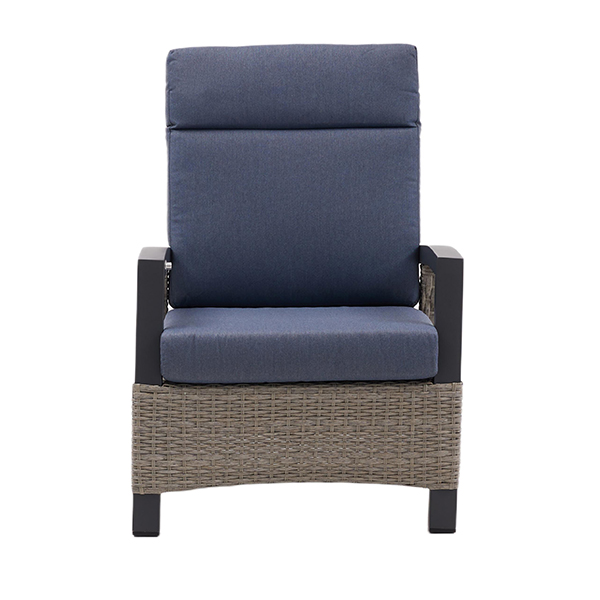
Core Specifications of a Commercial-Grade PE Rattan Outdoor Chair
Frame Construction and Load-Bearing Capacity
The foundation of any durable commercial chair is its internal frame. Powder-coated aluminum serves as the industry standard. It is rust-proof and lightweight, allowing staff to reconfigure seating arrangements easily. Steel frames, while strong, are prone to rust if the surface gets scratched. They are also unnecessarily heavy for daily operational movement.
When specifying an aluminum frame, mandate 360-degree, full-circumference welds. Spot welds fail under the repetitive stress of commercial use. Full welds ensure the joints remain solid. Internal frame bracing is another strict requirement, especially for wide-seat designs. Proper bracing prevents the frame from bending or warping, ensuring the chair maintains its shape despite constant use by guests of varying weights.
Frame Material
Weight
Corrosion Resistance
Commercial Suitability
Powder-Coated Aluminum
Lightweight
Excellent (Rust-Proof)
High
Powder-Coated Steel
Heavy
Poor (Rusts when scratched)
Low
Natural Wood
Variable
Moderate (Requires sealing)
Low to Moderate
Weave Density, Extrusion, and Resin Quality
Not all synthetic materials perform equally. A commercial-grade PE rattan outdoor chair must utilize High-Density Polyethylene (HDPE). Cheaper PVC or polyurethane alternatives dry out quickly. They become brittle and crack under minimal physical stress and UV exposure. HDPE provides the necessary flexibility and tensile strength for high-traffic environments.
Resin quality dictates visual longevity. Specify solid-dyed resin, where the color runs throughout the entire strand. Surface-painted resin chips and reveals the base color underneath. Solid-dyed strands mask scratches and maintain color consistency under heavy wear. Evaluate the weave tension during the prototype phase. A tight, tension-monitored, hand-woven pattern prevents sagging over time and ensures the seat remains supportive.
Weather Resistance and UV Degradation Metrics
Commercial outdoor furniture faces relentless environmental exposure. Detail industry-standard UV testing in your specifications. Look for materials with 3,000+ hours UV exposure ratings under ASTM standards. This ensures the synthetic rattan will not fade, chalk, or degrade prematurely in direct sunlight.
Temperature tolerance ranges matter just as much. The specified HDPE resin must resist melting or sagging in direct summer sun. It must also avoid shattering in freezing winter conditions. Verifying these metrics guarantees the furniture can remain outdoors year-round without catastrophic failure.
Evaluating Specialized Rattan Patio Seating for Hospitality Use
Dining vs. Lounge Ergonomics
Ergonomics dictate user comfort and vary significantly based on the application. Dining chairs require an upright pitch and a shallower seat depth to support guests while eating. Lounge seating demands a relaxed angle and a deeper seat to encourage relaxation. Analyzing these pitch and seat depth differences is essential when selecting rattan patio seating for different zones within a venue.
Seating Type
Ideal Seat Height
Backrest Pitch
Primary Use Case
Dining Chair
18 - 19 inches
Upright (95-105 degrees)
Restaurants, Cafes, Patios
Lounge Chair
15 - 17 inches
Relaxed (110-120 degrees)
Poolside, Terraces, Lobbies
Bar Stool
28 - 30 inches
Upright (90-100 degrees)
Outdoor Bars, High Tables
The Comfort and Tactile Experience
Users often wonder if synthetic rattan feels uncomfortable, scratchy, or sweaty. High-quality PE rattan addresses this by incorporating a matte, textured finish. This mimics the organic softness of natural fiber. The open weave design facilitates airflow, preventing heat buildup and ensuring a comfortable tactile experience even in warm climates.
The Adjustable Rattan Lounge Chair for Poolside Applications
When specifying an adjustable rattan lounge chair for poolside use, evaluate the mechanical components rigorously. Look for rust-resistant ratchets, 316-grade stainless steel hardware, gas struts, or heavy-duty multi-position locking mechanisms. Integrated wheels or rollers are necessary for staff mobility, allowing for rapid pool deck reconfigurations and efficient cleaning.
Integrating the Rattan Recliner with Footrest in Premium Suites
A rattan recliner with footrest adds luxury to premium suites but requires careful spatial planning. Assess the spatial footprint and clearance required for narrow balconies, VIP terraces, or private cabanas. Evaluate the structural integrity of the footrest hinges and ensure a continuous weave transition between moving parts to prevent pinching or unravelling.
Aesthetic Integration and Layout Strategy
Proper layout strategy ensures seating areas feel inviting rather than cluttered. Group chairs with complementary tables and utilize strategic spacing to improve both aesthetics and operational efficiency. Ensure there is ample room for staff to navigate between tables during peak service hours.
The 6-Stage Specification and Procurement Process for Commercial Projects
Space Planning & Code Compliance: Analyze spatial layouts and clearance zones. Ensure all materials meet local fire-retardant standards to prevent costly layout revisions later.
Performance Tiering: Decide when to specify a standard chair versus heavy-duty, reinforced models based on expected foot traffic and usage intensity in different venue zones.
Drafting Performance Specifications: Use precise language for RFPs, such as "HDPE resin, minimum 1.5mm wall thickness aluminum, UV-9 rated," to ensure vendors understand the exact commercial requirements.
Sample Verification & Prototype Testing: Always order physical samples to verify weave tension, weight balance, and weld quality before committing to a large volume order.
Vendor Vetting & Factory Certifications: Verify manufacturer testing standards. Look for BIFMA/ANSI compliance and ISO quality systems to guarantee consistent manufacturing quality.
Delivery, Assembly, and Post-Occupancy Inspections: Coordinate logistical timelines and staging areas. Schedule on-site inspections to ensure the delivered product matches the approved prototype.
Maintenance Realities and Operational Efficiency
Cleaning Protocols and Staff Efficiency
Operational efficiency depends heavily on how quickly staff can clean and turn over seating areas. PE rattan resists common commercial cleaning agents, sunscreen, and chlorinated water. Staff can power wash these chairs on a low setting or wipe them down rapidly with mild soap and water. This drastically reduces the time-to-clean per unit compared to porous materials like wood or natural fiber.
Step-by-Step Repairability of Resin Weave
Accidents happen, and individual strands of synthetic rattan can snap. You do not need to replace the entire chair. Maintenance teams can repair snapped synthetic strands using heat-fusing guns, replacement PE strands, and pegging tools. The process involves weaving the new strand into the existing pattern and fusing the ends behind the frame, restoring the chair to full functionality.
Replacement Cycles and Warranty Evaluation
Analyze standard commercial warranties carefully. Commercial warranties typically range from 1 to 3 years, whereas residential warranties might claim 5 to 10 years. Read the warranty exclusions regarding hardware, fading, saltwater exposure, and frame failure. A robust warranty indicates the manufacturer stands behind their product's performance in high-traffic environments.
Implementation Risks and Mitigation Strategies
Wind Uplift and Weight Considerations
Lightweight aluminum and rattan chairs present a risk of becoming projectiles in high-wind environments like rooftops or coastal resorts. To mitigate this, specify weighted frames. Select stackable designs that allow for rapid storage during severe weather. Integrated tie-down points can also secure furniture on exposed terraces.
Cushion Specification and Moisture Management
A durable chair is only as good as its cushion. Specify requirements for reticulated, quick-dry marine-grade foam that allows water to pass through rapidly. Pair this with solution-dyed acrylic fabrics to prevent mold, mildew, and color fading. This ensures the cushions match the longevity of the frames.
Vendor Vetting and Lead Time Management
Establish strict criteria for selecting manufacturers. Request cross-section samples of the frame and weave to verify material thickness. Verify commercial testing certifications and assess replacement part availability to ensure long-term support for the procured furniture. Manage lead times by ordering well in advance of the busy season.
Conclusion
Specify only HDPE resin and fully welded aluminum frames for all outdoor commercial seating.
Request physical prototypes to verify weld quality, weave tension, and ergonomic comfort before bulk ordering.
Mandate marine-grade foam and solution-dyed acrylic fabrics for all accompanying cushions.
Verify vendor certifications and ensure clear warranty terms covering commercial use.
FAQ
Q: Can natural rattan be used outdoors in commercial settings?
A: No. Natural rattan absorbs moisture, rots, and degrades rapidly when exposed to weather, making it unsuitable for commercial outdoor use.
Q: What is the best frame material for outdoor commercial chairs?
A: Powder-coated aluminum is the best choice because it is lightweight, rust-proof, and highly durable when fully welded.
Q: How do you prevent synthetic rattan from fading in the sun?
A: Specify High-Density Polyethylene (HDPE) resin with high UV exposure ratings and solid-dyed color strands.
Q: Are synthetic rattan chairs comfortable without cushions?
A: Yes, high-quality PE rattan has a textured finish and an open weave that provides flexibility and airflow, offering comfort even without cushions.
Q: How do you secure lightweight outdoor chairs in windy areas?
A: Use weighted frames, select stackable designs for easy storage, or utilize integrated tie-down points to secure the furniture.