- Home

How Can an Outdoor Table Base Improve Stability?
Views: 0 Author: Site Editor Publish Time: 2026-08-21 Origin: Site


Unstable outdoor furniture carries heavy operational and experiential costs. Spilled beverages create immediate slip hazards. Compromised food safety protocols disrupt service. A wobbling surface instantly degrades the user experience in commercial hospitality and high-end residential settings alike. Uneven terrain exposes the structural flaws of standard, aesthetically-driven furniture. Cobblestone, wooden decking, and natural stone rarely offer a perfectly flat foundation. Environmental stressors compound the issue. High wind loads, constant moisture, and intense UV radiation test the limits of patio fixtures daily.
True stability remains a strict engineering challenge. You must solve this problem at the foundation. A heavy top cannot compensate for a weak support system. Evaluating base mechanics, material density, and active leveling technology is the definitive method for selecting a reliable Outdoor Table. Structural integrity must dictate the design process from the ground up.
Key Takeaways
Weight Distribution is Critical: A base must mathematically counterbalance the tabletop's dimensions and weight, particularly for dynamic setups like an expandable outdoor table.
Terrain Dictates Technology: Uneven surfaces require active leveling mechanisms (hydraulic or pneumatic) rather than static shims or standard adjustable glides.
Material Trade-offs & Sustainability: The choice between cast iron, aluminum, and stainless steel involves strict trade-offs between sheer stabilizing weight, long-term corrosion resistance, and eco-friendly lifecycle considerations.
Design Impacts Wind Resistance: Solid, expansive tabletops act as sails; mitigating wind load requires specific base geometries, such as a heavily weighted, stable pedestal outdoor table.
The Physics of Outdoor Table Stability: Success Criteria
Center of Gravity and Weight Ratios
Stability relies on strict mathematical proportions. The base must carry enough mass to anchor the upper structure. Industry standards dictate a specific weight ratio between the base and the tabletop. A base should generally weigh at least thirty percent more than the surface it supports. This ratio prevents top-heavy configurations from tipping under lateral pressure. A low center of gravity acts as the primary defense against instability. Concentrating mass near the ground anchors the entire unit. You must evaluate the density of the base column and the floor plate. Hollow columns require internal ballast to achieve the necessary downward force. Solid metal bases naturally lower the center of gravity. This physical grounding resists the tipping forces applied when users lean on the table edge. We often see installations fail because contractors pair a heavy granite top with a hollow aluminum base. The center of gravity shifts too high. When someone pushes off the edge to stand up, the entire unit flips. You need heavy steel or cast iron floor plates to drag that center of gravity back down to the pavement.
Wind Load and Surface Area Dynamics
Wind interacts aggressively with patio furniture. Solid tabletops catch updrafts easily. Expansive surfaces act like rigid sails during storm conditions. Slatted tops allow air to pass through, reducing the overall wind load. You must analyze the local climate before selecting a surface shape. Round tops deflect crosswinds better than square profiles. Anchoring a modern outdoor long table requires massive structural support. These elongated surfaces present a massive area to crosswinds. A single central column rarely provides enough resistance for a long rectangular top. You need dual pedestals or a heavy-duty trestle base to distribute the anchoring weight. The geometry of the base must stretch outward to match the tabletop footprint. Narrow bases under wide tops create dangerous leverage points during high wind events. If you install furniture on a rooftop terrace, wind shear multiplies. A standard 30 mph gust can exert hundreds of pounds of lateral force on a solid rectangular surface.
The "Wobble" Metric and Site Risk Assessment
Micro-movements destroy the dining experience. A wobble originates from millimeter differences in leg length or ground surface variations. These tiny gaps at the floor level multiply exponentially at the table edge. A two-millimeter gap at the base translates to a severe tilt at the surface. You must conduct a formal site risk assessment before installation.
Evaluate the terrain grade first. Sloped concrete requires different hardware than flat wooden decking.
Measure historical wind load metrics for the specific location. Rooftop terraces experience significantly higher wind shear than enclosed courtyards.
Assess user traffic volume next. High-traffic areas demand heavier bases to withstand constant bumps and chair impacts.
Map out the surface texture. Deep grout lines or irregular flagstone require active leveling technology.
This assessment determines your baseline stability requirements and guides your hardware selection. Skipping this step guarantees post-installation complaints and constant manual adjustments by the staff.
Evaluating Base Designs and Structural Approaches
Four-Leg vs. Pedestal Architectures
Base architecture dictates both footprint and load-bearing capacity. Multi-leg bases distribute weight across four distinct contact points. This design offers excellent edge support for square or rectangular tops. However, four legs often interfere with seating arrangements. Central pedestals consolidate the support structure into a single vertical column. A stable pedestal outdoor table maximizes legroom for guests. It eliminates the corner obstacles found on traditional frames. Pedestals also accommodate uneven pavers more effectively. A smaller floor footprint means fewer points of contact to level. Four-legged variants struggle on cobblestone because finding four level points simultaneously is mathematically difficult. Pedestals excel in tight spaces where chair clearance is limited.
Base Architecture
Primary Advantage
Terrain Suitability
Best Use Case
Four-Leg Frame
Maximum edge support
Flat concrete or wood decking
Large rectangular dining setups
Single Pedestal
Unrestricted legroom
Uneven pavers or cobblestone
Compact cafe seating
Dual Pedestal
High wind resistance
Moderate slopes
Elongated communal dining
Trestle Base
Heavy load distribution
Flat, reinforced surfaces
Massive stone or concrete tops
Sanitation and Under-Table Clearance
Base geometry directly impacts hygiene protocols. Complex bases with intricate metalwork trap dirt and food particles. High-turnover environments require efficient sweeping and mopping. Staff must clean beneath the furniture rapidly without moving heavy units. Select base designs featuring clean lines and smooth floor plates. Stepped or tiered base covers collect debris and complicate sanitization. Food safety depends on eliminating bacterial breeding grounds. Smooth, sloped base profiles allow liquids to run off easily. Adequate under-table clearance ensures mops and brooms can reach the central column without obstruction. Prioritize functional simplicity over ornate detailing to maintain strict hygiene standards. We recommend a minimum of six inches of vertical clearance from the floor to the lowest horizontal crossbar to allow standard commercial mop heads to pass underneath freely.
Static vs. Active Leveling Systems
Traditional screw-in glides fail frequently in demanding environments. These static systems require manual adjustment. Staff rarely have the time to crawl under furniture to twist threaded feet. Furthermore, the threads strip easily when dragged across abrasive concrete. Active leveling systems solve this problem through self-stabilizing technology. Hydraulic or pneumatic pads automatically adjust to terrain variations. When you place the base on an uneven surface, the internal fluid transfers pressure to extend or retract individual feet. This creates a perfectly stable platform instantly. Active systems eliminate the need for folded napkins or wooden shims. They maintain constant contact with the ground, adapting dynamically as users shift the furniture.
Cross-Bracing and Torsional Rigidity
Lateral sway destroys structural joints over time. When users lean on a table, they apply twisting forces known as torsional stress. A base must possess high torsional rigidity to resist this movement. Structural cross-bracing prevents the frame from twisting. On four-leg models, horizontal bars connecting the legs add necessary stiffness. For pedestal bases, the connection between the vertical column and the floor plate must feature heavy-duty welds or thick mounting bolts. Weak joints allow the column to flex. This flexing creates a bouncing sensation at the tabletop. High-traffic environments demand rigid construction to survive constant lateral impacts from heavy chairs and passing crowds. Look for continuous seam welds rather than spot welds at the column base. Spot welds snap under repeated torsional stress.
Material Selection for a Weatherproof Outdoor Table Base
Cast Iron: Maximum Weight, High Maintenance
Cast iron provides superior stabilizing mass. It is the heaviest common base material available. This extreme density anchors large tops securely against high winds. However, cast iron carries significant implementation risks. It rusts rapidly when exposed to moisture and oxygen. You must protect cast iron with a marine-grade powder coating. Even a minor scratch in the finish allows oxidation to begin. Once rust penetrates the surface, it bubbles the surrounding paint and degrades the metal. Cast iron requires rigorous maintenance. You must inspect the coating regularly and touch up any exposed metal immediately. It suits controlled environments where sheer weight outweighs the maintenance burden.
Aluminum: Corrosion Resistance vs. Mass
Aluminum offers excellent weatherproofing. It naturally forms an oxide layer that prevents deep corrosion. Extruded aluminum provides lightweight structural framing, while cast aluminum offers more complex shapes and slightly more weight. The primary trade-off is mass. Aluminum lacks the natural density of iron or steel. A purely aluminum base often fails to provide enough anchoring weight for solid tops. To compensate, manufacturers design aluminum bases with wider footprints to increase leverage against tipping. Alternatively, you must add internal ballast. Filling hollow aluminum columns with sand or steel weights improves the center of gravity while maintaining the exterior corrosion resistance.
Stainless Steel (304 vs. 316 Grade)
Stainless steel delivers a modern aesthetic and high structural strength. However, not all stainless steel survives outdoor exposure. Standard 304-grade stainless steel resists mild moisture but fails in harsh climates. Coastal environments and high-humidity zones demand 316 marine-grade steel. The 316 alloy contains molybdenum, which specifically prevents chloride corrosion from salt air. Evaluating stainless steel requires analyzing the cost-to-lifespan ratio. Marine-grade 316 requires a larger upfront investment. Yet, it prevents the rapid pitting and rusting that destroys 304-grade bases near the ocean. Investing in 316 steel yields a longer lifespan and reduces replacement frequency in corrosive environments.
UV Degradation and Coating Stability
Sunlight aggressively attacks patio furniture materials. UV radiation breaks down the molecular bonds in polymers and paints. Prolonged sun exposure degrades inferior powder coats. The finish chalks, fades, and eventually peels away from the metal substrate. This exposes the raw metal to moisture. UV rays also destroy plastic components. Standard plastic leveling glides become brittle and shatter under the weight of the base. To maintain a truly weatherproof outdoor table, you must specify UV-resistant finishes. Look for architectural-grade powder coatings designed for exterior facades. Ensure all glides and end caps utilize UV-stabilized nylon or high-density polyethylene to prevent premature cracking.
Sustainability and Eco-Friendly Sourcing
Lifecycle evaluation dictates modern procurement. Base materials impact environmental sustainability. Cast aluminum stands out as a highly recyclable metal. At the end of its operational life, aluminum melts down efficiently without losing structural properties. Specify low-VOC finishes for all metal bases. Eco-friendly powder coating processes emit fewer toxins into the atmosphere compared to traditional liquid paints. Selecting sustainable materials supports green building certifications. It also ensures a healthier environment for guests and staff by eliminating off-gassing from chemical treatments. Prioritize manufacturers who source recycled metals and utilize closed-loop water systems in their finishing plants.
Matching Base Specifications to Tabletop Dynamics
Managing Shifting Centers of Gravity
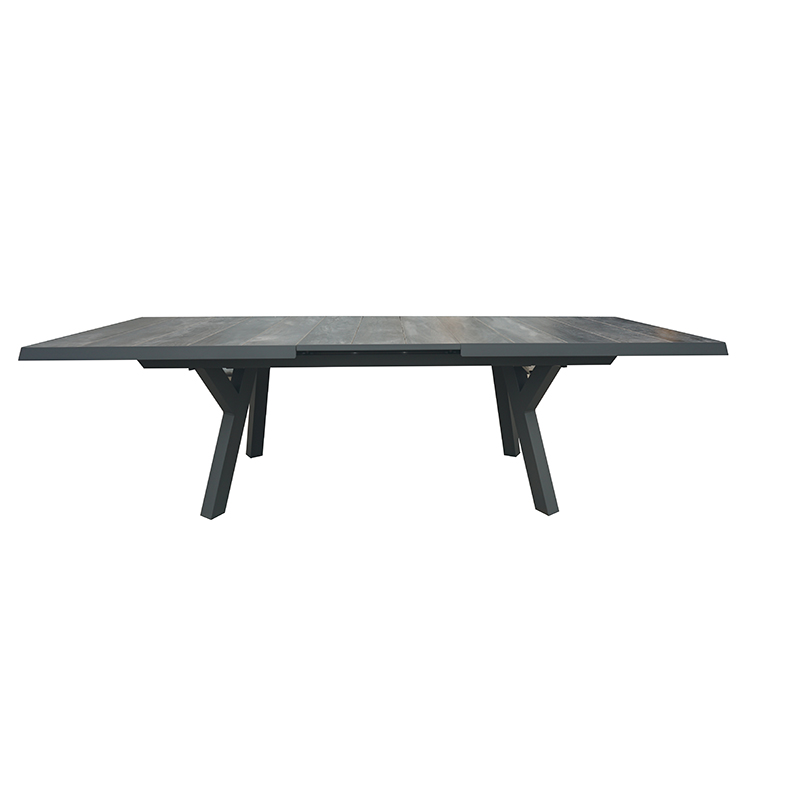
Dynamic furniture requires specialized support. An expandable outdoor table presents a unique engineering challenge. When you insert extension leaves, the overall length increases. This shifts the center of gravity outward. The base must support these extended edges without compromising the central balance point. Standard pedestals often fail here. If the base footprint is too narrow, pressing on the extended leaf will flip the unit. Expandable tops require bases with wide-reaching floor plates or dual-column designs. The support structure must stretch far enough toward the ends to capture the shifted weight load safely. We always specify a base footprint that covers at least sixty percent of the fully extended tabletop length.
Spider Sizing and Top-Plate Integration
The spider is the top mounting plate that connects the base column to the tabletop. Spider sizing dictates surface stability. The diameter of the spider must scale appropriately with the tabletop dimensions. A small spider under a large top creates massive unsupported overhangs. This leads to warping, edge-sagging, and structural failure at the mounting points. Heavy stone or concrete tops require massive, heavy-duty spiders to distribute the load evenly. The spider must feature multiple mounting holes to secure the top firmly. Insufficient top-plate integration allows the surface to twist and tear the screws out of the material.
Material Compatibility
Different tabletop materials react differently to temperature changes. High-Pressure Laminate, solid teak, and natural granite possess distinct thermal expansion rates. Wood expands and contracts with humidity. Metal bases remain relatively static. If you rigidly bolt a teak top to a steel base without tolerance, the wood will crack as it attempts to expand. The base mounting hardware must accommodate these micro-shifts. Use slotted mounting holes on the spider rather than perfectly round ones. This allows the screws to slide slightly as the tabletop material breathes. Proper material compatibility prevents stress fractures and prolongs the life of the entire assembly.
Implementation Risks and Mitigation Strategies
Installation Pitfalls
Assembly errors compromise the best engineering. Over-torquing bolts is a common installation failure. Applying too much force strips the threads inside the base column, destroying the rigid connection. This introduces immediate wobble. Using mismatched hardware creates chemical risks. If you use zinc-plated screws on an aluminum base, galvanic corrosion occurs. The dissimilar metals react in the presence of moisture, accelerating rust at the connection point. Always use stainless steel hardware for exterior assembly. Follow manufacturer torque specifications precisely. Use thread-locking fluid to prevent bolts from vibrating loose over time.
Terrain Assessment Failures
Deploying the wrong base on difficult terrain guarantees failure. A lightweight aluminum base on a heavily sloped patio will tip over in a mild breeze. Highly textured surfaces, like rough-hewn flagstone, demand active leveling tech. Static glides catch on the stone edges and snap off when staff drag the furniture. You must match the base technology to the ground reality. Conduct a thorough site walk before ordering. Identify the steepest grades and the roughest textures. Specify self-stabilizing hydraulic glides for all uneven patios to mitigate the risk of continuous wobbling.
Lifespan and ROI Time Scales
Purchasing decisions must account for operational time scales. Budget bases degrade rapidly. Thin metal bends, cheap paint peels, and plastic feet shatter within a single season. The rapid replacement costs quickly exceed the initial savings. Engineered, self-stabilizing solutions require a higher initial capital outlay. However, they deliver multi-season durability. Heavy-duty construction resists daily wear. Premium coatings prevent rust. Active leveling prevents joint fatigue caused by wobbling. Calculate the long-term ROI by factoring in replacement frequency, maintenance labor, and the prevention of liability claims from spilled hot liquids. Quality engineering always yields a better return over a five-year operational window.
Long-Term Maintenance Protocols
Even the best hardware requires oversight. Establish a routine inspection framework to ensure continuous stability. Check hardware fatigue monthly. Tighten any loose bolts connecting the spider to the column and the column to the floor plate. Inspect glide wear closely. Hydraulic pads eventually lose fluid or wear down from concrete friction. Replace worn glides before they expose the metal base to the ground. Verify coating integrity at the end of each season. Look for scratches or chips in the powder coat. Apply touch-up paint immediately to seal out moisture. Consistent maintenance ensures the base maintains its stabilizing properties over multiple years.
Conclusion
An outdoor table's performance depends entirely on the engineering of its base. Aesthetics must always follow structural integrity. A beautiful surface is useless if it wobbles, tips, or corrodes. True stability requires precise weight distribution, appropriate material selection, and terrain-specific leveling technology. You must approach the purchasing process as an engineering problem rather than a purely visual choice.
Take the following steps to finalize your hardware selection:
Audit your patio terrain to identify slopes, deep grout lines, or uneven pavers that require active hydraulic leveling.
Calculate the exact weight of your chosen tabletop to ensure the base provides a minimum thirty percent weight counterbalance.
Specify 316 marine-grade stainless steel or heavily powder-coated aluminum if your site sits within five miles of a coastline.
Request physical material samples from the manufacturer to test the scratch resistance of the UV-protective coating.
FAQ
Q: What is the best base style for a heavy outdoor table?
A: Wide-stance cast iron or heavy-duty steel pedestals work best. Dense tops like natural stone, concrete, or thick solid wood require massive anchoring weight. A wide floor plate distributes this heavy load evenly, preventing the unit from becoming top-heavy and tipping over.
Q: How do self-stabilizing table bases work?
A: They utilize active leveling mechanisms, typically hydraulic or pneumatic glides. When placed on uneven ground, internal fluid or air transfers pressure between the feet. This allows individual glides to extend or retract automatically, ensuring all four corners maintain solid contact with the terrain without manual adjustment.
Q: Can I use an indoor table base outdoors?
A: No. Indoor bases lack the necessary weatherproofing. Their standard paint will peel, leading to rapid rust and structural failure. They also lack UV-stabilized plastics, meaning their leveling feet will become brittle and shatter in the sun. Furthermore, indoor bases often lack the weight required to resist exterior wind loads.
Q: How does UV radiation affect outdoor table bases?
A: UV radiation causes molecular breakdown in non-treated materials. It degrades the polymers in standard powder coatings, causing them to chalk, fade, and crack. It also attacks untreated plastic components like end caps and glides, destroying their flexibility and causing them to disintegrate under load.
Q: How do I stop my patio table from wobbling on cobblestone?
A: Replace static screw-in feet with self-adjusting hydraulic glides. Cobblestone presents a highly irregular surface that static feet cannot accommodate. Hydraulic glides adapt instantly to the deep grooves and raised edges of the stone, locking the base into a stable, level position automatically.
Q: What maintenance does a cast iron base require?
A: Cast iron requires regular visual inspections for paint damage. You must immediately sand and touch up any scratches in the powder coating with rust-inhibiting exterior paint. Failing to seal exposed iron will result in rapid oxidation, bubbling paint, and eventual structural degradation.