- Home

How Does the Frame Support a Rattan Outdoor Sofa Set?
Views: 0 Author: Site Editor Publish Time: 2026-11-20 Origin: Site


Buyers often fixate on the intricate exterior weaving when shopping for premium outdoor furniture. A perfectly styled patio certainly offers undeniable aesthetic appeal. Yet, the true hero of any durable piece remains completely hidden beneath the surface. The internal frame is the core engine of your seating.
Recent market analyses reveal a massive consumer shift within the outdoor living sector. Homeowners no longer want to replace cheap patio sets every two seasons. Instead, the current industry trend heavily favors structural longevity and extreme weather resistance. Buyers demand true investment-grade furniture. This exact demand drives top-tier manufacturers to radically innovate internal framing technologies. We are seeing a major focus on advanced metallurgy, precision load-bearing geometries, and commercial-grade coatings to combat environmental wear.
Ultimately, a patio sofa is only as strong as its skeleton. This internal architecture dictates not just how much weight the furniture can hold. It determines how well the piece withstands harsh environmental stressors, resists oxidation, and prevents the exterior wicker from stretching over time. In this comprehensive guide, we will explore exactly how the frame supports your seating. We will compare the best materials used in the industry and provide the expert engineering knowledge you need to make a confident purchasing decision.
Key Takeaways
The Foundation of Durability: The frame acts as the structural core of all outdoor seating. It is directly responsible for weight distribution, shape retention, and overall longevity.
Material Matters: Powder-coated aluminum remains the industry gold standard. It offers lightweight, naturally rust-proof, and highly durable characteristics compared to heavy steel or porous natural wood.
Weave Tension: A high-quality rigid frame provides the necessary anchor points to keep synthetic polyethylene rattan taut and supportive over years of continuous use.
Craftsmanship is Key: Manufacturing features like 360-degree continuous welds and reinforced under-seat crossbars are non-negotiable indicators of a premium patio investment.
Smart Shopping: Knowing how to physically test frame weight, inspect welded joints, and verify powder-coating quality will help you choose the perfect patio set that lasts for decades.
The Hidden Foundation: Why the Frame Matters for Outdoor Sofa Sets
Evaluating outdoor furniture requires looking past the color of the cushions or the silhouette of the piece. Objective durability relies entirely on the internal skeleton. The frame serves as the foundational base, establishing both physical limitations and environmental resilience.
Structural Integrity and Weight Distribution
Picture hosting a lively summer barbecue. When three adults sit simultaneously on your sofa, they generate substantial downward and lateral forces. The primary function of any furniture frame is to manage these load-bearing forces safely. A well-engineered frame acts as a complex load-transfer system. It takes the concentrated weight from the seating area, distributes it evenly across the horizontal base, and channels it down through the legs to the ground.
Without a scientifically balanced structure, this weight transfer fails. Inadequate support causes the horizontal seat bars to bow inward. This results in an uncomfortable sinking sensation. Metal fatigue is real. Over time, poor weight distribution leads to micro-fractures, which can cause the legs to buckle or internal support beams to snap unexpectedly.
Shape Retention Against the Elements
Outdoor furniture faces a relentless cycle of environmental stressors. Thermal expansion and contraction play a massive role in outdoor material science. During a scorching July afternoon, metal frames heat up and expand slightly. During a freezing January night, they contract. A sturdy high-gauge frame is specifically designed to withstand these constant micro-fluctuations without permanently warping.
Why does shape retention matter so much? The synthetic resin woven around the frame has a specific tension limit. If the internal structure bends or loses its original geometric shape due to temperature stress, the exterior weave suffers. It will either become hopelessly saggy or stretch beyond its tensile limit and break.
Common Frame Materials Used in a Rattan Patio Sofa Set
Understanding the metallurgical differences between framing materials is essential before investing in a rattan patio sofa set. Manufacturers typically rely on three primary materials. Each presents a distinct profile of weight, cost, and weather resistance.
Powder-Coated Aluminum — The Industry Gold Standard
In the realm of premium outdoor living, aluminum is universally recognized as the optimal framing material. From a chemical perspective, aluminum contains no iron. Consequently, it is physically incapable of producing red rust when exposed to rain, snow, or morning dew. This natural corrosion resistance makes it exceptionally well-suited for any climate, particularly coastal areas with high ambient salt levels.
Beyond its rust-proof nature, aluminum boasts an excellent strength-to-weight ratio. Premium designs often utilize 1.2mm to 1.5mm commercial-grade aluminum tubing. This specific gauge provides the optimal balance. It can support substantial weight while remaining light enough for you to effortlessly rearrange your patio layout. To enhance this natural durability, top brands apply a baked-on powder-coating finish. This creates a hardened shell that guards against UV radiation and physical scratches.
Galvanized and Stainless Steel
Steel is frequently utilized in more budget-conscious furniture lines. It is inherently stronger and heavier than aluminum. This might seem advantageous in regions prone to high-velocity winds. However, steel has a fatal flaw outdoors. It contains iron.
To combat rust, manufacturers use galvanization or standard paint. While effective initially, these protective layers are highly fragile. If the steel frame is scratched by a pebble or chipped during transit, the underlying iron is immediately exposed. Once oxidation begins, rust spreads rapidly beneath the coating. This compromises the structural integrity and often leaves permanent orange stains on your patio tiles.
Natural Wood Frames
Occasionally, outdoor wicker is woven over a natural wood frame like teak or acacia. While this combination offers a highly desirable organic aesthetic, it introduces massive maintenance requirements. Wood is a porous hygroscopic material. It absorbs and releases moisture based on ambient humidity. To prevent rotting or splintering, wooden frames demand regular sanding and the constant application of specialized sealants.
Frame Material Comparison Matrix
Material Type
Rust Resistance
Weight / Mobility
Maintenance Level
Ideal Use Case
Powder-Coated Aluminum
Exceptional — Cannot rust
Lightweight / Easy to move
Zero to Low
Premium all-weather outdoor seating
Steel / Galvanized Steel
Poor — Prone to internal oxidation
Heavy / Hard to move
High — Requires touch-ups
Budget-friendly, temporary setups
Natural Wood
N/A — Prone to rot and mold
Very Heavy
Very High — Needs sanding/sealing
Covered patios or sunrooms
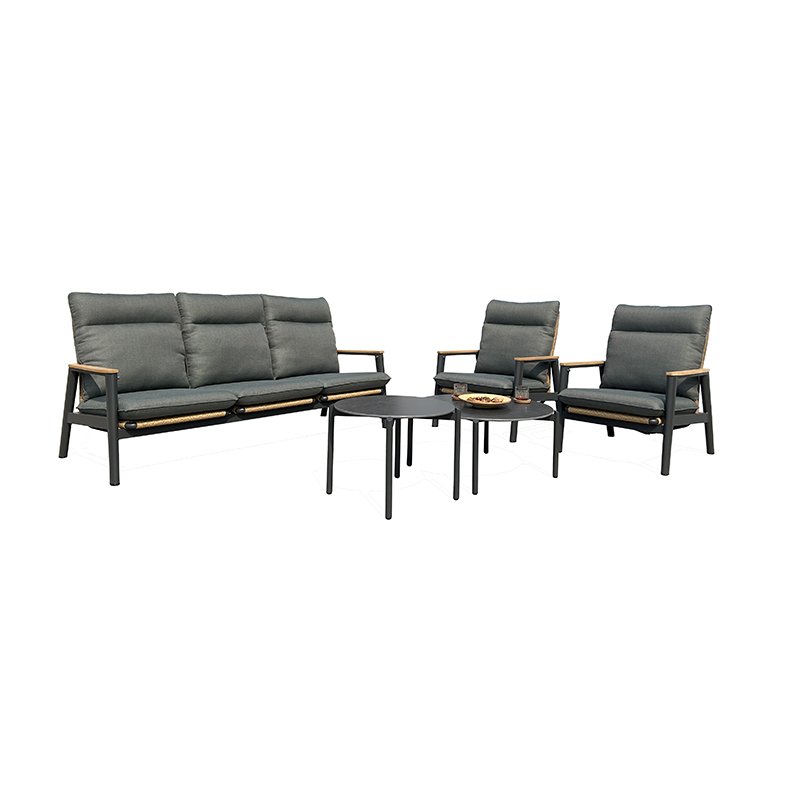
Manufacturing Craftsmanship: From Welding to Rust-Proofing
The disparity between a single-season disposable chair and a multi-decade outdoor investment usually comes down to unseen craftsmanship. The techniques used on the factory floor to join and protect the metal dictate the ultimate lifespan of the furniture.
Full-Circumference Welding vs. Spot Welding
The joints where two pieces of metal meet are the highest-stress points on any skeleton. Premium manufacturers utilize a technique known as 360-degree continuous welding. The welder creates a solid, uninterrupted bead of molten metal entirely around the circumference of the joint. If you run your hand along the underside of a high-end frame, the connection feels smooth and completely sealed. This technique maximizes load-bearing strength and hermetically seals the tubes to prevent internal moisture accumulation.
Conversely, mass-produced furniture often employs spot welding. In this expedited process, the metal pieces are joined by only two or three small dots of weld. Spot welds leave visible gaps between the metal tubes. Under the stress of human weight, these tiny connection points can easily snap. This allows rainwater to seep inside and destroy the furniture from the inside out.
The Advanced Powder-Coating Process
Powder-coating is a sophisticated industrial finishing process. It provides vastly superior protection compared to traditional liquid paint. The process begins with extensive surface preparation. The welded frame is chemically washed and sandblasted to remove impurities. This creates a microscopic texture for maximum adhesion.
Next, the frame is electrically grounded. A dry powder composed of thermoplastic polymers is sprayed onto the metal using an electrostatic gun. The electrostatic charge ensures the powder magnetically wraps around complex curves to create a perfectly even coat. Finally, the frame enters a high-temperature curing oven. The intense heat causes the powder to melt, flow together, and undergo a chemical cross-linking reaction. The result is a thick impenetrable skin.
How the Frame Interacts with the Woven Rattan Backrest Sofa
The relationship between the internal metal frame and the exterior resin wicker is highly symbiotic. The frame provides the unyielding structure. The synthetic fibers provide the flexible tactile surface that accommodates the human body. This dynamic is especially critical when evaluating a woven rattan backrest sofa.
Anchoring the Weave and Tension Control
Manufacturing resin wicker furniture is an intensely manual process. Artisans wrap strands of High-Density Polyethylene around the metal skeleton by hand. They apply consistent high-tension pulling forces. To ensure the weave never unravels, the starting and ending points of the strands are securely anchored to the frame using heavy-duty stainless steel staples or hidden tension clips.
The frame must possess sufficient wall thickness to hold these anchors securely for decades. If the metal is too thin or structurally weak, the anchors will eventually pull out under the tension of the weave. This leads to loose unraveling wicker that cannot be easily repaired.
Ergonomic Support and Comfort Geometry
While thick cushions provide surface softness, the actual ergonomic comfort of your seating is dictated by the metal geometry beneath it. The precise angle at which the backrest is welded to the seat base determines your seating posture.
A scientifically designed frame features a slight rearward pitch in the seat base. It utilizes a carefully calculated recline angle to support the lumbar spine naturally. The metal establishes this permanent ergonomic curve. Meanwhile, the tightly woven rattan acts as a breathable suspension system. The rattan yields just enough to conform to your back, but the rigid metal behind it prevents you from sinking too deeply.
Weight Capacity and Structural Reinforcement in a Rattan Garden Lounge Set
Larger furniture configurations require advanced structural engineering. As the span of a seating area increases, the risk of structural deflection rises exponentially. This is a vital consideration when purchasing an expansive rattan garden lounge set designed to host multiple guests.
Cross-Bracing and Under-Seat Support
High-quality lounge sets achieve their impressive weight capacity through the strategic use of cross-bracing. If you were to remove the wicker from the seating area, you would see a grid-like structure of horizontal and vertical metal bars welded beneath the main frame.
These crossbars act as secondary load distributors. When a heavy load is applied to the center of the seat, the cross-bracing prevents the perimeter frame from bowing inward. Without adequate under-seat support, the synthetic fibers bear the entirety of the occupant's weight. This inevitably leads to permanent sagging and eventual fiber tearing.
Integrating Center Support Legs
For elongated pieces like three-seater sofas or U-shaped sectionals, perimeter support alone is mathematically insufficient. Premium manufacturers address this physical limitation by integrating hidden center support legs into the architecture.
These central legs are welded directly to the middle cross-bracing and extend down to the patio surface. They are often slightly recessed to remain invisible from a standard viewing angle. This center leg cuts the unsupported span of the sofa in half. It effectively doubles the structural rigidity and ensures the middle seat remains perfectly firm.
Real vs. Synthetic Rattan: Does the Frame Requirement Change?
A common source of confusion for consumers is the distinction between natural plant-based cane and synthetic outdoor wicker. The physical properties of these materials dictate entirely different internal requirements.
Natural Rattan Frames for Indoors
Authentic natural rattan is derived from a climbing palm native to tropical regions. In traditional furniture, the frame and the weave are often made from the exact same plant. Thick solid poles of the vine are steamed, bent into shape, and allowed to cool to form the structural base.
While incredibly beautiful, this is strictly an indoor or conservatory material. Because it is highly porous organic matter, a natural cane frame will rapidly absorb moisture. If left outdoors, the frame will expand, harbor mold, rot, and ultimately collapse within a single season.
Synthetic Polyethylene Rattan for Outdoors
To achieve the classic wicker aesthetic outdoors, the industry engineered synthetic alternatives. High-Density Polyethylene is a highly durable non-porous thermoplastic. It is immune to moisture and infused with UV inhibitors to prevent fading.
Unlike natural plant poles, extruded synthetic strands possess no structural rigidity of their own. They are entirely flexible. Therefore, synthetic outdoor wicker absolutely requires a rigid separate internal skeleton. A rust-proof aluminum frame is mandatory to provide the load-bearing capabilities that the resin cannot provide itself.
Actionable Standards When Buying a Rattan Outdoor Conversation Set
Armed with an understanding of frame mechanics and material science, you can approach the purchasing process with a highly critical eye. Evaluating the unseen components of a rattan outdoor conversation set requires a few practical inspection techniques.
Execute the Lift Test
One of the most effective ways to gauge quality on a showroom floor is the simple lift test. Attempt to lift one end of the chair. If the furniture is immovable or incredibly heavy, the skeleton is likely constructed from steel. This carries a massive risk of future rust. Conversely, if it feels alarmingly light and flimsy, the manufacturer may have used aluminum with a sub-1.0mm wall thickness. This is too thin to safely support long-term use. The ideal premium set feels manageable to lift but exhibits a solid grounded sturdiness that actively resists twisting.
Inspect the Underside Craftsmanship
The true quality of outdoor furniture is often hidden out of sight. Do not be shy about physically tilting or flipping a chair upside down before you buy. Look closely at the exposed metal joints. They should feature thick, clean, and continuous welding beads rather than sparse spot welds. Check for the presence of multiple reinforced crossbars running beneath the seating area. Ensure the ends of the weave are neatly secured and that the feet are capped with durable rubber glides to protect your patio floor.
Verify the Structural Warranty
A manufacturer's warranty serves as a quantifiable metric of their confidence in their own engineering. Because the internal architecture is the most critical component, premium brands will often offer a tiered warranty system. They provide a longer guarantee for the metal than for the exterior cushions. A reliable investment should come with a robust warranty specifically covering structural defects and frame failure.
Investing in Engineering That Lasts
While the beautiful wicker exterior and plush cushions initially catch the eye, the internal frame is what you are truly investing in when purchasing outdoor furniture. A patio sofa is only as enduring as the skeleton beneath it. By prioritizing powder-coated aluminum frames with continuous 360-degree welds and proper under-seat cross-bracing, you ensure your seating remains a comfortable and structurally sound centerpiece in your garden for years to come.
Ready to upgrade your outdoor living space with engineering that lasts? Explore the meticulously crafted collections at Alpha Garden. Whether you need a sprawling sectional or an intimate seating arrangement, our designs prioritize commercial-grade aluminum frames and premium weather-resistant weaves. Invest in true durability today.
FAQ
How long should an aluminum frame outdoor sofa last?
A well-engineered powder-coated aluminum skeleton can easily last 15 to 20 years. The limiting factor is rarely the metal itself but rather the exterior resin wicker or the fabric cushions. Utilizing a breathable waterproof furniture cover during extreme winter months will extend this lifespan significantly.
Does a thicker metal frame mean better quality for patio furniture?
Wall thickness absolutely matters. Tubing under 1.0mm gauge will bend under heavy dynamic loads. However, material type trumps pure thickness. A 1.2mm commercial-grade aluminum tube is vastly superior to a 2.0mm steel tube because the latter will inevitably succumb to internal oxidation and rust.
Can I leave my rattan outdoor sofa set outside all year round?
Yes, provided it is constructed with a powder-coated aluminum frame and synthetic polyethylene rattan weave. Aluminum physically cannot rust, and high-quality synthetic resin is heavily UV-resistant. Proper winter storage or covering is still recommended to keep the piece pristine.
How much weight can a standard rattan patio sofa set hold?
A high-quality set featuring a reinforced aluminum frame and proper under-seat cross-bracing can typically support between 250 to 300 pounds per seat. For a three-seater sofa, this equates to a total weight capacity of roughly 750 to 900 pounds. Always verify the manufacturer's specific engineering guidelines.
How do I know if the frame of my woven rattan backrest sofa is rusting?
If your furniture utilizes a steel frame, early signs of rust include orange or brown stains bleeding through the resin wicker. This usually happens near the welded joints, screws, or the feet. If you have an aluminum frame, it will not produce red rust, though deep scratches in the powder coating may occasionally show a harmless white oxidation powder.
Is a heavier frame always better for a rattan garden lounge set?
Not necessarily. While extreme weight can indicate thick materials, excessively heavy frames are usually made of steel, which is highly prone to rusting outdoors. High-gauge aluminum offers the perfect structural balance. It is incredibly strong and load-bearing, yet light enough to allow you to easily rearrange your patio layout without straining your back.
Can a broken frame on a rattan outdoor conversation set be repaired?
It is exceptionally difficult to repair a broken internal frame because the synthetic wicker is tightly woven around it. Fixing a snapped weld usually requires completely unraveling the resin strands, welding the metal back together, repainting it, and meticulously re-weaving the area. This intensive labor highlights why purchasing a continuously welded premium frame from the start is absolutely critical.