- Home

Round Outdoor Dining Tables Vs Rectangular Patio Tables
Views: 0 Author: Site Editor Publish Time: 2026-06-25 Origin: Site


Choosing between a round or rectangular table is rarely just about style. This decision fundamentally dictates how people move through your backyard. The wrong table shape creates frustrating physical bottlenecks. It easily limits your seating capacity and disrupts the social dynamics of your outdoor space. If you ignore patio geometry, you risk trapping guests against walls or forcing them into cramped corners during a meal.
This guide provides an objective, measurement-based framework to help you evaluate table shapes. You will learn how to match furniture to your specific footprint and your typical guest count. We also cover long-term durability needs based on structural realities. Read on to discover which profile best maximizes your space, improves daily traffic flow, and elevates your overall hosting experience.
Key Takeaways
Clearance is Non-Negotiable: Both shapes require a minimum of 36 inches of clearance from the table edge to walls, railings, or deck edges for functional traffic flow.
Space-to-Shape Matching: Square or perfectly circular patios inherently favor round tables; long, narrow decks are better optimized by rectangular designs.
Social vs. Capacity Optimization: Round tables improve sightlines and conversation equity, while rectangular tables maximize linear seating efficiency for groups larger than six.
Material Matters: The structural shape impacts weight distribution—especially crucial when evaluating heavy, premium materials like a sintered stone table against wind or uneven patio pavers.
Assessing Your Patio Footprint and Traffic Flow
Before considering aesthetics, you must measure your physical constraints. Homeowners often buy tables based purely on showroom appeal. They forget how those large dimensions translate to a lived-in deck. Understanding your true footprint prevents costly spatial mistakes.
The 36-Inch Rule
Every outdoor dining setup requires "push-back" clearance. You need a minimum of 36 inches between the table edge and any physical barrier. This barrier might be a stucco wall, a glass railing, or the abrupt edge of a wooden deck. This clearance serves a vital purpose. It allows guests to slide their chairs back comfortably when standing up. It also creates a safe, unobstructed pathway for people walking behind seated guests holding plates or drinks. If you cheat this rule, your patio feels immediately cramped. Worse, it creates dangerous tripping hazards.
Mapping the "Active Zone"
Your total patio square footage does not equal your usable dining space. You must map the "active zone" before choosing a table shape. We recommend following these practical steps:
Measure your total patio dimensions from edge to edge.
Subtract the floor space required for inward-swinging patio doors.
Subtract the safety clearance needed around active heat sources like fire pits or gas grills.
Identify and exclude primary walking paths from the house entrance to the yard.
The remaining footprint is your actual active zone. This specific area is where your table must comfortably fit without violating the 36-inch rule.
Visual Weight vs. Physical Footprint
Tables occupy both physical space and visual space. Rectangular tables carry heavy visual weight. They firmly anchor a space and demand attention. They work beautifully in large areas because they provide structural presence. However, they easily dominate smaller patios. In contrast, a patio round table offers soft edges. These continuous curves make tight spaces feel significantly less restricted. The lack of harsh corners allows the eye to travel smoothly around the furniture. This visual trick creates an illusion of extra square footage.
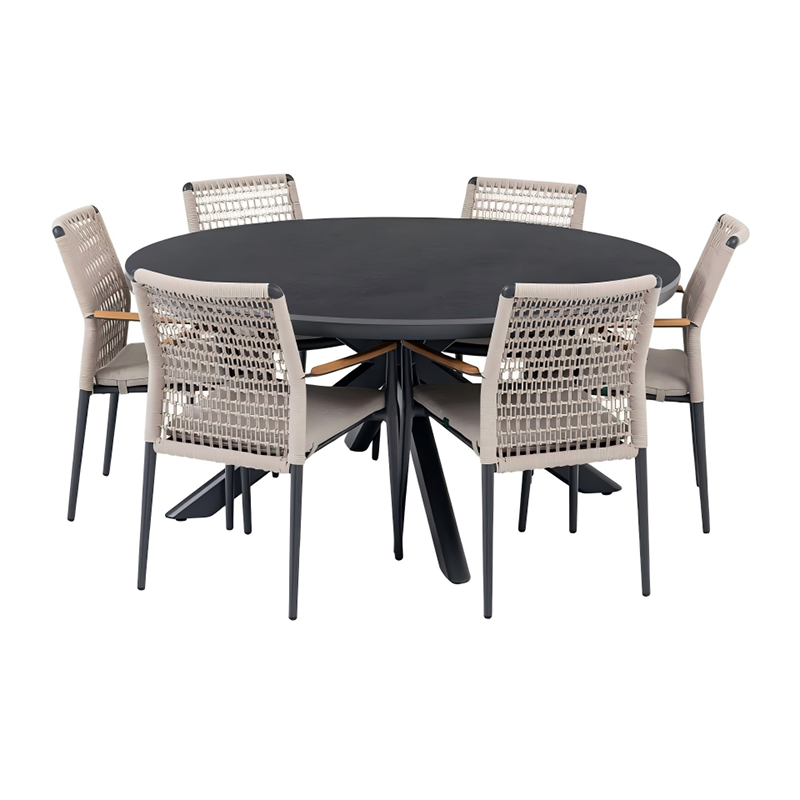
The Case for the Round Outdoor Dining Table
A circular shape brings unique functional and social benefits to a backyard. It specifically excels in square architectural spaces or conversational seating setups.
Core Advantages
Fluid Capacity: Round designs completely lack fixed corners. This absence makes seating highly flexible. You can easily squeeze in an extra chair for unexpected guests. No one has to awkwardly straddle a sharp table leg. This fluid capacity remains a massive advantage for casual hosts who prefer relaxed, informal gatherings.
Conversational Dynamics: Round designs eliminate the traditional "head of the table" hierarchy. Everyone faces the center equally. This geometry provides equal sightlines to all guests. It encourages shared, unified conversations rather than fragmented side chats. For intimate gatherings of four to six people, a round outdoor dining table is practically unmatched.
Pedestal Base Benefits: Many circular tables utilize a center-pedestal base rather than four corner legs. Pedestal designs maximize legroom underneath the surface. Guests enjoy complete knee clearance. You also avoid the common annoyance of chair legs banging into table legs when pushed in after a meal.
Limitations & Risks
Scaling Inefficiency: Circular tables quickly lose their charm at larger sizes. Once a round table exceeds 60 inches in diameter, it introduces severe spatial problems. The center of the table becomes virtually unreachable. Guests cannot easily pass food, share appetizers, or grab salt shakers. Furthermore, massive round tables consume a disproportionate amount of square footage. They leave awkward, unusable triangles of dead space in the corners of a standard rectangular deck.
When to Choose Rectangular Patio Tables
Long, narrow spaces require long, narrow solutions. Rectangular setups remain the gold standard for large-scale entertaining and structured backyard layouts.
Core Advantages
Linear Efficiency: If you regularly host more than six people, rectangular shapes win easily. They offer optimal linear efficiency. You fit more human bodies into less width. Furthermore, rectangular tables align naturally with typical house architecture. Most decks, patios, and pergolas are built as rectangles. Mirroring this shape creates pleasing visual symmetry and respects the existing structural lines of your home.
Zone Definition: In expansive, multi-use backyards, furniture must act as architecture. A long rectangular table serves as a strong physical divider. It naturally separates the busy outdoor kitchen from the quiet, casual lounge area. It establishes clear boundaries and directs foot traffic logically around its perimeter.
Limitations & Risks
Rigid Seating: Unlike circular setups, rectangular tables strictly dictate exact chair counts. Fixed leg placements restrict exactly where chairs can go. If a table is built perfectly for six chairs, squeezing in an eighth person usually means someone sits uncomfortably astride a table leg.
Traffic Bottlenecks: Hard 90-degree corners create natural pinch points. In narrow or heavily trafficked outdoor spaces, these corners disrupt walking flow. Guests must carefully navigate around the sharp edges to reach their seats. This rigid footprint demands much more precise spatial planning before purchase.
Material Selection & Structural Realities
Table shape directly influences how a piece of furniture handles weather, gravity, and wear. You must evaluate these specific structural factors carefully when buying outdoor dining furniture.
Evaluating Outdoor Dining Furniture: Different shapes stress materials in very different ways. Long rectangular wooden tables are highly prone to center bowing or warping over time. They require robust center support beams. Flat metal tables can accumulate rust if water pools on large, continuous surfaces. Always match the structural shape to the material constraints.
The Sintered Stone Table Advantage: Homeowners increasingly turn to advanced engineered materials. A sintered stone table provides a high-density, UV-resistant, and completely non-porous surface. It shrugs off spilled wine, freezing rain, and blazing sun alike. However, sintered stone is exceptionally heavy. This extreme weight dictates specific base requirements. For a circular layout, a heavy, wide pedestal base is critical to prevent tipping. For rectangular versions, thick, reinforced legs are mandatory for safety. The structural base must confidently support the dense stone top, especially on uneven patio pavers or shifting wooden decks.
Wind & Weather Considerations: Your local climate should strongly influence your shape selection. High winds pose a serious threat to outdoor setups. Solid rectangular tables can act as rigid windbreaks. If they feature a heavy top and solid sides, they withstand gusts incredibly well. Conversely, open-base round designs allow wind to pass right through the legs. However, if the base is too light, a strong gust catching an open umbrella can easily topple a round table. Always calculate the combined weight of the table and base for your specific wind conditions.
Capacity Sizing Guide & Shortlisting Logic
You need clear, objective numbers to make a final decision. Use this sizing guide to properly match your guest list to the right physical dimensions.
By the Numbers (Round)
42"–48" Diameter: Seats 4 people comfortably. Best for apartment balconies, small patios, or secondary breakfast nooks.
54"–60" Diameter: Seats 6 people comfortably. This is the maximum recommended size before center-reach becomes a serious ergonomic issue.
By the Numbers (Rectangular)
72" (6 feet) Length: Seats 6 people comfortably. A standard, reliable choice for average suburban decks.
84"–96" (7-8 feet) Length: Seats 8 people comfortably. Ideal for larger families, holiday hosting, and expansive open-air rooms.
Decision Matrix
To simplify your final choice, use the following comparison chart to evaluate your primary needs.
Consideration
Choose Round If...
Choose Rectangular If...
Patio Shape
Your space is square or perfectly circular.
Your space is long, narrow, or sprawling.
Primary Use
You prioritize equal conversation and intimacy.
You want to anchor a large, open area and divide zones.
Guest Count
You usually host 4-6 people.
You frequently host 8+ guests.
Conclusion
Choosing the perfect outdoor dining setup ultimately comes down to matching geometry. You must seamlessly align the table's shape to the patio's shape. Square spaces thrive with circular centerpieces. Long decks demand the linear efficiency of a rectangular design.
Before buying any piece, grab a roll of painter's tape. Physically tape out the exact table dimensions directly on your patio floor. Do not forget to tape out the mandatory 36-inch clearance ring around it as well. This practical step reveals exactly how a round outdoor dining table or a long rectangular piece will function in real life. Measure twice, prioritize your traffic flow, and invest in durable materials tailored to your local climate.
FAQ
Q: Can you put a rectangular rug under a round outdoor dining table?
A: Yes, you can. However, square or round rugs typically provide better visual symmetry. If you choose a rectangular rug, ensure it extends at least 24 to 36 inches beyond the table edge on all sides. This generous sizing prevents chair legs from catching on the rug's border when guests push back from the table.
Q: Which table shape is better for an outdoor umbrella?
A: Round tables generally offer more centralized shade coverage for all seated guests. A standard round umbrella canopy perfectly matches the circular footprint. Rectangular tables often leave guests at the far ends exposed to the sun. They typically require a larger, rectangular canopy or an offset cantilever umbrella for complete end-to-end coverage.
Q: Is a patio round table better for small spaces?
A: Yes. The complete lack of corners frees up essential navigational space. This makes the table physically and visually lighter in cramped footprints or narrow balcony settings. It allows people to slide smoothly past the table without bumping into sharp edges, maximizing every square inch of your available outdoor area.