- Home

Textilene Outdoor Chair Applications for Poolside Seating
Views: 0 Author: Site Editor Publish Time: 2026-07-26 Origin: Site


Managing poolside seating requires a constant defense against harsh environmental elements. Chlorine exposure, intense UV radiation, and trapped moisture rapidly degrade traditional outdoor furniture, leading to frequent replacements and escalating maintenance demands. Facility managers and homeowners face the ongoing challenge of balancing user comfort with material longevity, often overlooking the hidden labor required to maintain, dry, and store cushioned seating on a daily basis.
Addressing these environmental stressors requires a technical, evidence-backed solution rather than temporary fixes. PVC-coated polyester, commonly known as Textilene, offers a pragmatic approach to poolside furniture. Designed specifically to withstand harsh conditions, an Outdoor Chair utilizing this material provides durability and ergonomic support without the constant upkeep required by traditional fabrics. By eliminating moisture retention and resisting chemical breakdown, this material fundamentally changes how outdoor spaces are managed.
Material Pragmatism: Textilene’s non-absorbent, antimicrobial properties eliminate the need for high-maintenance cushions while providing ergonomic support.
Frame Dependency: The lifespan of an outdoor chair is heavily dictated by its frame; pairing the fabric with powder-coated aluminum is critical for rust prevention in high-moisture zones.
Assembly and Shipping Economics: Buyers must weigh the lower initial shipping costs of knock-down (KD) assembly kits against the long-term structural integrity of fully welded frames.
Lifecycle ROI: While initial procurement costs vary, a high-quality UV resistant textilene chair significantly reduces seasonal replacement expenses and daily maintenance labor compared to traditional fabrics or cheap plastics.
Vulnerability Points: Proper fabric tensioning, quality of assembly hardware (fasteners), and weld joint integrity are the primary failure points to evaluate during the shortlisting process.
The Poolside Environment: Success Criteria for an Outdoor Chair
Environmental Stressors: UV, Chlorine, and Saltwater
Poolside furniture faces relentless exposure to chemical and solar degradation. UV rays break down standard plastics at a molecular level, causing them to become brittle, chalky, and prone to cracking under normal weight loads. Chlorine and saltwater accelerate the oxidation and corrosion of untreated metals, while standard fabrics quickly rot or lose their tensile strength. To survive these conditions, furniture must possess inherent resistance to these specific environmental stressors. You cannot rely on aftermarket sprays or temporary covers; the core materials must be engineered for continuous exposure to ensure structural integrity and visual appeal over multiple seasons.
Saltwater pools present an even harsher environment. Salt vapor travels through the air, settling on frames and fabrics even if the furniture is placed several feet away from the water's edge. This constant salt exposure requires marine-grade materials. Standard steel, even when powder-coated, will eventually succumb to rust if a microscopic scratch allows salt moisture to penetrate the surface. Therefore, material selection is not just an aesthetic choice; it is a structural necessity.
Operational and Maintenance Requirements
Moving, cleaning, and drying traditional cushioned seating demands significant labor and time. In a commercial setting, staff spend hours each morning wiping down dew-soaked cushions or dragging heavy furniture out of the rain. Success in poolside environments requires a "leave-in-place" solution. Furniture should require minimal daily intervention, allowing staff or homeowners to focus on other tasks rather than constantly managing wet or soiled cushions.
Consider the daily operational workflow. When a sudden rainstorm hits, cushioned chairs must be covered or moved indoors. With a mesh sling design, the water simply passes through. Once the rain stops, a quick wipe with a towel or a few minutes in the sun is all it takes to make the seating usable again. This operational efficiency drastically reduces labor hours and ensures seating is always available for guests.
Safety and Hygiene Standards
Wet swimwear remains in constant contact with poolside seating, creating an ideal environment for mold, mildew, and bacterial growth. Resistance to these biological growths is essential for maintaining hygiene and safety standards. Materials must prevent moisture absorption to inhibit bacterial proliferation. Traditional foam cushions act like sponges, trapping moisture and organic matter, which eventually leads to foul odors and unsanitary conditions.
Non-absorbent materials mitigate this risk entirely. By denying mold spores the moisture they need to thrive, the seating surface remains hygienic. Regular washdowns with mild soap and water are sufficient to maintain a clean environment, eliminating the need for harsh chemical treatments that could further degrade the furniture or irritate the skin of users.
Resistant to Suntan Oils and Body Chemistry
Body oils, sunscreens, and pool chemicals interact with seating surfaces daily. Without chemical resistance, these substances cause staining, discoloration, and structural breakdown. Sunscreen, in particular, contains compounds that can permanently stain or dissolve certain plastics and untreated fabrics. Poolside furniture must withstand these chemical interactions to maintain its appearance and functionality.
The protective PVC coating on specialized outdoor fabrics acts as a barrier against these chemical agents. It prevents oils from penetrating the fibers, allowing them to be easily washed away. This chemical resistance is a critical factor in maintaining the visual appeal of the furniture over its lifespan, preventing the unsightly yellowing or spotting that plagues lesser materials.
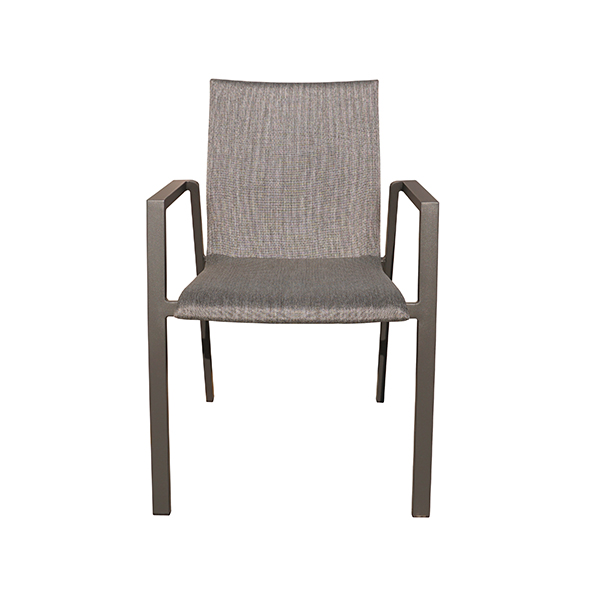
Technical Anatomy of a UV Resistant Textilene Chair
Material Composition and Tensile Strength
Textilene consists of a woven polyester core encapsulated in a protective PVC coating. This composition yields remarkable tensile strength, allowing the material to support high weight capacities, often exceeding 300 lbs, without tearing or losing its structural stability. The polyester core provides the necessary strength and flexibility, while the PVC coating provides the barrier against environmental damage.
The extrusion process used to create this material ensures that the PVC coating is uniform and tightly bonded to the polyester yarn. This prevents delamination, where the coating separates from the core, a common failure point in cheaper imitation fabrics. The resulting material is highly resistant to punctures and abrasions, making it suitable for high-traffic areas where furniture is subjected to heavy use and occasional rough handling.
Thermal and Moisture Regulation of a Breathable Mesh Patio Chair
The mechanics of a breathable mesh patio chair rely on its porous weave. This design prevents heat retention, keeping the seating surface cool even in direct sunlight. Solid materials like cast aluminum or dark plastics can reach burning temperatures under the summer sun, making them unusable without thick cushions. The open weave allows air to circulate freely, dissipating heat and providing a comfortable seating experience.
Furthermore, the porous structure allows water to pass through instantly. This eliminates puddling and prevents the uncomfortable skin-clinging effect common with solid materials. When a user sits down in a wet swimsuit, the moisture is not trapped against their skin; it drains away, enhancing comfort and preventing the chair from becoming a soggy mess.
UV Inhibitors and Colorfastness
To ensure longevity, UV-resistant treatments are integrated directly into the PVC coating of a UV resistant textilene chair during the manufacturing process. These inhibitors act like sunscreen for the fabric, absorbing and dissipating harmful UV radiation before it can break down the polymer chains. This prevents the material from becoming brittle and fading, typically ensuring a functional lifecycle of five to seven years under continuous sun exposure.
Colorfastness is another critical benefit of this process. Because the pigments are mixed into the PVC before it is extruded over the polyester core, the color is consistent throughout the material, not just painted on the surface. This means that even if the surface is slightly abraded, the color remains vibrant, resisting the bleached-out look that plagues lesser fabrics after a single summer.
Weave Density and Deflection Rate
The density of the weave significantly impacts performance. High-density weaves offer superior weight-bearing support and shape retention, resisting long-term sagging. The tighter the weave, the less the individual yarns can shift under load. This results in a firmer seat that maintains its ergonomic contours over time.
Conversely, low-density weaves may stretch under continuous load, leading to a hammocking effect that compromises comfort and aesthetics. When evaluating these materials, you must look at the warp and weft count—the number of yarns per inch in both directions. A higher count indicates a denser, more durable fabric that will resist deflection and provide better long-term support.
Frame Pairings and Structural Integrity
The Aluminum Textilene Chair
An aluminum textilene chair provides distinct advantages for poolside applications. Aluminum is naturally rust-proof because it forms a protective oxide layer when exposed to air, preventing further corrosion. It is also lightweight, making it ideal for direct poolside placement and easy reconfiguration by staff or guests. You can easily move these chairs to chase the sun or clear the deck for cleaning.
However, the lightweight nature of aluminum can be a drawback in high-wind areas. Without proper weighting or thicker wall profiles, these chairs can be blown into the pool or across the deck during a storm. To mitigate this, manufacturers often use heavier gauge aluminum tubing or design the frames to be stackable, allowing them to be secured together when not in use.
Powder-Coated Steel and Iron Frames
Powder-coated steel and iron frames offer high weight capacity and heavy-duty construction, resisting wind displacement effectively. The sheer mass of these frames makes them stable in blustery conditions. They also generally present a lower initial procurement cost compared to high-grade aluminum.
The primary drawback is the high risk of catastrophic rust. If the powder coating is scratched, chipped, or compromised at a weld joint, moisture will penetrate and rust will begin to form immediately. This rust can bleed onto the pool deck, causing permanent stains. Because of this vulnerability, steel and iron frames are strictly unsuitable for saltwater pool environments or areas with high ambient humidity.
Comparing Textilene to Rigid Alternatives
When selecting outdoor seating, it helps to compare materials side-by-side to understand their practical applications.
Material Type
Comfort & Ergonomics
Heat Retention
Maintenance Level
Water Drainage
Textilene Sling
High (Flexible, contours to body)
Low (Breathable mesh)
Low (Wash and go)
Excellent (Passes through)
Solid HDPE / Resin
Medium (Rigid, requires cushions for long use)
High (Can get hot in direct sun)
Low (Wipe down)
Poor (Puddles on seat)
Cast Aluminum
Low (Very rigid, cushions mandatory)
Very High (Burns skin if unshaded)
Medium (Requires cushion care)
Medium (Depends on design gaps)
Wicker / Rattan
Medium (Slight give, usually needs cushions)
Medium (Airflow depends on weave)
High (Dirt traps in weave)
Medium (Water can pool in crevices)
Assembly Mechanics: KD Kits vs. Fully Welded Frames
Knock-Down (KD) Assembly Kits
Knock-down kits are delivered flat-packed, requiring manual fastening of components like legs, backrests, and armrests. While they significantly reduce shipping costs by maximizing cargo space, they introduce an assembly bottleneck. For commercial properties requiring large volumes of seating, the labor hours required to unbox, assemble, and inspect hundreds of chairs can negate the initial freight savings.
Structurally, KD kits present long-term vulnerabilities. Joint connections rely on bolts and screws that can loosen over time under heavy use and thermal expansion. This creates wobble points and potential safety hazards. Regular maintenance schedules must include tightening all fasteners, adding to the operational burden.
Fully Welded Frames
Fully welded frames arrive pre-assembled with seamless joints. This construction eliminates hardware failure points and prevents water ingress into the internal frame tubes. A continuous weld provides superior structural rigidity, ensuring the chair will not loosen or wobble over time, regardless of how heavily it is used.
The longevity advantage of fully welded frames often outweighs the higher initial shipping costs. By eliminating the need for assembly labor and reducing the risk of joint failure, fully welded frames provide a more robust, reliable solution for high-traffic areas. When inspecting welded frames, look for smooth, continuous beads around the entire joint, indicating a high-quality manufacturing process.
Application Zones: Layout Integration and Multi-Scene Versatility
Direct Poolside Lounging
For primary sunbathing, chaise lounges and recliners must offer lay-flat capabilities and efficient water runoff. The seating surface must support the entire body evenly while allowing wet swimsuits to drain without pooling. Textilene excels here, providing a surface that dries quickly and is easy to sanitize between users, ensuring a hygienic lounging experience.
When laying out poolside zones, consider the footprint of the loungers when fully reclined. Ensure there is adequate space for guests to walk between the chairs and access the pool safely. The lightweight nature of sling loungers allows guests to easily adjust their position relative to the sun without dragging heavy frames across the concrete deck.
The Textilene Outdoor Dining Chair
Integrating a textilene outdoor dining chair requires evaluating ergonomic upright support and armrest clearance with standard patio tables. The pitch of the backrest must be vertical enough to allow comfortable eating while still providing lumbar support. Armrests must be low enough to slide under the table apron, maximizing space when the chairs are not in use.
Space-saving stackability is crucial for off-season storage or when clearing the deck for events. When pairing these chairs with dining tables, consider structural compatibility, especially with tables featuring built-in umbrella holes and heavy bases. The chairs must be easy to pull in and out without catching on the table legs or umbrella stand.
Transition Zones: Multi-Scene Portability
The lightweight nature of aluminum frames allows furniture to transition effortlessly across various outdoor spaces. Chairs can easily move from the pool deck to garden lawns, backyard patios, or balconies, offering multi-scene versatility without requiring heavy lifting. This adaptability is particularly valuable for hospitality venues that frequently reconfigure their outdoor spaces for different events.
To ensure smooth transitions across different surfaces, inspect the foot glides on the chairs. High-quality nylon or polyurethane glides protect both the chair legs and the flooring surfaces, preventing scratches on wooden decks and reducing noise when chairs are dragged across concrete patios.
Conceptual Trade-Offs and Lifecycle Longevity
Aesthetic Plushness vs. Functional Comfort
Buyers often hesitate between aesthetic plushness and functional comfort. While sling seating lacks the deep-seating look of thick, overstuffed cushions, it offers superior functional comfort through breathability and contouring support. This trade-off prioritizes practicality and low maintenance over traditional, heavy aesthetics.
Thick cushions look inviting, but they trap heat and sweat, becoming uncomfortable during extended use in hot climates. Sling fabrics conform to the user's body, eliminating pressure points while allowing air to circulate. For environments where users are frequently wet or covered in sunscreen, functional comfort and ease of cleaning must take precedence over the visual appeal of plush cushions.
Initial Procurement Cost vs. Lifecycle Longevity
Evaluating the true value of outdoor furniture requires looking past the initial sticker price. You must compare the recurring costs of replacing faded or mildewed cushion covers against the functional lifespan of commercial-grade sling fabrics. Over a five to seven-year period, high-quality mesh seating significantly reduces replacement expenses and daily maintenance labor.
Consider the labor costs associated with cushion management: moving them during rain, washing covers, and replacing degraded foam. When you eliminate these tasks, the operational savings quickly offset the higher initial cost of premium sling furniture. This makes it a highly cost-effective choice for both commercial properties and busy homeowners.
Implementation Risks and Procurement Red Flags
Assembly and Hardware Vulnerabilities
Low-grade assembly hardware can rust long before the frame or fabric degrades, causing structural failure and staining pool decks. A single rusting bolt can ruin the appearance of an entire chair and leave permanent marks on expensive paving stones.
Verify Hardware Grade: Always demand marine-grade stainless steel fasteners (Grade 304 or 316) in all joints.
Inspect Fastener Coatings: Ensure that bolts are not just zinc-plated, as this coating will quickly wear off in harsh environments.
Check for Galvanic Corrosion: Ensure that stainless steel bolts are properly isolated from aluminum frames using nylon washers to prevent galvanic corrosion.
Sling Sagging and Tension Loss
Poor quality, low-density weaves stretch under continuous load, leading to sagging. This not only looks terrible but also ruins the ergonomic support of the chair. Once a sling stretches out, it cannot be tightened; the entire fabric panel must be replaced.
Evaluate Weave Density: Look for fabrics with a high warp and weft count to ensure structural stability.
Review Warranty Terms: Check the warranty specifically regarding fabric retention and stated weight capacity limits.
Test the Tension: Press firmly on the center of the seat; it should feel taut and spring back immediately without leaving a depression.
Conclusion
Textilene remains a highly pragmatic, low-maintenance material choice for high-moisture, high-UV environments when paired with appropriate frame architecture. By eliminating the need for cushions and providing inherent resistance to environmental stressors, it streamlines outdoor space management.
Request physical material swatches from manufacturers to assess weave density and colorfastness firsthand.
Review warranty terms specifically addressing UV degradation, fabric tension loss, and frame corrosion.
Procure a single sample unit to test assembly simplicity, fabric tension, and ergonomic comfort before committing to a bulk purchase.
Verify the grade of all assembly hardware to ensure it matches the environmental demands of your specific location.
FAQ
Q: How long does a UV resistant textilene chair last in direct sunlight?
A: A high-quality chair typically lasts 5 to 7 years in direct sunlight before significant fading or brittleness occurs. The exact lifespan depends heavily on the quality of the UV inhibitors integrated into the PVC coating during manufacturing.
Q: Can you leave a breathable mesh patio chair outside during winter months?
A: Yes, the material withstands freezing temperatures without cracking. However, covering the chairs or storing them in a dry location prevents unnecessary wear from ice and snow, significantly extending their functional lifespan.
Q: What is the practical difference between an aluminum textilene chair and a steel-framed one?
A: Aluminum is naturally rust-proof and lightweight, making it ideal for wet poolside environments. Steel is heavier and often cheaper, but it is highly prone to catastrophic rust if the protective powder coating is scratched or damaged.
Q: How do you properly clean and sanitize a textilene outdoor chair?
A: Wash the surface with mild dish soap and warm water using a soft-bristle brush to remove dirt and oils. Rinse thoroughly with a garden hose. Avoid harsh bleach, pressure washers, or abrasive cleaners that can strip the PVC coating.
Q: Is a textilene outdoor dining chair comfortable for extended seating?
A: Yes, the flexible mesh contours to the body, eliminating pressure points. The porous weave provides continuous breathability, making it comfortable for long meals without retaining body heat or trapping moisture against the skin.