- Home

What Is A Rattan Woven Outdoor Sofa Set?
Views: 0 Author: Site Editor Publish Time: 2026-07-05 Origin: Site


A premium outdoor living space often centers around a well-crafted lounge area. At its core, this furniture consists of pliable fibers. Artisans weave these durable fibers over a rigid internal frame. Manufacturers design these pieces primarily for outdoor relaxation and dining. However, many buyers fall into a common commercial trap. They confuse natural botanical vines and synthetic engineered resins. This fundamental misunderstanding leads to premature furniture failure. Pieces suffer from severe rot and unraveling. They also experience rapid fading when you leave them exposed to raw elements.
Our objective is to guide you past these purchasing pitfalls. We provide a rigorous technical breakdown of essential materials. We also analyze internal frame construction techniques and specific weather-resistance metrics. This knowledge lets you accurately evaluate structural longevity. You can properly assess the overall value of the furniture before you finalize a purchase. A well-informed decision guarantees years of comfortable outdoor living.
Key Takeaways
Material Distinction: True outdoor longevity requires High-Density Polyethylene (HDPE) synthetic rattan, not natural botanical rattan or cheap PVC.
Structural Core: A powder-coated aluminum frame is the non-negotiable standard for rust prevention and structural integrity.
Component Vulnerability: Cushions and fabrics typically degrade faster than the rattan shell; evaluating textile grade (e.g., solution-dyed acrylic) is critical.
Decision Framework: Purchasing should be driven by climate exposure, modularity needs, and manufacturer warranties, not just aesthetic appeal.
Natural vs. Synthetic: Defining the Rattan Woven Sofa
Shoppers must understand core materials before examining any specific piece. A high-quality rattan woven sofa relies entirely on appropriate fiber selection. The industry divides these fibers into natural organics and synthetic polymers. Your choice dictates the entire lifespan of the furniture.
Natural Rattan
Farmers harvest natural rattan from climbing palm species native to tropical regions. It offers massive aesthetic value and beautiful organic textures. However, natural fibers remain highly susceptible to moisture rot. They also suffer from severe UV brittleness. Sunlight quickly degrades the organic material over time. You should never place natural pieces in unprotected outdoor environments. They belong exclusively indoors or under fully enclosed sunrooms.
Polyvinyl Chloride (PVC) Wicker
PVC represents the absolute budget tier of synthetic materials. Manufacturers use it frequently for low-cost outdoor collections. We advise strong caution here. PVC becomes highly rigid and prone to cracking in freezing temperatures. Conversely, it stretches and deforms significantly in high heat. It also experiences rapid UV fading. PVC fibers often break down within a single sunny season.
Polyethylene (PE / HDPE) Rattan
High-Density Polyethylene serves as the strict industry standard. It creates a highly durable lounge piece built for actual exterior use. HDPE is an engineered synthetic polymer. Manufacturers design it specifically for massive tensile strength. It boasts extraordinary UV resistance built into the chemical structure. It easily handles severe temperature fluctuations without compromising structural integrity.
Wicker vs. Rattan Clarification
Many buyers use these two terms interchangeably. This practice creates immense confusion during the shopping process. "Rattan" refers directly to the specific material itself. It identifies either the natural palm vine or the synthetic plastic polymer. "Wicker" refers solely to the traditional weaving technique. Artisans use the wicker method to interlock various materials into a solid surface.
Material Type
UV Resistance
Moisture Tolerance
Recommended Placement
Natural Rattan
Very Low (Fades/Cracks)
Poor (Prone to Rot)
Indoors Only
PVC Wicker
Low (Fades Quickly)
Moderate (Waterproof but deforms)
Heavily Shaded Outdoors
PE / HDPE Rattan
Very High (Colorfast)
Excellent (Fully Waterproof)
Fully Exposed Outdoors
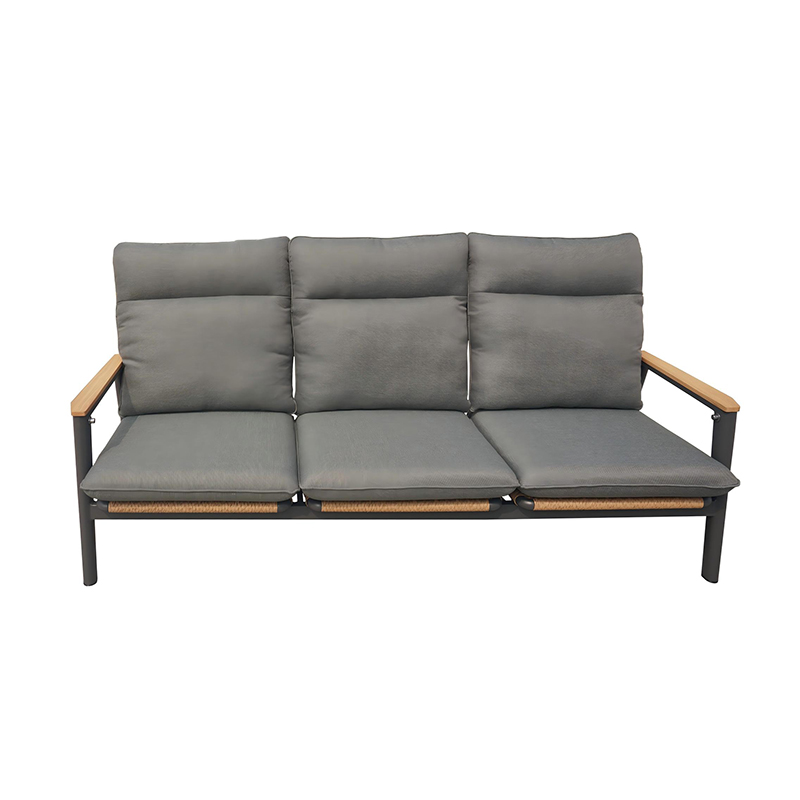
Structural Integrity: What Supports a Patio Wicker Sofa
The hidden skeleton dictates the true lifespan of a patio wicker sofa. Beautiful exterior weaves mean nothing over a rapidly failing frame. You must inspect the metal core before confirming any purchase.
Frame Materials
You will encounter two primary metals used in outdoor furniture construction. Each metal offers distinctly different performance metrics.
Steel Frames: Steel is noticeably heavier and substantially cheaper to produce. However, it remains highly vulnerable to aggressive rust. Moisture penetrates easily if the protective powder coating scratches. Coastal salt air destroys steel frames rapidly.
Aluminum Frames: Aluminum provides the ideal specification for exterior lounge pieces. It is naturally rust-proof at a chemical level. It is exceptionally lightweight. This characteristic allows for easy furniture reconfiguration. It remains structurally sound for decades when factories weld the joints properly.
Weight Capacity and Load Distribution
Always evaluate the seating suspension located directly beneath the bottom cushions. You need robust support systems for daily use. Look for reinforced under-seat metal crossbars. Avoid pieces featuring entirely unsupported woven bases. Loose woven bases stretch out over time. They cause severe sagging and extreme discomfort. Proper metallic load distribution prevents the entire structure from warping.
Hardware and Assembly Risks
Furniture assembly methods significantly impact long-term durability. Pre-assembled welded frames offer superior longevity. Factories weld the metal joints permanently before shipping. Conversely, flat-pack frames require manual assembly at home. They rely heavily on threaded bolts. These bolts frequently loosen over time. They also introduce prime rust points at the drilled holes. Fully welded joints eliminate these common mechanical failure points.
Weather Resistance and Wear: Evaluating an Outdoor Rattan Sofa Set
Raw environmental exposure constantly tests the limits of an outdoor rattan sofa set. You must assess three critical weather metrics to guarantee a smart investment.
UV Degradation Analysis
Direct sunlight destroys weak plastics aggressively. Manufacturers must integrate strong UV inhibitors into the PE resin during initial production. These chemical additives prevent the plastic structure from becoming brittle. They also stop the dye color from fading out. Top-tier materials retain their rich colorfastness for years under direct sunlight exposure.
Temperature Tolerance
Extreme regional climates stress synthetic materials heavily. You must evaluate how the woven fibers handle thermal expansion. They expand slightly during extreme summer heat. They contract rapidly in freezing winter temperatures. High-grade HDPE flexes naturally during these environmental shifts. It survives severe winter freezes without snapping, splitting, or splintering.
Moisture and Mildew Resistance
PE material remains inherently waterproof by design. Rain simply rolls off the synthetic polymer strands. However, dirt buildup between the tight weaves creates secondary problems. Organic debris easily hosts mildew spores. Maintenance realities require periodic physical intervention. You should use a gentle pressure washer on a low setting. Alternatively, perform a thorough bristle-brush cleaning annually to clear the debris.
Cushion Quality and Ergonomics for the Garden Sofa
Soft textiles often fail long before the rigid structural frame. You must prioritize high-end cushion quality when selecting a durable garden sofa. Proper padding ensures years of comfortable use.
Foam Density and Drainage
Standard polyurethane foam acts exactly like a sponge. It retains water heavily after a summer rainstorm. This trapped moisture breeds mold. High-quality exterior cushions utilize open-cell foam instead. Many premium brands use specific reticulated foam. These specialized internal foams let water pass through them instantly. Fast drainage prevents internal mold growth. It also drastically reduces the required drying time.
Textile Specifications
Outer fabric choice directly dictates visual longevity. We rank common fabrics from lowest to highest overall durability.
Polyester: This cheap fabric is highly prone to fading. It often degrades visually within one single season. You should only accept polyester for heavily shaded or fully covered patio areas.
Olefin: Olefin represents a solid mid-tier option. It is highly durable against friction. It naturally resists liquid stains. It also repels external mildew effectively.
Solution-Dyed Acrylic (e.g., Sunbrella): This specific material stands as the absolute gold standard. Manufacturers dye the raw liquid fibers before weaving them into fabric. It offers unmatched UV resistance and total colorfastness.
Ergonomic Considerations
Physical comfort matters just as much as material durability. Assess the overall seat depth carefully. Standard ergonomic depths range from 24 to 28 inches for optimal lounging. Pay close attention to the rear backrest angles. Bare woven backs offer very limited lumbar support naturally. You need thick, properly contoured back cushioning to achieve true ergonomic comfort.
Shortlisting Logic: How to Choose the Right Rattan Woven Sofa Set
Navigating a crowded marketplace requires a strict evaluation methodology. Use these strategic criteria to select a premium rattan woven sofa set. Eliminate weak options quickly.
Define Success Criteria by Climate
Your local weather directly dictates your material requirements. Coastal areas feature heavy salt spray and high humidity. These humid environments strictly require rust-proof aluminum frames and waterproof HDPE fibers. Dry, sunny climates present entirely different challenges. They prioritize maximum UV protection. You must demand solution-dyed acrylic fabrics to prevent severe sun fading.
Space Planning and Modularity
Assess your physical patio footprint before browsing. Decide whether a solid fixed-frame sofa suits your space better. Alternatively, a modular sectional provides excellent layout scalability. Modular individual units allow easy future patio redesigns. Always include proper spatial clearance requirements. Leave ample room for comfortable walking paths around the assembled furniture.
Warranty Evaluation
A trustworthy warranty reveals deep manufacturer confidence. It should clearly separate the frame, the weave, and the fabric policies. Look for specific minimum guarantees. Demand 3 to 5 years of comprehensive coverage on the structural metal frame. Expect 2 to 3 years on the PE weave itself. This specific policy protects you against unspooling or unexpected fiber snapping.
Red Flags to Avoid
Protect yourself from deceptive industry marketing. Avoid product listings lacking explicit material details. They must state "PE rattan" clearly. They must confirm an "aluminum frame" directly in the specifications. Budget brands often mask cheap steel as a generic "metal frame." Skip these vague listings entirely. They indicate inferior construction.
Component
Ideal Specification
Red Flag to Avoid
External Weave
HDPE / PE Resin
PVC or "Natural" for outdoor use
Internal Frame
Powder-Coated Aluminum
Generic "Metal" or Steel
Cushion Fabric
Solution-Dyed Acrylic
Basic untreated Polyester
Frame Joints
Fully Welded Construction
Bolt-together Flat Pack
Conclusion
Combine an HDPE exterior weave, an aluminum frame, and solution-dyed cushions to achieve the absolute maximum return on your investment.
Prioritize strict structural specifications over tempting initial cost savings.
Avoid the frustrating "replace-every-two-years" cycle typical of low-end, big-box outdoor furniture.
Always request exact material disclosures from the manufacturer before finalizing your online cart.
FAQ
Q: Can a rattan woven sofa set be left outside year-round?
A: Yes, provided it utilizes HDPE fibers and an aluminum frame. However, you must implement protective measures. Always use breathable winter covers to prevent ice expansion damage. You should bring all cushions indoors during extreme weather or heavy snow. This prevents fabric degradation and internal foam freezing.
Q: How long does synthetic rattan furniture last?
A: High-quality HDPE furniture typically lasts between 5 and 10 years under continuous outdoor exposure. Proper winter storage extends this lifespan significantly. Conversely, cheap PVC variants usually fail, crack, or fade heavily within 1 to 3 years. The difference lies entirely in the polymer quality.
Q: How do you clean and maintain outdoor woven furniture?
A: Maintain it using a simple regimen. Mix warm water and non-abrasive dish soap. Scrub the weaves gently using a soft-bristle brush to remove trapped dirt. Rinse thoroughly using a standard garden hose. Never use harsh chemical solvents or bleach. These chemicals destroy the protective UV inhibitors instantly.
Q: Does PE rattan get hot in the sun?
A: Yes, synthetic resins retain thermal energy. Dark-colored weaves absorb and hold heat noticeably more than lighter colors. While the plastic handles the heat structurally, it can feel uncomfortably warm against bare skin. We recommend keeping thick cushions in place or utilizing patio umbrellas for heavy summer lounging.