- Home

What Makes a Patio Dining Set Practical for Daily Entertaining?
Views: 0 Author: Site Editor Publish Time: 2026-07-16 Origin: Site


The idealized vision of outdoor entertaining often clashes with the practical reality of daily use. Weather exposure, constant cleaning, and spatial bottlenecks quickly turn a dream patio into a frustrating chore. Purchasing outdoor furniture based solely on aesthetics usually leads to premature degradation, uncomfortable seating, and cramped layouts. Daily entertaining requires a shift from visual appeal to functional resilience, ease of movement, and long-term durability. A well-chosen setup instantly expands a home’s functional square footage, transforming an underutilized yard into a reliable outdoor living space. To ensure a high return on investment, you must evaluate Dining Sets based on material science, spatial dynamics, seating configurations, environmental sustainability, and long-term maintenance requirements.
Material dictates lifespan: High-performance materials like sintered stone and powder-coated aluminum offer the best balance of durability and low maintenance for daily use.
Configuration drives utility: Expandable tables, flexible movable chairs, and modular seating (like benches mixed with chairs) accommodate fluctuating guest counts without permanently overcrowding the patio.
Space planning is non-negotiable: Functional daily entertaining requires strict adherence to clearance metrics (minimum 36 inches around the table) to ensure a safe, comfortable flow of traffic.
Ergonomics equal endurance: Deep seating, appropriate cushion density, heat-resistant surfaces, and ambient night-time compatibility determine whether a set is used for a quick meal or extended evening entertaining.
Sustainability matters: Selecting eco-friendly, recyclable, or responsibly sourced materials ensures the set is as good for the environment as it is for the home.
Defining Success Criteria for Daily Outdoor Entertaining
Establishing the baseline requirements for a patio setup that sees daily use versus occasional weekend gatherings changes how you approach the design process. Daily use demands a setup that requires minimal effort to maintain and prepare. Field experience shows an inverse relationship between complex materials, like untreated woods or intricate wickers, and your willingness to use the space daily. If you have to spend twenty minutes wiping down the table and removing debris from chair crevices before every meal, you simply won't use the space. Practicality means the furniture is ready the moment you step outside.
Spatial constraints and traffic flow dictate the mathematical framework for outdoor dining spaces. The "36-inch rule" is an absolute requirement for chair push-out clearance and safe pathway navigation. Without this clearance, guests feel trapped against walls or railings, and serving food becomes a hazardous obstacle course. When planning the layout, you must measure from the edge of the table to the nearest physical obstruction, whether that is a house wall, a deck railing, or a potted plant. If you only have 24 inches, guests will scrape the backs of their chairs against the barrier every time they stand up.
Positioning your furniture effectively creates a seamless extension of the indoor dining room, maximizing usable square footage year-round. You want the transition from the kitchen to the patio to feel natural. This involves aligning the outdoor table with indoor sightlines and ensuring the pathway from the food prep area to the outdoor seating is unobstructed. A well-placed setup encourages daily use because it feels like a natural part of the home's floor plan rather than an isolated island in the backyard.
Daily vs. Occasional Use Requirements
Requirement
Daily Entertaining
Occasional Gatherings
Maintenance
Wipe-and-go surfaces, zero daily prep
Acceptable to spend 30 mins cleaning prior
Clearance
Strict 36-48 inches for constant movement
Can compromise slightly for temporary seating
Ergonomics
High-density foam, lumbar support
Basic cushions or hard seating acceptable
Weathering
Must withstand constant UV and rain exposure
Can be covered or stored between uses
When you evaluate the space, consider the microclimate of your specific patio. Does it get blasted by afternoon sun? Is it a wind tunnel? These environmental factors directly influence the success criteria for your furniture. A lightweight setup might be fine for a sheltered courtyard but will cause endless frustration on an exposed high-rise balcony. Understanding these site-specific challenges is the first step in selecting furniture that actually performs day in and day out.
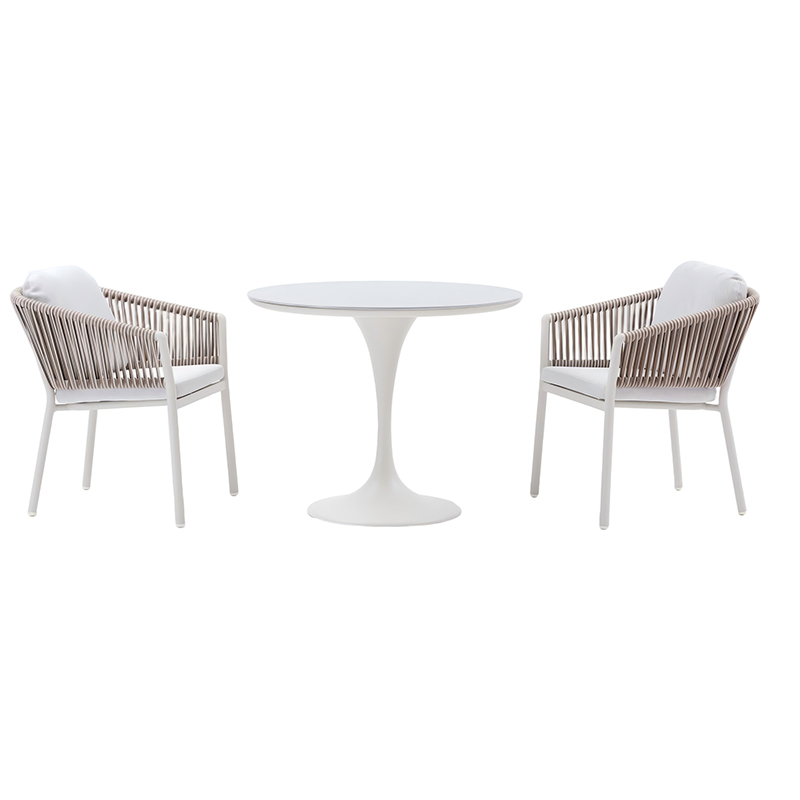
Evaluating Materials in Modern Dining Sets
Comparing materials based on UV resistance, thermal retention, moisture tolerance, and structural weight reveals which options withstand daily exposure. You cannot rely on aesthetics alone when the furniture lives outside. A sintered stone patio dining set stands out as a premium, high-durability option for serious outdoor spaces. Sintered stone is manufactured using extreme heat and pressure, creating a surface that offers exceptional resistance to scratches, UV fading, and thermal shock. It handles hot plates straight from the grill or freezing winter temperatures without cracking. Because it is non-porous, spilled wine or grease wipes away easily without leaving stains.
The weight factor of sintered stone is highly beneficial for wind resistance. Heavy tables stay put during storms, eliminating the need to drag furniture into the garage every time the wind picks up. However, this weight requires a permanent placement strategy. You need to know exactly where the table will live because moving a solid stone table is not a casual task. This permanence anchors the outdoor room, providing a solid foundation for the rest of the layout.
Metals offer varying benefits and drawbacks depending on their composition and treatment. Powder-coated aluminum provides excellent rust resistance, lightness, and ease of mobility. If you frequently rearrange your layout to accommodate different group sizes, aluminum chairs are easy to lift and stack. Steel offers superior structural rigidity and weight, making it feel incredibly solid. However, steel carries a critical need for high-quality, multi-stage powder coating. If the coating scratches and exposes raw steel to moisture, oxidation begins immediately, leading to rust stains on your deck.
Woods like teak possess a high natural oil content and tight grain that aids weathering. Over time, exposed teak forms a silvery-gray patina that many homeowners find attractive. However, keeping wood viable for daily use requires ongoing maintenance. If you want to maintain the original warm brown color, you must commit to regular cleaning, light sanding, and application of specific teak sealers. Untreated wood can also develop a rough surface over time, which might snag delicate clothing. Evaluating the environmental footprint of these materials highlights the benefits of choosing FSC-certified woods, infinitely recyclable aluminum, and sustainable sintered stone production.
Material Performance Comparison
Material
UV Resistance
Moisture Tolerance
Maintenance Level
Weight/Wind Resistance
Sintered Stone
Excellent
Excellent (Non-porous)
Very Low
High
Powder-Coated Aluminum
High
Excellent (Rust-proof)
Low
Low to Medium
Powder-Coated Steel
High
Moderate (Prone to rust if scratched)
Medium
High
Teak Wood
Moderate (Silvers over time)
High (Natural oils)
High (If retaining color)
Medium to High
When selecting materials, you must also consider thermal retention. Dark metals absorb and hold heat from the summer sun, making them uncomfortable or even dangerous to touch by mid-afternoon. Sintered stone and lighter-colored woods remain much cooler. If your patio lacks shade, material temperature becomes a major factor in whether you can actually use the space for a late lunch.
Sizing and Configuration: Matching the Patio Dining Furniture Set to the Space
Breaking down table shapes and seating capacities based on specific patio footprints ensures a functional layout. You cannot force a massive rectangular table into a square space without ruining the traffic flow. A small round patio dining set offers distinct geometric advantages for intimate spaces. Round tables lack sharp corners, providing superior traffic flow in tight square footage. You can navigate around a round table much easier than a square one, especially on a narrow balcony.
Bistro-style or 4-seater round sets facilitate better face-to-face conversation. Everyone faces the center, making it easier to hear and engage with all guests. This configuration maximizes limited balcony, deck, or small patio spaces while maintaining a high level of comfort. For larger families or those who frequently host, high-capacity configurations are necessary. Expandable tables with removable or butterfly leaves offer versatility, allowing you to keep the table small for daily family meals and expand it for weekend parties.
When dealing with expandable outdoor tables, you must verify the mechanics. The hardware on moving parts must be rust-proof, preferably marine-grade stainless steel. If the expansion mechanism uses cheap galvanized parts, it will seize after a few months of exposure to rain, rendering the expandable feature useless. The tracks must also be designed to shed water and debris, preventing leaves and dirt from jamming the gears.
Measure the total length and width of the usable patio space, ignoring areas needed for doors to swing open.
Subtract 72 inches from both the length and width to account for the mandatory 36-inch clearance on all sides.
The remaining dimensions represent the absolute maximum size for your table fully expanded.
Select a table shape that mirrors the shape of the remaining usable space (e.g., a long rectangular table for a long narrow deck).
Seating dynamics also play a massive role in how the space functions. Benches tuck completely under the table when not in use, saving significant space and keeping the patio looking tidy. They encourage communal dining and closeness, which works well for families with children. Conversely, flexible, movable individual chairs allow users to easily shift away from the table to form casual, post-meal conversation circles. A mixed approach—a bench on one side against a wall and individual chairs on the open side—often provides the best balance of space-saving and flexibility.
Ergonomics and Comfort in Modern Patio Table and Chairs
Connecting physical design elements to user comfort dictates prolonged use. If the chairs are uncomfortable, your guests will eat quickly and move back indoors. Optimal ergonomic measurements for seat depth, pitch, and back support ensure dining chairs can double as lounge seating after a meal. A seat depth of 18 to 20 inches accommodates most adults comfortably, while a slight backward pitch to the backrest encourages relaxation without making it difficult to reach the table.
Cushion technology and density are vital for outdoor comfort and hygiene. You have two main choices for foam: open-cell and closed-cell. Open-cell foam is highly porous; water runs straight through it. When paired with a mesh bottom, these cushions dry rapidly, preventing mold and mildew growth after a rainstorm. Closed-cell foam resists water absorption entirely, but it feels much stiffer and less comfortable for long periods. For daily use, high-density open-cell foam offers the best combination of comfort and weather resistance.
The fabric covering these cushions must withstand daily abuse. Solution-dyed acrylic fabrics offer excellent stain and UV resistance. Because the color is mixed into the liquid acrylic before the fibers are extruded, the color goes all the way through the thread, much like a carrot. Cheaper printed fabrics only have color on the surface, like a radish, and will fade quickly under the summer sun. Solution-dyed fabrics resist fading and can often be cleaned with a mild bleach solution to remove stubborn food stains.
Check the seat height: It should be roughly 18 inches from the ground to fit comfortably under a standard 30-inch high dining table.
Inspect the armrests: They should be low enough to slide under the table apron, allowing the chair to be pushed in fully.
Test the back support: The chair should provide lumbar support without forcing you into a rigid, upright posture.
Evaluate the cushion ties: Cushions must have strong ties or Velcro straps to prevent them from blowing away in high winds.
Heat retention realities impact daytime usability. As mentioned earlier, dark surfaces get hot. Designing the dining area to transition from day to night involves evaluating how modern patio table and chairs accommodate ambient lighting and shade. Built-in umbrella holes are essential for daytime shade and can route solar-powered string lights for the evening. The table surface should have enough space to accommodate floral centerpieces or protective lantern boxes that won't clutter the dining area or interfere with serving platters.
Implementation Risks: What Fails in Outdoor Dining Sets?
Identifying common points of failure helps mitigate risks before purchase. Outdoor furniture lives in a harsh environment, and cheap construction reveals itself quickly. Hardware corrosion and joint failure are the most frequent issues. Manufacturers often cut costs by using cheap galvanized screws and bolts. Within a year, these rust, bleeding orange stains onto the furniture frame and your patio floor. Marine-grade stainless steel hardware is a mandatory specification for longevity.
The idealized vision of outdoor entertaining often clashes with the practical reality of daily use. Weather exposure, constant cleaning, and spatial bottlenecks quickly turn a dream patio into a frustrating chore. A well-chosen patio dining setup instantly expands a home’s functional square footage, transforming an underutilized yard into an outdoor oasis. Purchasing outdoor furniture based solely on aesthetics leads to premature degradation, uncomfortable seating, and cramped layouts. Daily entertaining requires a shift from visual appeal to functional resilience, ease of movement, and long-term durability. To ensure a high return on investment, you must evaluate Dining Sets based on material science, spatial dynamics, seating configurations, environmental sustainability, and long-term maintenance requirements.
Material dictates lifespan: High-performance materials like sintered stone and powder-coated aluminum offer the best balance of durability and low maintenance for daily use.
Configuration drives utility: Expandable tables, flexible movable chairs, and modular seating (like benches mixed with chairs) accommodate fluctuating guest counts without permanently overcrowding the patio.
Space planning is non-negotiable: Functional daily entertaining requires strict adherence to clearance metrics (minimum 36 inches around the table) to ensure a safe, comfortable flow of traffic.
Ergonomics equal endurance: Deep seating, appropriate cushion density, heat-resistant surfaces, and ambient night-time compatibility determine whether a set is used for a quick meal or extended evening entertaining.
Sustainability matters: Selecting eco-friendly, recyclable, or responsibly sourced materials ensures the set is as good for the environment as it is for the home.
Defining Success Criteria for Daily Outdoor Entertaining
Establishing the baseline requirements for a patio setup that sees daily use versus occasional weekend gatherings dictates the entire purchasing strategy. Daily use demands a setup requiring minimal effort to maintain and prepare. There is an inverse relationship between complex materials, like untreated woods or intricate wickers, and the willingness to use the space daily. If you spend twenty minutes wiping down a table and picking debris out of woven chairs before every meal, you simply will not use the space. Practicality means the furniture is ready the moment you step outside.
Spatial constraints and traffic flow dictate the mathematical framework for outdoor dining spaces. The 36-inch rule is a hard metric in spatial planning. You need a minimum of 36 inches from the edge of the table to the nearest wall, railing, or drop-off. This clearance allows a person to push their chair back and stand up without hitting an obstruction. It also provides a narrow but passable walkway behind seated guests. For high-traffic areas where people are carrying trays of food, expanding that clearance to 48 inches prevents accidents and makes the space feel intentional rather than cramped.
Creating a seamless indoor-outdoor transition maximizes usable square footage year-round. When the outdoor dining area aligns visually and spatially with the interior dining room or kitchen, it naturally draws people outside. This requires matching the scale of the outdoor furniture to the adjacent indoor space. A massive, heavy table placed right outside a small sliding glass door creates a visual blockade. Instead, aligning the sightlines and ensuring the pathway from the kitchen counter to the outdoor table is unobstructed encourages daily outdoor meals.
Requirement Category
Occasional Weekend Use
Daily Entertaining Use
Maintenance Tolerance
High (Willing to clean/prep before events)
Low (Must be ready immediately)
Material Focus
Aesthetics and complex textures
Smooth, wipeable, weather-resistant surfaces
Spatial Clearance
Flexible (Guests can squeeze by)
Strict 36-inch minimum for safe daily flow
Ergonomics
Standard upright dining posture
Deep seating for prolonged lounging
Evaluating Materials in Modern Dining Sets
Comparing materials based on UV resistance, thermal retention, moisture tolerance, and structural weight reveals which options withstand daily exposure. A sintered stone patio dining set stands out as a premium, high-durability option. Sintered stone is manufactured using intense heat and pressure, mimicking the natural formation of stone but accelerating the process. This results in a surface with exceptional resistance to scratches, UV fading, and thermal shock. It handles hot plates straight from the grill or freezing winter temperatures without cracking. Because it is non-porous, spilled wine or grease wipes away without staining. The weight factor is highly beneficial for wind resistance, though it requires a permanent placement strategy since moving a heavy stone table daily is impractical.
Metals offer varying benefits depending on their composition and treatment. Powder-coated aluminum provides excellent rust resistance, lightness, and ease of mobility. When you need to rearrange layouts frequently, aluminum is the superior choice. Steel offers immense structural rigidity, making it ideal for heavy-use environments, but it carries a critical need for high-quality powder coating. If the coating on a steel frame scratches down to the bare metal, oxidation begins immediately, leading to rust stains on your patio pavers.
Woods like teak and acacia bring warmth to an outdoor space but require a realistic understanding of their lifecycle. Teak possesses a high natural oil content and dense grain that aids weathering, naturally repelling water and insects. Over time, untreated teak forms a silver patina. However, keeping wood viable and looking new for daily use requires ongoing maintenance. You must clean it with specialized wood cleaners and apply sealers or oils annually. Acacia is a more affordable hardwood but lacks the same level of natural oils as teak, making it more susceptible to warping and cracking if not rigorously maintained.
Check the underside of metal tables for uniform powder coating; missed spots indicate poor quality control.
Test the weight of the chairs; they should be heavy enough to resist wind but light enough to pull out with one hand.
Inspect stone or ceramic tops for edge banding; solid slabs are more durable than banded edges which can trap moisture and delaminate.
Verify the source of wood materials; look for FSC certification to ensure sustainable harvesting practices.
Sizing and Configuration: Matching the Patio Dining Furniture Set to the Space
Breaking down table shapes and seating capacities based on specific patio footprints ensures a functional layout. A small round patio dining set offers distinct geometric advantages for intimate spaces. Round tables lack sharp corners, providing superior traffic flow in tight square footage. When navigating a narrow balcony or a compact deck, eliminating corners prevents bruised hips and makes the space feel larger. Bistro-style or 4-seater round sets facilitate better face-to-face conversation. Everyone faces the center, creating an inclusive dynamic that rectangular tables often lack.
For high-capacity configurations, expandable tables with removable or butterfly leaves offer versatility. You can keep the table small for daily family meals and expand it when hosting larger groups. However, the mechanics of these tables in outdoor settings require scrutiny. You must verify that all moving parts, hinges, and tracks utilize rust-proof hardware, specifically marine-grade stainless steel or brass. If the expansion mechanism uses cheap galvanized steel, it will seize after a few months of exposure to rain, rendering the expandable feature useless.
Seating dynamics heavily influence how the space is used. Benches tuck completely under the table when not in use, saving significant space on narrow patios. They encourage communal dining and closeness, often allowing you to squeeze an extra person in when needed. Conversely, flexible, movable individual chairs allow users to easily shift away from the table to form casual, post-meal conversation circles. A hybrid approach—a bench on one side facing the view, with individual chairs on the opposite side—often provides the best balance of space-saving utility and individual comfort.
Ergonomics and Comfort in Modern Patio Table and Chairs
Connecting physical design elements to user comfort dictates prolonged use. Optimal ergonomic measurements ensure dining chairs can double as lounge seating after a meal. A seat depth of 18 to 20 inches accommodates most adults comfortably. The pitch, or the angle of the backrest, should recline slightly—around 10 to 15 degrees past vertical. Chairs with a rigid 90-degree back force a stiff posture, making guests want to leave the table immediately after eating. When evaluating modern patio table and chairs, prioritize designs that support the lumbar region and provide armrests at a natural resting height.
Cushion technology and density are vital for daily outdoor use. Open-cell foam, often called reticulated foam, drains water rapidly. If you leave the cushions out in the rain, water passes straight through, preventing mold and allowing them to dry quickly in the sun. Closed-cell foam resists water absorption entirely but can feel stiffer and less comfortable. The fabric covering the foam is equally important. Solution-dyed acrylic fabrics offer excellent stain and UV resistance. Because the color is mixed into the liquid polymer before the yarn is extruded, the fabric resists fading even under intense daily sun exposure.
Heat retention realities impact daytime usability. Dark metals or solid glass tables absorb and retain heat, becoming uncomfortably hot in direct summer sunlight. A dark aluminum chair left in the midday sun can cause burns. Light-colored materials, slatted designs that allow airflow, and materials like sintered stone or light woods remain cooler to the touch. Designing the dining area to transition from day to night involves evaluating how the table accommodates ambient lighting. Built-in umbrella holes can route solar-powered string lights or support a cantilever umbrella with integrated LEDs. Surface space should accommodate protective lantern boxes that provide light without cluttering the dining area or blowing over in the wind.
Implementation Risks: What Fails in Outdoor Dining Sets?
Identifying common points of failure helps mitigate risks before purchase. Hardware corrosion and joint failure are the most frequent issues in outdoor furniture. Manufacturers often cut costs by using cheap galvanized screws. Over time, moisture penetrates the zinc coating, causing the screw to rust, expand, and eventually split the wood or snap the metal joint. Marine-grade stainless steel hardware is a mandatory specification for longevity. When assembling the furniture, applying a small amount of anti-seize compound to the threads prevents them from locking up over time.
Wind resistance and weight considerations address the risk of lightweight furniture becoming projectiles in high winds. A sudden storm can lift a lightweight aluminum chair and throw it through a glass door. Mitigation tactics include using weighted bases for tables, selecting heavy materials like sintered stone or wrought iron for exposed areas, and strategic placement against structural windbreaks. If you live in a high-wind area and prefer lightweight furniture, you must choose stackable designs that can be quickly secured or moved indoors when a storm approaches.
Storage and off-season mitigation are necessary for extending the lifespan of your furniture, regardless of the material. Even the most durable materials degrade when left exposed to freezing rain and snow buildup. Custom-fit, breathable covers are essential. They must be breathable to allow trapped ground moisture to escape; otherwise, condensation builds up under the cover, creating a greenhouse effect that breeds mold and mildew on your cushions and wood surfaces. The stackability of chairs simplifies winter storage, allowing you to consolidate the set into a corner of the garage or shed, keeping the patio organized and protecting the furniture from severe weather.
Conclusion
Measure your patio space and map out a strict 36-inch clearance zone around the intended table location to ensure safe traffic flow.
Request physical material swatches from manufacturers and leave them in direct sunlight to test heat retention before committing to a dark-colored set.
Inspect the hardware specifications on any expandable tables or folding chairs, ensuring they use marine-grade stainless steel to prevent rust and seizing.
Purchase custom-fit, breathable covers simultaneously with your furniture to guarantee immediate protection from unexpected weather and off-season degradation.
FAQ
Q: What is the most durable material for outdoor dining sets?
A: Powder-coated aluminum, teak, and sintered stone are highly durable. Aluminum resists rust and is lightweight. Teak contains natural oils that repel water, though it requires maintenance. Sintered stone offers exceptional resistance to scratches, UV rays, and thermal shock.
Q: How much space is needed around a patio dining table?
A: You need a minimum of 36 to 48 inches of clearance around the table. This allows guests to push their chairs out comfortably and provides a safe walkway for serving and navigating the space without feeling cramped.
Q: Are sintered stone dining tables good for outdoors?
A: Yes, sintered stone is excellent for outdoors. The manufacturing process makes it virtually non-porous, rendering it impervious to weather, stains, scratches, and extreme heat or cold. It requires minimal maintenance and will not fade in direct sunlight.
Q: How do you secure lightweight modern patio table and chairs from wind?
A: Secure lightweight furniture by using weighted bases, placing them against structural windbreaks, choosing stackable designs for easy storage during storms, and utilizing heavy-duty, tie-down covers that anchor the pieces together.
Q: Can you leave a patio dining furniture set outside year-round?
A: While many sets are weather-resistant, few are completely weather-proof. Leaving them out year-round requires custom-fit, breathable covers to prevent mold, protect against UV degradation, and shield the materials from severe winter conditions.
Q: What is the advantage of a small round patio dining set?
A: A small round set maximizes spatial efficiency by eliminating sharp corners. It improves traffic flow in tight spaces, prevents accidental bumps, and provides better sightlines, encouraging intimate, face-to-face conversation among all guests.