- Home

When Is an Extendable Outdoor Dining Set Useful?
Views: 0 Author: Site Editor Publish Time: 2026-08-06 Origin: Site


Outdoor hosting forces a compromise between saving everyday patio space and seating large groups. A massive, static table eats up your deck year-round. It feels awkwardly empty during a quiet family dinner and blocks foot traffic to the grill. On the flip side, a small table leaves guests standing around with paper plates when you host a summer barbecue. Deciding if you need an extendable patio dining set comes down to your deck dimensions, how often you actually entertain, and the materials you choose. These mechanical tables solve the footprint problem. However, they introduce moving parts to an environment full of rain, dirt, and temperature swings. We need to look at your daily habits versus your event needs. This framework will help you figure out if the mechanical upkeep makes sense for your specific backyard layout.
Space vs. Frequency: Extendable tables offer high utility only if the ratio of everyday use to large-event hosting justifies the mechanical complexity.
Mechanism Reliability: The viability of an extension table dining set depends heavily on the weather resistance of its moving parts (tracks, hinges) against rust and debris.
The Hidden Footprint: Buyers must account for the storage, stacking, or nesting logistics of the additional chairs or benches required when the table is fully expanded.
Material Stability: Selecting materials with low expansion/contraction rates (like powder-coated aluminum or premium teak) is critical to prevent the extension joints from warping or jamming over time.
The Core Problem: Static vs. Flexible Patio Footprints
Optimizing an outdoor living space requires strict adherence to physical clearance rules. A successful patio layout maintains a minimum of 36 inches of dead space around the entire perimeter of the table. This clearance allows guests to slide chairs back and walk behind seated individuals without forcing others to lean forward. When evaluating a table, you must apply this 36-inch rule to the table's maximum extended length. If expanding the table pushes chairs against a railing, blocks the stairs, or encroaches on the grill zone, the extension feature loses its practical value.
Calculating the everyday versus event ratio provides clarity on furniture selection. You need to track how many days per year the patio hosts more than your immediate household. If a family of four eats outside three nights a week but hosts a party of ten only three times a summer, a static ten-person table wastes valuable square footage for the vast majority of the season. A flexible footprint reclaims that space for secondary zones. Keeping the table compact allows room for a fire pit, a reading lounger, or clear access to an outdoor kitchen.
To determine if an extension table dining set fits your lifestyle, follow this evaluation sequence:
Audit your daily household seating requirements to establish the baseline table size.
Review your hosting history over the past twelve months to identify your maximum guest count.
Measure the physical footprint difference between the retracted and extended table dimensions.
Assess your off-season storage capacity for the extra chairs you will need during large events.
Spatial bottlenecks become glaringly obvious when a table reaches its maximum extension. Mapping the deck limitations requires measuring the physical footprint of the pulled-out chairs at the table's ends. An extended table often encroaches on traffic paths leading to grilling stations or exterior doors. Identifying these bottlenecks before purchase prevents the frustrating scenario where a fully extended table traps guests in their seats or creates a fire hazard near the cooking area.
Solution Categories: Types of Extension Mechanisms in Dining Sets
Butterfly Leaf Systems (Self-Storing)
Butterfly leaf systems feature panels that fold in half via a central hinge and store directly beneath the primary table surface. When you pull the main table halves apart, the hidden leaf rotates upward and unfolds into place. This self-storing mechanism offers a seamless way to add seating without requiring you to transport heavy panels from a shed or garage.
The operational advantages center entirely on convenience. Eliminating external storage requirements makes impromptu hosting effortless. Transitions take seconds, and you do not need to worry about dropping or damaging a separate leaf during transit. Because the leaf remains attached to the table's internal frame, alignment is generally precise upon deployment. The internal hinges guide the panels exactly where they need to go, ensuring a flat dining surface.
Implementation risks exist due to the outdoor environment. The internal storage cavities and moving hinges are highly vulnerable to moisture buildup. If you do not rigorously cover the table, rainwater pools inside the storage compartment, leading to mildew or rust. Insects and spiders frequently build nests in the dark, protected cavity beneath the table. Regular inspection and cleaning of the internal framework are mandatory to keep the folding mechanism operational.
Removable Leaf Extensions
Removable leaf designs utilize physical, separate panels that insert into the center or ends of the table. You pull the primary table halves apart on sliding wooden or metal tracks, creating a gap where you manually place the independent leaf. Once inserted, heavy-duty latches secure the sections together to create a unified surface. Alignment relies on metal pins or wooden dowels that slot into corresponding holes on the table halves.
This design reduces mechanical complexity. With fewer moving parts and no internal folding hinges, the risk of mechanical failure or severe rust drops significantly. This makes the removable leaf style highly advantageous in harsh, wet climates. The track system is exposed and easy to clean, preventing the hidden debris accumulation common in self-storing models. You can easily wipe down the glides and apply lubricant without reaching into a cramped internal cavity.
The primary implementation risk involves storage logistics. The removable leaves require dedicated, climate-controlled indoor storage when not in use. Leaning a wooden leaf against a damp garage wall causes it to warp, rendering it impossible to insert into the table tracks later. You must also physically carry the panels, which get heavy depending on the material. Dropping a heavy teak or aluminum leaf during transport can dent the edges, ruining the seamless fit.
Drop-Leaf and Slide-Out Designs
Drop-leaf and slide-out models expand at the ends rather than the center. Drop-leaves rely on hinges that allow the ends of the table to fold down flat against the legs. When you need the space, you lift the leaf and prop it up with swinging brackets. Slide-out designs feature smaller panels nested under the main tabletop that pull outward from the ends, locking into place on cantilevered tracks.
These mechanisms work exceptionally well for narrow patios or balconies where center-extension is geometrically impossible. By keeping the central base static, you can quickly pop up one or both ends to accommodate an extra guest without shifting the entire table base across the deck. This prevents the table legs from scratching the decking material during the expansion process.
Structural stability presents the main limitation. The extended ends lack direct vertical leg support. They rely entirely on the cantilever strength of the hinges or slide tracks. This weight-bearing limitation makes the extended ends less suitable for heavy serving dishes, leaning guests, or resting elbows. Overloading a drop-leaf bends the support brackets permanently, causing the leaf to sag and creating an uneven dining surface.
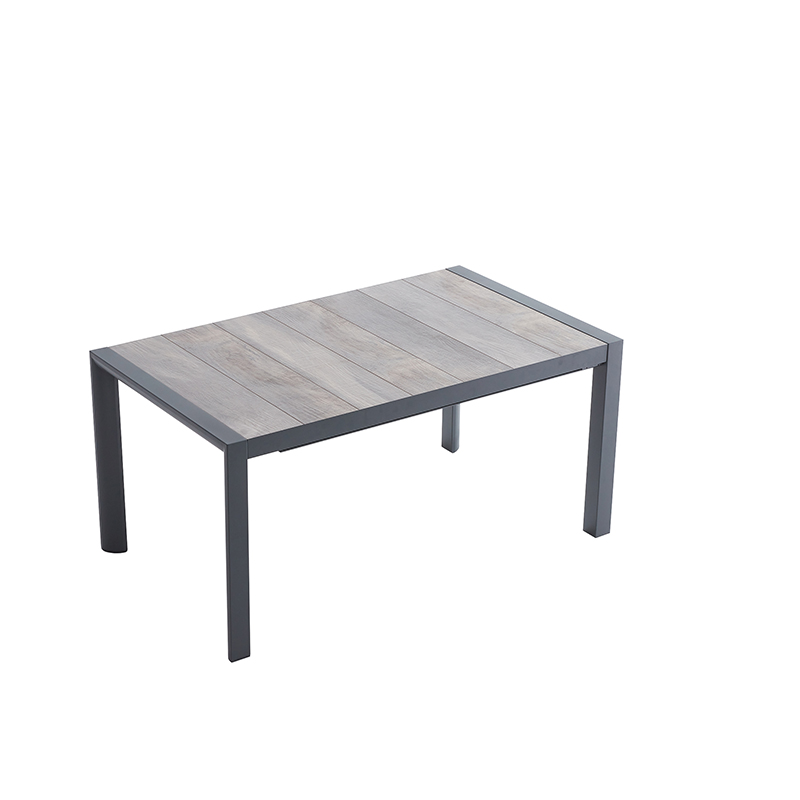
Evaluation Dimensions: Features to Outcomes
Material Durability and Track Reliability
The lifespan of an expansion table and chairs depends entirely on the construction of its sliding mechanism. The tracks bear the brunt of the physical stress and weather exposure. You must evaluate the track material before looking at the tabletop aesthetics.
Stainless Steel Tracks: Offer the highest resistance to rust and provide smooth gliding action. They require occasional dry lubrication but generally outlast the table frame.
Powder-Coated Aluminum Glides: Lightweight and rust-proof. However, they suffer from galling—a type of wear where metal friction causes the tracks to bind and stick together over time.
Wood-on-Wood Sliders: Common in traditional teak tables. They rely on precise craftsmanship but swell in humid environments, making the table nearly impossible to open during the rainy season.
Thermal expansion realities complicate outdoor furniture engineering. Extreme heat and freezing temperatures cause materials to expand and contract at different rates. Lower-grade timber or composite plastics warp under intense summer sun, causing the extension joints to seize. Selecting dimensionally stable materials, such as heavy-gauge powder-coated aluminum or kiln-dried premium teak, minimizes the risk of the tracks binding during seasonal temperature shifts.
Scalability of Seating Capacity
Realistic assessments of seating capacity require mapping exact dimensions to guest counts. Scaling a five-piece daily setup into an eleven-piece event setup demands precise calculations to avoid compromising elbow room. A standard dining chair requires roughly 24 inches of linear table space. When a table extends from 72 inches to 96 inches, it functionally adds exactly one chair per side. Miscalculating this ratio leads to overlapping place settings and uncomfortable dining experiences.
The extra chair dilemma is a critical logistical hurdle. When you retract the table for daily use, the surplus seating must go somewhere. Evaluating solutions for this surplus is just as important as selecting the table itself. Stackable chairs offer a minimal storage footprint in a shed. Folding chairs hang easily on wall racks. Extendable or nesting benches provide the most efficient patio space savings. You can tuck a nesting bench completely under the retracted table, keeping it out of the way until you expand the setup.
Ergonomics and Ease of Operation
Assessing the physical effort required to transition the table determines its practical utility. Single-user viability is a major selling point. You need to know if one person can operate the mechanism smoothly, or if track friction and leaf weight necessitate two people pulling from opposite ends. High-quality gear-driven tracks utilize a rack-and-pinion system. This allows a single user to pull one end of the table while the opposite end automatically opens in tandem.
Locking mechanisms play a vital role in operational safety and stability. Heavy-duty latches secure the table halves together, preventing the surface from drifting apart during use. Without robust locks, guests leaning against the table or high winds cause the seams to separate. This creates a pinching hazard and allows glassware to tip over into the expanding gap. Always inspect the tension and material of the locking clasps.
Maintenance and Weather Compliance
Preventative maintenance ensures the longevity of the extension tracks. Routine track cleaning and lubrication prevent jamming. You must apply dry silicone spray rather than oil-based lubricants. Oil attracts dirt, pollen, and dust, creating an abrasive paste that grinds down the metal tracks. Dry silicone provides a slippery surface without leaving a sticky residue that captures outdoor debris.
Covering protocols dictate the survival of a stretchable outdoor dining table. Custom-fit, breathable, waterproof covers are non-negotiable. The seams where the leaves meet allow water to penetrate the internal mechanisms. A high-quality cover protects these seams from rain, prevents UV degradation of the surface, and stops organic debris from clogging the track system. Built-in vents in the cover prevent condensation buildup that leads to mold on wooden frames.
Trade-Offs and Overall Value Influencing Factors
Cost vs. Utility
Analyzing the upfront cost difference reveals a noticeable premium for mechanical flexibility. An extendable table inherently costs more than a static table of the exact same maximum dimensions. You are paying for the engineering, the track hardware, the internal hinges, and the additional structural supports required to keep the extended ends stable. You must evaluate if the mechanical convenience justifies the higher initial expenditure based on your actual hosting frequency.
The return on investment calculation weighs this financial premium against tangible daily benefits. The primary return is reclaimed daily patio real estate. By keeping the table small for 90 percent of the year, you gain usable square footage for daily living. Additionally, flexible seating capabilities eliminate the need to rent auxiliary tables and chairs for large gatherings. Avoiding rental fees and delivery charges offsets the initial premium over several hosting seasons.
Aesthetic and Structural Compromises
Mechanical tables require accepting certain visual compromises. Visible seams are unavoidable. The break in the tabletop design where the leaves meet interrupts continuous wood grain patterns and breaks the sleek lines of modern metal designs. While precision engineering minimizes the gap, the seam remains a permanent visual element on your patio.
Mismatched weathering presents a significant aesthetic risk for tables with removable leaves. If the primary table remains outdoors exposed to UV rays and rain, it fades and develops a patina. If you store the removable leaves indoors in the dark, they retain their original factory color. When you insert the leaves months later, the stark color contrast between the weathered table and the pristine leaves creates a disjointed, checkerboard appearance.
Implementation Risks and Mitigation Strategies
Risk Factor
Mechanical Root Cause
Field Mitigation Strategy
Track Jamming
Airborne dust, pollen, and tree sap mix with moisture to create an abrasive paste inside the metal glides.
Clean tracks bi-annually with a stiff nylon brush and compressed air. Apply a dry silicone spray. Never use oil-based lubricants.
Inadequate Clearance
Expanding the table pushes seated guests too close to railings, fire pits, or stairs, creating a cramped environment.
Calculate the fully extended length of the table and add 72 inches (36 inches per side) to ensure comfortable guest mobility.
Uneven Patina
Storing removable teak leaves indoors while the main table weathers outside results in a multi-colored tabletop.
Leave the table fully extended with the leaves inserted during the first three to six months of sun exposure to weather uniformly.
Internal Frame Rot
Rainwater seeps through the center seams of a butterfly leaf table and pools inside the storage cavity.
Deploy a custom-fit, breathable waterproof cover whenever the table is not in active use to block moisture penetration.
Conclusion
To finalize your patio layout and ensure your new furniture functions correctly, execute these immediate next steps:
Measure your deck from the intended table center outward, adding 36 inches to the maximum extended length to verify you have adequate clearance for traffic flow.
Audit your garage or shed space to confirm you have the physical room to store removable leaves and surplus chairs during the off-season.
Inspect the track hardware specifications before buying to ensure you are getting stainless steel or heavy-gauge aluminum components rather than cheap plastic glides.
Order a custom-fit, breathable waterproof cover simultaneously with your Dining Sets to protect the mechanical seams from moisture and debris from day one.
FAQ
Q: Are extendable outdoor dining tables durable in winter weather?
A: Durability depends on the frame and track materials. Powder-coated aluminum and stainless steel hardware handle freezing temperatures well if kept dry. However, water trapped inside butterfly leaf hinges expands when frozen, potentially cracking the internal frame. You must use a breathable, waterproof cover during winter to keep ice out of the mechanical joints.
Q: How do you store the extra chairs for an extension table dining set?
A: Surplus chairs require strategic planning. Stackable chairs are the most efficient, easily stored in a corner of a garage or shed. Folding chairs hang on heavy-duty wall hooks. Alternatively, nesting benches slide completely underneath the retracted table, requiring zero off-site storage while keeping the patio footprint clear.
Q: What is the most reliable material for a stretchable outdoor dining table?
A: Powder-coated aluminum paired with stainless steel track hardware offers the highest reliability. Aluminum resists rust and thermal warping, ensuring the table halves remain aligned. Premium kiln-dried teak is also highly reliable, provided you maintain the wood-on-wood or metal glides, as teak naturally resists moisture and insect damage.
Q: Do butterfly leaf tables allow water to leak through the center seams?
A: Yes, the seams where the table halves meet are not watertight. Rainwater seeps through the gap and into the internal cavity where the folded leaf is stored. This makes using a high-quality, custom-fit outdoor cover essential to prevent water from pooling inside the mechanism and causing mildew or rust.
Q: How much clearance is required around an extendable patio dining set?
A: You need a minimum of 36 inches of clearance around the entire perimeter of the table when it is fully extended. This distance allows guests to push their chairs back comfortably and permits others to walk behind seated individuals without disrupting the meal or creating a bottleneck.
Q: Can one person operate an expansion table and chairs alone?
A: High-quality models feature gear-driven or synchronized track systems that allow a single person to pull one end, causing the opposite end to open simultaneously. However, lower-tier models or heavy wooden tables experience track friction, requiring two people to pull evenly from opposite ends to prevent the glides from binding.
Q: How do you prevent the extension tracks from rusting or jamming?
A: Prevent jamming by cleaning the tracks twice a year with a stiff brush to remove pollen and dirt. Lubricate the metal glides exclusively with a dry silicone spray. Never use oil-based lubricants like WD-40, as they attract dust and create an abrasive paste that degrades the track mechanism over time.