- Home

Patio Dining Chair Features for Restaurant Terraces
Views: 0 Author: Site Editor Publish Time: 2026-08-16 Origin: Site


Restaurant terraces represent critical revenue-generating square footage. Seating downtime directly impacts profitability. Diners actively seek well-ventilated spaces, prioritizing environments that support health-conscious dining. Managing commercial outdoor seating introduces severe friction points. Rapid weather degradation destroys weak frames. Guest discomfort leads to shorter dwell times and lower check averages. Heavy, non-stackable furniture places massive operational strain on staff during daily setups and breakdowns. Moving beyond residential aesthetics is mandatory for commercial success. Selecting the right Outdoor Chair requires a strict evaluation of structural integrity, material science, operational scalability, and rapid sanitization capabilities. You must prioritize equipment built specifically for the rigorous demands of hospitality environments.
Material dictates lifespan: Commercial environments require rust-proof, UV-stabilized materials; residential-grade materials fail rapidly under high-volume restaurant use.
Operational efficiency is non-negotiable: Features like stackability, lightweight frames, and self-leveling glides reduce daily labor costs and prevent staff injury.
Ergonomics drive revenue: Breathable materials, supportive backrests, and armrests increase guest comfort, directly correlating with longer dwell times and higher average check sizes.
Defining Success Criteria for Commercial Terrace Seating
Commercial terrace seating operates under entirely different parameters than residential patio furniture. A standard backyard chair might see use twice a week. A restaurant chair experiences ten or more distinct turns every single day. Guests drag them across concrete. Staff stack them hastily late at night. This sheer volume of use demands reinforced joints, heavy-duty hardware, and scratch-resistant finishes. Failing to account for this turnover rate results in broken furniture and potential liability issues within the first season.
Local climate dictates your baseline material requirements. You must assess your specific micro-environment before selecting frames. Coastal properties deal with corrosive salt air that aggressively attacks exposed steel. High-altitude or sun-drenched locations face extreme UV indexes that bleach and weaken cheap plastics. Frequent rain requires materials that drain instantly to minimize seating delays. High-wind environments, like rooftop bars, demand heavier frames to prevent furniture from blowing across the deck.
To properly evaluate a site before procurement, operators should follow a strict assessment protocol:
Measure the exact square footage of the usable terrace space, deducting mandatory fire lanes and server pathways.
Identify the primary flooring material to determine the necessary glide type for the chair legs.
Calculate the average daily UV exposure hours to establish the required UV resistance rating for slings or resins.
Review historical local weather data for average wind speeds to determine minimum frame weight requirements.
Assess the available overnight storage capacity to dictate stackability needs.
Restaurant operators constantly balance space optimization against guest comfort. Narrower chairs allow you to maximize cover counts and push more volume during peak hours. Cramped seating frustrates diners. Wider seats and armrests require larger table footprints but significantly increase guest comfort. This comfort translates directly into longer stays, additional dessert orders, and higher beverage sales. You must calculate the mathematical trade-off between packing the patio and providing an elevated dining experience.
Brand cohesion matters. The terrace serves as the highly visible exterior face of your restaurant. The seating must bridge your interior design with the outdoor space. Whether your aesthetic is industrial, modern minimalist, or coastal, the furniture must maintain a unified brand identity. Disjointed patio furniture signals a drop in quality to passing foot traffic.
Hygiene remains a top priority for diners. You must factor in the ease of rapid sanitization. Staff need surfaces they can wipe down with hospital-grade disinfectants in seconds between seatings. Complex weaves or deep crevices trap food particles and bacteria, slowing down table turns and compromising the clean environment your guests expect.
Core Material Profiles: Balancing Durability and Maintenance
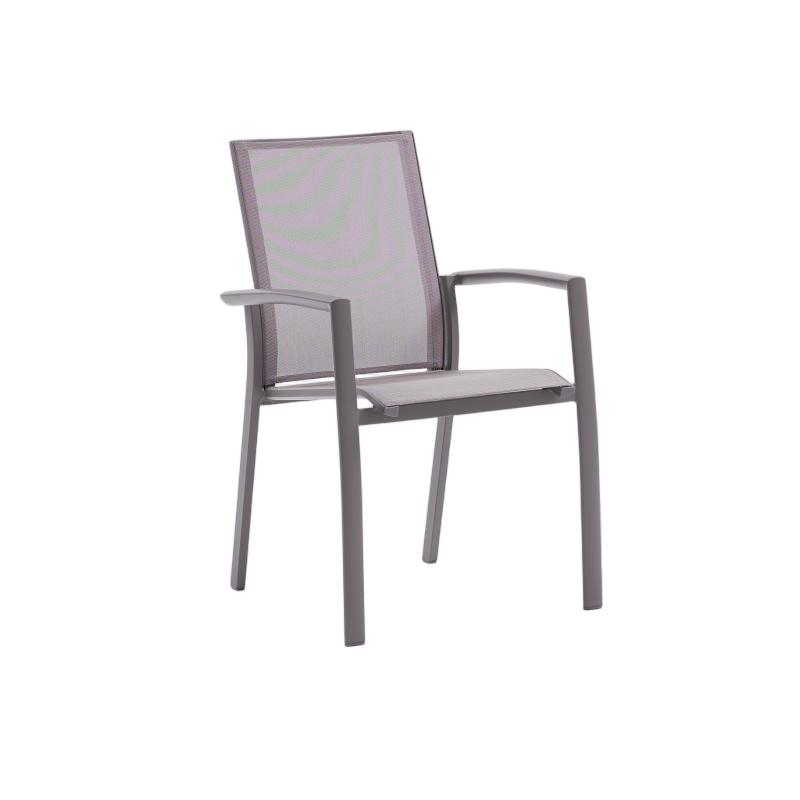
The Aluminum Patio Dining Chair Frame
Aluminum dominates the commercial hospitality market for a reason. It offers an exceptional strength-to-weight ratio. Extruded aluminum provides lightweight, highly durable frames perfect for daily movement. Commercial-grade extrusions typically feature a 1.5mm to 2.0mm wall thickness, providing the necessary rigidity to withstand constant guest weight shifting. Cast aluminum allows manufacturers to create intricate, high-end design profiles without sacrificing structural integrity. Both manufacturing methods yield frames capable of supporting heavy static loads while remaining light enough for a single server to carry.
Corrosion resistance is the primary advantage. Aluminum does not rust. When treated with a commercial-grade powder coating, an aluminum patio dining chair becomes virtually impervious to humidity and salt air. The powder-coating process involves sandblasting the raw frame, electrostatically applying dry powder paint, and curing it in a high-temperature oven. This bakes the color directly onto the metal, creating a thick barrier that resists chipping, scratching, and fading. This makes it the industry standard for coastal resorts and humid climates.
Lightweight aluminum carries an implementation risk in specific environments. High-wind areas expose light frames to movement. A sudden gust can easily blow standard aluminum chairs across a terrace, causing damage or injury. In these specific micro-climates, operators must utilize weighted bases, select heavier frame designs, or enforce strict overnight storage protocols.
Textilene Patio Dining Chair Slings and Breathable Fabrics
Thermal regulation is a primary concern for unshaded summer terraces. Solid metal or dark resin seats absorb and retain massive amounts of heat. Guests wearing shorts will physically burn themselves on hot metal. Textilene, a PVC-coated polyester mesh, prevents this heat retention. The woven structure allows air to circulate continuously beneath the diner, keeping the seat cool even in direct afternoon sunlight. Commercial-grade mesh typically utilizes a tight 2x2 or 4x4 weave pattern to maximize tensile strength while maintaining breathability.
Maintenance workflows improve drastically with mesh seating. A textilene patio dining chair features a porous surface. Rainwater passes straight through the material rather than pooling on the seat. Staff can wipe the chair completely dry in seconds, allowing you to seat guests immediately after a summer storm. The synthetic fibers resist mold, mildew, and the harsh chemical sanitizers required in food service environments.
Sling seating simplifies long-term maintenance logistics. When a solid chair breaks, you throw away the entire unit. When a mesh sling eventually stretches or tears, you simply order a replacement insert. Maintenance staff can swap the fabric in minutes, retaining the original aluminum frame. This modular approach significantly reduces long-term replacement frequency.
Evaluating Alternative Materials: Resin, Teak, and Steel
Commercial-grade polypropylene and resin offer viable solutions for high-turnover operations. Modern resin is often reinforced with glass fibers, allowing for contoured, ergonomic shapes that mimic more expensive materials. They are completely waterproof and easy to pressure wash. Operators must acknowledge the risk of UV fading. Even UV-stabilized resin will eventually chalk and lose its color saturation after years of direct sun exposure.
Teak and commercial hardwoods provide a premium, high-aesthetic appearance. They fit perfectly into upscale or coastal dining concepts. The trade-off is severe maintenance. Wood requires regular sanding, brightening, and oiling to prevent splintering and graying. If your maintenance team lacks the bandwidth for this seasonal upkeep, wood frames will quickly degrade and look neglected.
Galvanized steel and cast iron solve the wind problem. These heavy materials stay planted during severe weather, making them ideal for rooftop bars or exposed waterfronts. Industrial Tolix-style steel designs offer massive weight capacities. The counterweight is the severe risk of rust. If a guest scratches the protective galvanized coating, moisture will penetrate the steel, causing rust that can stain expensive terrace flooring and ruin guests' clothing.
Material
Durability
Maintenance Level
Best Application
Powder-Coated Aluminum
High
Low
Coastal, humid, high-turnover patios
Textilene Mesh
High
Low
Unshaded summer terraces
Glass-Fiber Resin
Medium
Low
Casual dining, poolside decks
Teak Wood
High
High
Premium, high-end aesthetics
Galvanized Steel
High
Medium
High-wind rooftops, industrial themes
Ergonomics and the Guest Experience
The Role of the Modern Patio Armchair
Support and accessibility directly influence how guests perceive your restaurant. Armrests assist guests in sitting down and standing up safely. This feature proves especially important for elderly patrons or those with mobility impairments. A chair that is difficult to get out of creates a negative final impression of the meal. Armrests provide the necessary leverage for a graceful exit from the table. Standard commercial armrests sit at a height of 25 to 26 inches, allowing them to clear the underside of a standard 30-inch dining table.
Perceived value is a psychological driver of revenue. A modern patio armchair visually elevates the dining experience. It looks substantial, comfortable, and intentional. This elevated aesthetic supports higher menu price points. Guests are willing to pay more for a steak when sitting in a structured, supportive armchair compared to a basic backless stool or a rigid wire chair.
You must account for footprint considerations. Armchairs require wider table spacing. They do not tuck completely under standard tables, meaning they intrude further into the walkway. You must measure your terrace carefully to prevent congestion. Servers need a minimum 36-inch clear path to carry trays safely. You must maintain strict ADA compliance for wheelchair accessibility between tables, ensuring no guest feels trapped in their seat.
Seat Pitch, Contouring, and Dwell Time
Anatomical support dictates how long a guest will sit. Multi-course meals require seating that prevents dining fatigue. A slight rearward seat pitch shifts the guest's weight off their thighs and into the backrest. Lumbar contouring supports the lower spine. A waterfall front edge prevents the frame from pinching the back of the guest's knees, maintaining proper blood flow. Flat, rigid seats cause guests to shift constantly, eventually prompting them to skip dessert and ask for the check.
Operators frequently face the cushion dilemma. Fabric cushions look luxurious and feel soft initially. Operationally, they are a nightmare. Cushions soak up rain, requiring staff to run outside and collect them at the first sign of a storm. They absorb spilled wine and food grease, demanding constant laundering. Specifying ergonomically contoured bare materials or integrated mesh slings provides the necessary comfort without the massive labor overhead of cushion management.
Operational Scalability and Terrace Management
Stackability and Storage Footprints
End-of-day workflows consume significant labor hours. When the shift ends, staff must clear the patio for cleaning, sanitization, and overnight security. Chairs that do not stack require massive amounts of floor space for storage. Stackable designs allow staff to consolidate seating quickly. Stacking chairs 4-to-8 high clears the deck for pressure washing and secures the furniture against theft or wind overnight. Utilizing custom storage carts allows a single employee to move stacks of eight chairs effortlessly.
Friction prevention extends the life of your inventory. When staff stack chairs rapidly, metal grinds against metal. This friction chips powder coating and gouges frames. You must check for integrated stacking bumpers. These small nylon or rubber guards sit beneath the seat or along the legs. They create a soft barrier between frames, preventing scratching and degradation during daily movement.
Weight, Mobility, and Staff Ergonomics
Front-of-house staff walk miles every shift. Adding the physical toll of moving heavy furniture leads to fatigue, back injuries, and workers' compensation claims. OSHA guidelines emphasize reducing repetitive heavy lifting. Establishing an ideal weight range is critical for staff safety. A highly mobile outdoor patio dining chair should weigh between 8 and 15 pounds. This range provides enough heft to feel stable to the guest while remaining light enough for a server to carry two at a time during closing procedures.
Leg Architecture and Uneven Surfaces
The wobble factor destroys the dining experience. Uneven cobblestone, brick patios, or sloped concrete terraces cause tables and chairs to rock. A wobbly chair makes guests feel insecure. It causes spilled drinks, ruined clothing, and comped meals. You must match the leg architecture to your specific flooring.
Compare base types against your terrain. Four-leg designs require relatively flat surfaces to remain stable. Sled bases feature two continuous metal loops instead of four individual legs. Sled bases prevent the chair from sinking into soft surfaces like grass or gravel. A sled base will rock violently on uneven brick or natural stone.
Hardware solutions fix uneven floors. Never rely on folded cardboard to level a chair. Recommend adjustable, non-marring nylon glides for 4-leg chairs. Self-leveling glides feature an internal hydraulic or spring mechanism that automatically adjusts to the floor's pitch. These glides ensure immediate stability and protect expensive terrace flooring from rust stains or deep scratches caused by bare metal legs.
Risk Mitigation and Compliance
Commercial Warranties and Compliance
Warranty traps catch inexperienced buyers constantly. Purchasing residential furniture for a commercial space immediately voids the manufacturer's warranty. You must verify that the warranty explicitly covers commercial use. Read the fine print carefully. Many warranties contain exclusion clauses for UV degradation or coastal proximity. If your restaurant sits on the beach, a standard warranty might not cover salt corrosion.
Weight capacity standards protect your guests and your business. Residential chairs often max out at 200 pounds. Commercial seating must accommodate all guests safely to mitigate liability. Emphasize the necessity of a 300 to 330+ pound static weight rating. Look for BIFMA certification where applicable. This certification proves the frame has undergone rigorous structural testing, including back-pull tests and drop tests, ensuring it survives commercial environments.
Maintenance Workflows and Hidden Costs
Cleaning protocols dictate how much time your staff spends maintaining the patio. Break down the daily and weekly requirements before purchasing. Resin requires weekly pressure washing to remove embedded dirt. Aluminum needs only a quick wipe down with mild soap and water. Teak demands scheduled sanding and chemical sealing. Match the material to the actual bandwidth of your maintenance team. A chair that requires an hour of maintenance per week drains operational resources rapidly.
Conclusion
Selecting the optimal outdoor seating requires a calculated balance of climate-appropriate materials, guest ergonomics, brand aesthetics, and daily operational efficiency. You cannot afford to treat terrace furniture as an afterthought. Follow these actionable steps to secure your patio revenue:
Audit your local micro-climate to determine if you need salt-resistant aluminum, wind-resistant steel, or heat-resistant mesh.
Measure your terrace square footage to calculate the exact trade-off between narrow side chairs and wider, comfortable armchairs.
Physically test the stackability and weight of the frames to ensure your staff can manage daily setups without risking injury.
Verify all commercial warranties and demand a minimum 300-pound static weight rating to protect your guests and limit liability.
FAQ
Q: Can I use residential patio chairs for my restaurant terrace?
A: No. Residential chairs lack the structural reinforcement required for high-volume commercial use. They typically feature lower weight capacities and lack commercial warranties. Using them in a restaurant increases liability risks and guarantees frequent, costly replacements.
Q: How do I stop patio chairs from wobbling on uneven brick?
A: Install self-leveling glides on the bottom of the chair legs. These glides use an internal spring mechanism to automatically adjust to the uneven pitch of cobblestone or brick, ensuring a stable seat without manual adjustments.
Q: What is the best chair material for a very windy rooftop bar?
A: Galvanized steel or heavy cast iron are the best options for high-wind environments. Their sheer weight prevents them from blowing across the deck. If using aluminum, you must specify heavily weighted bases or strict stacking protocols.
Q: Why do my dark resin chairs look faded after one season?
A: Dark resin absorbs massive amounts of UV radiation. Without high-grade UV stabilizers, the sun breaks down the plastic polymers, causing the color to chalk and fade. Always specify UV-resistant commercial resin for unshaded areas.
Q: Are fabric cushions a good idea for outdoor restaurant seating?
A: Operationally, cushions are highly inefficient. They absorb rainwater, trap food stains, and require constant laundering. Ergonomically contoured bare frames or breathable mesh slings provide excellent comfort without the massive maintenance overhead.
Q: How heavy should a commercial outdoor dining chair be?
A: The ideal weight ranges between 8 and 15 pounds. This provides enough structural heft to feel secure to the guest while remaining light enough for staff to stack and move safely during daily closing procedures.