- Home

Are There Reclining Camp Chairs with Footrests?
Views: 0 Author: Site Editor Publish Time: 2026-04-16 Origin: Site


Standard camp chairs often leave you feeling cramped. They frequently cause lower body fatigue after just an hour. Conversely, traditional zero-gravity recliners provide excellent comfort. However, they are usually too heavy or bulky for typical camping transport. You might wonder if a functional middle ground exists.
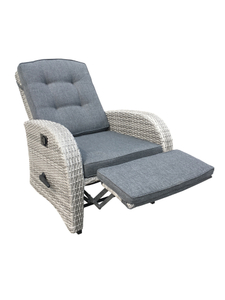
Reclining camp chairs featuring footrests do exist. They successfully bridge the gap between upright portable chairs and heavy patio loungers. These hybrid designs offer leg elevation without the massive footprint of a backyard zero-gravity lounger.
We will introduce a clear evaluation framework below. You will learn how to determine if this specific design justifies the added weight, cost, and mechanical complexity. We will examine whether flagship models, like the Bromo Lounge Recliner With Footrest, make sense for outdoor or hybrid office use. Keep reading to discover how these chairs can transform your lounging experience.
Key Takeaways
Design Reality: Reclining camp chairs with footrests utilize modular (detachable) or continuous-fabric designs to support full leg extension, typically offering 110° to 135° recline angles.
The Durability Standard: High-quality models require 600D Oxford fabric and heavy-duty steel frames to safely support standard 250–330 lb weight capacities without hinge failure.
Primary Trade-off: The addition of a footrest and reclining mechanism increases overall chair weight (averaging 8.5–10 lbs) and introduces potential folding resistance over time.
Top Contender: The Bromo Lounge Recliner With Footrest balances ergonomic support with functional portability, serving as a benchmark for this hybrid category.
The Mechanics of Reclining Camp Chairs (Solution Categories)
Upright 90-degree chairs present a significant ergonomic problem. They restrict blood flow in the legs during extended sitting. The rigid front edge presses against your thighs. This compression causes numbness and prompts a desperate need for elevated leg support. Manufacturers solve this by engineering specialized leg-rest mechanisms. These solutions generally fall into two distinct categories.
Category 1: Detachable Footrest Models
These models utilize straps, zippers, or locking pins. They connect an independent leg rest directly to the main frame. You can attach or remove the component based on your immediate needs.
Advantage: High versatility stands out as the primary benefit. You can detach the front section entirely. This allows you to use it as a standard chair in tight spaces.
Best Use Case: Crowded campsites, crowded stadium events, or compact office environments.
Category 2: Integrated Zero-Gravity Designs
These chairs feature a unified, continuous frame. Leaning back automatically elevates your legs in a single, synchronized motion. Bungee cords often suspend the fabric to create a floating sensation.
Advantage: You get a significantly smoother transition between sitting and reclining. The weight distribution feels flawless.
Disadvantage: They are significantly heavier and bulkier when folded. Transporting them requires substantial trunk space.
Common Mistake: Many buyers purchase integrated zero-gravity designs for tent camping. They quickly realize the folded chair takes up half their car trunk. Always measure your cargo space before choosing between detachable and integrated models.
Core Evaluation Dimensions for Footrest Camp Chairs
Evaluating an outdoor recliner requires looking past aesthetic appeal. You must scrutinize structural integrity, recline functionality, and material lifespan. These factors determine your total cost of ownership (TCO).
Weight Capacity & Structural Integrity
You must evaluate the independent load-bearing capacity of the footrest versus the main seat. The main seat should aim for a 300+ lb capacity. However, the extended footrest typically holds only 40–50 lbs. It exists solely to support human legs.
Frame geometry matters immensely. Look for X-cross structural steel frames. Avoid parallel aluminum tubes. X-cross steel distributes weight evenly across multiple contact points. This prevents the frame from buckling under sudden movements.
Recline Angles (Features-to-Outcomes)
The recline angle dictates how you use the chair. Not all angles serve the same purpose.
110° positioning: This angle keeps you slightly upright. It remains ideal for socializing around a fire, reading a book, or eating dinner.
135° positioning: This deeper angle is required for spinal decompression. You need this specific tilt for napping or taking office lunch breaks comfortably.
Material Durability (TCO Drivers)
Fabric quality directly impacts longevity. Industry standards demand 600D Oxford cloth. This material resists punctures from keys or rough clothing. Furthermore, a PVC weather-resistant coating reduces the need for frequent replacement. It protects the fabric against rapid UV degradation and sudden rainstorms.
Material Specification Chart
Component
Baseline Standard
Premium Standard
Impact on Performance
Fabric Density
300D Polyester
600D Oxford Cloth
Prevents sagging; resists tearing under heavy loads.
Frame Material
Tubular Aluminum
X-Cross Steel
Increases overall weight capacity from 225 lbs to 330+ lbs.
Weather Treatment
Basic Water Resistance
PVC Coating
Blocks UV degradation and prevents mold in damp storage.
Spotlight Analysis: Bromo Lounge Recliner With Footrest
We must look at concrete examples to understand this product category. Assessing how the Bromo Lounge Recliner With Footrest stacks up against industry benchmarks reveals crucial insights regarding comfort and reliability.
Performance Overview
This model serves as a prime example of the modular category. It balances rugged outdoor capability alongside refined indoor comfort. The design prioritizes user flexibility over rigid structure. You can easily switch between an upright social posture and a fully extended lounging position.
Ergonomic Features
The evaluation of its adjustable backrest mechanism shows high reliability. The transition smoothness prevents jerky movements. It features a padded headrest designed for cervical support. This headrest aligns your neck naturally when you shift into the 135° recline position. Your spine remains neutral, reducing lower back tension significantly.
Storage & Value-Add Capabilities
Modern outdoor gear must multitask. The Bromo Lounge Recliner With Footrest excels here. An analysis of its integrated utility features shows immense practical value. These elements eliminate the need to carry secondary tables or standalone coolers.
Side Pockets: Deep enough to secure smartphones, tablets, and sunscreen bottles safely.
Oversized Cup Holders: Specifically designed to accommodate modern 40oz insulated tumblers.
Built-in Cooler Bags: Insulated compartments keep two to three canned beverages cold for hours.
Assembly & Portability
Reviewing the "no-assembly" quick-fold design proves impressive. You simply pull the opposing corners outward. The chair locks into place instantly. Packing it away involves an equally simple compression motion. The practicality of its included carry bag ensures you can sling it over your shoulder effortlessly.
Implementation Risks and Hidden Trade-Offs
Every piece of outdoor gear has compromises. Reclining camp chairs carry specific mechanical vulnerabilities. You must understand these hidden trade-offs before making a purchase.
Mechanical Hinge Degradation
The Risk: Exposure to outdoor elements causes multi-stage reclining joints to stiffen. Sand, fine dirt, and morning moisture easily penetrate the exposed locking pins. Over time, rust and grit accumulate.
The Reality: Users often report difficulty folding the chair back into its bag after heavy field use. The hinges bind up. You must perform occasional joint lubrication. A quick spray of dry silicone lubricant every season prevents this frustrating issue.
Portability vs. Footprint
These chairs are completely unsuitable for ultralight backpacking. They weigh around 8–10+ lbs on average. Their heavy-duty steel frames prioritize static strength over mobility. They are strictly designed for car camping, tailgating, beach trips, or stationary patio use. Carrying them farther than a few hundred yards becomes physically exhausting.
Space Requirements
Fully reclined at 135° with the footrest attached, the chair requires significantly more square footage. An upright chair might use a 2x2 foot area. A fully extended recliner easily demands a 5x2 foot footprint. This expansion can become a serious issue in crowded campsites. It also makes them difficult to deploy inside small two-person tents during rainstorms.
Best Practice: Always set up your reclining chair on the outer perimeter of your camp circle. This prevents family members from tripping over the extended footrest in the dark.
Shortlisting Logic: Which Chair Fits Your Use Case?
Selecting the right model depends entirely on your primary environment. We categorize shoppers into three distinct profiles. Use this logic to match features to your personal needs.
For the Car Camper / RVer
You drive directly to your campsite. Space constraints exist, but carrying weight matters little. You should prioritize heavy-duty frames boasting a 330 lb capacity. Look for X-cross steel construction. Integrated cooler bags are essential for keeping drinks handy by the fire. Weight is merely a secondary concern for your lifestyle.
For the Office / Patio User
You plan to use the chair for indoor lunch breaks or backyard sunbathing. Dirt and sand are non-issues. You should prioritize ergonomic padding above all else. Seek out models guaranteeing 135° lock-in stability. Easy-clean fabric matters deeply here, as coffee spills or sunscreen smudges will occur frequently.
For the Hybrid User
You need one chair to do everything. You attend weekend soccer games, go on summer camping trips, and occasionally nap on the porch. A modular design is absolutely optimal for you. Models like the Bromo Lounge Recliner With Footrest allow the front section to be removed entirely. You can detach it when space feels tight. You can also reattach it when you finally have room to stretch out.
User Persona Comparison Chart
User Profile
Primary Need
Must-Have Feature
Recommended Style
Car Camper
Durability & Utility
Cooler Bag & Cup Holder
Heavy-duty fixed or detachable
Office / Patio
Ergonomic Comfort
135° Recline & Padding
Smooth Zero-Gravity design
Hybrid User
Maximum Versatility
Removable Footrest
Modular Zip/Clip design
Conclusion
Final Verdict: Reclining camp chairs featuring footrests represent a legitimate, highly functional upgrade for static outdoor lounging. They dramatically reduce lower body fatigue. They provide exceptional comfort for reading, napping, or socializing. However, you must accept the increased weight and larger packing volume they require.
Next-Step Action: Grab a tape measure today. Measure your vehicle's trunk or your home storage space. Verify the chair's folded dimensions against your available cargo room. Furthermore, always confirm the specific connection mechanism of the footrest. Decide if you prefer a quick zipper or a sturdy tension clip before finalizing your purchase.
FAQ
Q: Can you comfortably sleep in a reclining camp chair with a footrest?
A: Yes. Models reaching a 135-degree recline combined with tensioned 600D fabric provide excellent support. Padded headrests cradle your neck naturally. This ergonomic alignment easily supports short periods of sleep or afternoon napping without causing back pain.
Q: Is the footrest on the Bromo Lounge Recliner With Footrest removable?
A: Yes, it is fully removable. You detail the specific detachment mechanism by simply loosening the tension straps or unzipping the connecting fabric. This quick modular feature allows you to convert it back into a traditional upright chair instantly.
Q: What is the weight limit for the footrest attachment?
A: The main chair typically supports up to 300+ lbs. However, the extended footrest only supports the weight of human legs. This generally equals roughly 40-50 lbs. You must never use the extended footrest as a standalone seat.
Q: Are these chairs difficult to fold back up?
A: They do require slightly more effort than a standard umbrella camp chair. Multi-joint recliners require you to align the locking mechanisms properly before folding. Sand or dirt can occasionally stiffen the hinges, so keeping them clean ensures a smoother folding process.
Table of Content list