- Home

Do You Need A Recliner After Rotator Cuff Surgery?
Views: 0 Author: Site Editor Publish Time: 2026-04-17 Origin: Site


Sleep disruption remains the number one complaint following rotator cuff repair. Patients often anticipate daytime soreness but are entirely blindsided by agonizing nights. You might naturally assume a specialized recovery chair is an absolute medical requirement. However, orthopedic surgeons do not technically require a recliner. They instead mandate "therapeutic positioning." This means you must maintain a specific upper-body elevation to protect the fragile, healing joint. We want to objectively evaluate your sleep setup options to ensure a safe, comfortable healing process.
This article will help you determine the best path forward. We will evaluate whether purchasing or renting a recovery chair is the most cost-effective and medically sound solution. We will also explore if cheaper alternatives can suffice for your recovery. You will discover the biomechanics of post-op sleep and learn exactly how to evaluate different furniture setups. Ultimately, you will gain practical strategies to achieve pain-free nights.
Key Takeaways
Sleeping flat post-surgery pulls the healing shoulder capsule, causing severe pain; an elevation of 30 to 45 degrees is medically recommended.
Recliners act as a physical barrier to prevent "active sleepers" from rolling onto their surgical side during the night.
Sinking into a plush, overly soft chair is a trap; patients need firm support to stand up using only one functional arm.
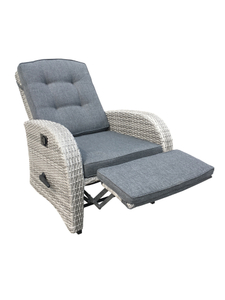
While medical adjustable beds offer the highest independence, a structured seat like the Bromo Lounge Recliner With Footrest offers a highly viable, lower-TCO (Total Cost of Ownership) alternative for the 4-to-6-week recovery window.
The Biomechanics of Post-Op Sleep: Why Flat Beds Fail
The Gravity Problem
Lying flat on a standard mattress creates an immediate biomechanical crisis for a repaired shoulder. Gravity pulls the heavy arm downward and backward. This posterior shift forces the humerus bone to drop away from the socket. It aggressively stretches the newly repaired tendons. The surrounding joint capsule becomes highly inflamed. Patients who attempt flat sleep typically wake up within an hour experiencing intense, throbbing pain. The tension placed on the surgical anchors simply becomes unbearable.
Maximally Loose Packed Position (MLPP)
Orthopedic specialists rely on a clinical standard known as the Maximally Loose Packed Position (MLPP). This position minimizes internal joint tension. It also optimizes localized blood flow to accelerate tissue healing. To achieve MLPP for the shoulder, you must rest your upper body at a strict 30 to 45-degree angle. This moderate elevation neutralizes the pull of gravity. The shoulder joint rests in a neutral, decompressed state. Swelling decreases significantly when the torso remains elevated above the heart.
The "Active Sleeper" Risk
Unconscious movement poses a massive threat to surgical outcomes. Standard flat beds offer absolutely no physical boundaries. They make it dangerously easy for "active sleepers" to roll onto their surgical shoulder. A sudden roll can tear delicate sutures or severely damage the rotator cuff repair. You cannot control your reflexes while deep in sleep. A structured chair inherently solves this problem. It securely isolates the torso. Thick armrests act as physical bumpers. They prevent involuntary rolling and keep your body safely anchored.
Evaluating Your Sleep Setup Options (ROI & Trade-offs)
You have multiple options for achieving therapeutic positioning. Each path carries specific benefits and distinct drawbacks. Let us objectively compare these setups.
Setup Option
Upfront Cost
Positioning Success
Major Drawback
Standard Pillow Stacks
Zero
Low
Constant shifting and rapid compression
Wedge Pillows
Low ($40 - $100)
Moderate
Lack of lateral support; body slides downward
Recliner Chair
Medium ($300 - $800)
High
Risk of choosing improper firmness or manual levers
Medical Adjustable Bed
High ($1,000 - $3,000+)
Very High
Expensive Total Cost of Ownership; requires floor space
Standard Pillow Stacks
Many patients initially attempt to build a mountain of standard bed pillows. The primary advantage here is the zero-dollar cost. However, this method suffers from an exceptionally high failure rate. Standard pillows consist of soft materials. They quickly compress under your body weight. They shift constantly throughout the night. This requires endless readjustment. Your sleep becomes heavily fragmented. Ultimately, pillow stacks fail to maintain the necessary 30-to-45-degree angle consistently.
Wedge Pillows
Wedge pillows present a low-cost upgrade. They provide a predictable, rigid angle for your torso. They certainly outperform standard pillow stacks. However, they completely lack lateral support. Patients frequently complain about sliding down the wedge while asleep. This sliding ruins the elevation angle. Furthermore, your arms are left dangling off the sides. A heavy, unsupported surgical arm will drag on the shoulder capsule and trigger intense pain.
Medical Adjustable Bed Frames / Rental Hospital Beds
Adjustable beds deliver excellent therapeutic positioning. They make getting out of bed remarkably easy. You simply press a button to raise the headboard. Unfortunately, they carry a very high Total Cost of Ownership (TCO). Purchasing an adjustable frame easily costs between $1,000 and $3,000. Renting a hospital bed involves expensive monthly fees. Furthermore, these beds consume significant floor space. They also disrupt your bedroom aesthetics long after your recovery ends.
The Recliner (The Industry Standard)
Chairs remain the industry standard for rotator cuff recovery. They boast a tremendously high success rate during weeks one through four. Sturdy armrests provide necessary elbow support. They also serve as physical barriers against rolling. You stay securely locked in an upright posture. The main disadvantage involves selecting the wrong type of chair. A chair featuring handles on your surgical side becomes useless. A chair offering too much plushness becomes a trap you cannot escape.
What to Look for in a Recovery Recliner (Evaluation Criteria)
Mechanism Placement & Operation
Operating your furniture should not require Herculean effort. A manual lever located on your surgical side is entirely useless. You cannot reach across your body to pull a heavy handle. You must evaluate chairs based on smart mechanics. Look for motorized functions operated via a remote control. Alternatively, prioritize push-back mechanics requiring only core strength. If you choose a manual lever, ensure it sits firmly on your non-surgical side.
Firmness over Plushness
Patients often mistakenly buy the softest chair available. Sinking deeply into plush cushions feels great initially. However, plushness is a massive trap for post-op patients. You must rely entirely on your core muscles and one good arm to stand up. If your hips sink far below your knees, standing becomes physically impossible without assistance. A highly structured, firm chair is absolutely mandatory for maintaining your independence.
Leg Elevation and Anti-Slip
You must elevate your legs to prevent your body from sliding downward overnight. Gravity constantly pulls your hips toward the floor. Discussing the necessity of a footrest is vital here. Using the Bromo Lounge Recliner With Footrest as an architectural example, we can see how essential this feature is. It provides independent leg elevation. This leg support, combined with a stable backrest angle, physically anchors your pelvis. It prevents your lower spine from dangerously compressing over an eight-hour sleep cycle.
Armrest Height & Width
Your surgical arm will spend weeks strapped inside a bulky abduction sling. Standard, narrow armrests simply cannot accommodate this extra width. The armrests must be exceptionally wide. They need to fully support the weight of the sling. If your elbow hangs over the edge, the shoulder joint will stretch painfully. Always measure the armrest width before committing to a recovery chair.
Implementation: How to Set Up a Pain-Free Recliner Sleep Station
Strategic Pillow Placement
Even inside a highly structured chair, you must make micro-adjustments. Correct pillow placement bridges the gap between basic comfort and medical-grade relief. Your surgical arm needs localized support to distribute its heavy weight.
Place a small, flat pillow securely between your surgical arm and your chest wall.
Tuck a tightly rolled hand towel directly under your surgical elbow.
Add a U-shaped travel neck pillow to prevent your head from slumping sideways.
These minor additions prevent nerve compression and keep your joint in perfect alignment.
The Sling Stays On
Patients frequently beg their surgeons for permission to remove the sling at night. You must resist this urge. Keeping the sling on is a medical non-negotiable. The immobilization sling must be worn continuously throughout the night. It prevents dangerous reflex movements. If you dream of catching a falling object, your arm will involuntarily shoot forward. The sling acts as an essential emergency brake, protecting your fragile surgical anchors from sudden tears.
Non-Surgical Side Staging
You must effectively map out your "recovery cockpit." Reaching across your body is strictly forbidden during early recovery. You must place every essential item strictly on your non-surgical side. Utilize a small side table. Stage your water bottles, television remotes, and pain medications here. Purchase an extended 10-foot phone charging cable. Tape the cable to the table edge. This prevents the cord from dropping to the floor, where you cannot safely reach it.
Ice Machine Integration
Continuous cold therapy drastically reduces joint inflammation. Most patients use a motorized ice machine during the first two weeks. You must account for routing the heavy plastic water tubes safely. Run the tubes up the side of the chair opposite the footrest lever. Secure them loosely so they do not tangle in the chair's mechanical linkages. Proper tube management prevents accidental snags when you elevate or lower your legs.
Transitioning Back to Flat Sleep: Timelines and Next Steps
Your recovery journey involves distinct phases. Understanding this timeline helps manage your expectations and reduces nighttime anxiety.
Recovery Phase
Timeframe
Sleep Posture Goal
The Critical Window
Weeks 1 – 3
Strict 30-45 degree elevation
The Step-Down Phase
Weeks 4 – 6
Gradual lowering (15-30 degrees)
The Flat Transition
Weeks 7+
Standard flat bed with supportive pillows
Weeks 1–3 (The Critical Window)
The first three weeks dictate the success of your tendon repair. You must maintain strict adherence to the 30-45 degree angle in your chair. Sleep hygiene during this phase relies heavily on strict pain management protocols. Take your prescribed medications exactly on schedule. Do not skip a dose to "tough it out." Furthermore, staying isolated from a restless bed partner is crucial. Sleeping alone prevents accidental bumps in the dark.
Weeks 4–6 (The Step-Down Phase)
As your shoulder capsule stabilizes, you enter the step-down phase. You can begin gradually lowering the degree of your recline. Pay close attention to your body. If lowering the backrest causes a throbbing sensation, return to a steeper angle immediately. Around week five, many patients begin transitioning back to their standard bed. Use a wedge pillow to maintain a slight elevation until your surgeon clears you for fully flat sleep.
When to Consult Your Surgeon
Transitioning sleep setups can occasionally reveal underlying complications. You must watch for specific red flags. Pay attention to sudden spikes in morning pain. Monitor your hand for any persistent numbness or tingling in the fingers. If your shoulder feels unusually hot to the touch, you may have an infection. Never hesitate to call your orthopedic clinic if these symptoms arise during your transition back to a flat mattress.
Conclusion
We can summarize the ideal decision framework clearly. A recovery chair is not strictly classified as a medical device. However, it is the most pragmatic, reliable tool available for achieving the mandatory 30-45 degree sleep angle. Sinking into a flat mattress simply invites severe complications and sleepless nights.
You must prioritize structured firmness and accessibility over cloud-like plushness. Utilizing a sturdy chair equipped with a built-in footrest will yield a significantly better recovery ROI than attempting to survive on pillows alone. Take control of your sleep environment early. Establish your recovery cockpit, commit to wearing your sling nightly, and trust the biomechanical benefits of therapeutic elevation.
Actionable Next Steps
Test your current living room furniture for firmness; ensure you can stand up using only one arm and your core.
Acquire a highly structured recovery chair well before your scheduled surgery date.
Purchase supplementary items like an extended charging cable and small positioning towels.
Set up a dedicated side table strictly on your non-surgical side.
FAQ
Q: Do I have to sleep in my sling if I’m in a recliner?
A: Yes, you must wear your sling every night. The sling immobilizes the shoulder and prevents dangerous reflex movements. If you dream or shift suddenly, the sling acts as a physical brake. This vital protection prevents you from accidentally tearing the newly repaired rotator cuff tendons.
Q: How long will I need to sleep elevated after rotator cuff surgery?
A: Patients typically sleep elevated for 4 to 6 weeks. The exact timeframe depends heavily on the severity of your tendon tear and your specific surgeon's protocol. Always wait for your doctor's official clearance before attempting to sleep entirely flat.
Q: Can I just sleep on the couch?
A: Couches are generally poor options for surgical recovery. They typically lack bilateral arm support to keep your torso securely centered. Furthermore, couch cushions often sink too deeply. This soft depth makes executing a safe, one-handed exit extremely difficult and potentially dangerous.
Q: Is it safe to sleep on my non-surgical side?
A: Side sleeping is highly discouraged during the first few weeks. Gravity will violently pull your elevated surgical shoulder forward, straining the repair. Surgeons usually permit non-surgical side sleeping much later in the recovery phase, provided you firmly support the surgical arm with a large body pillow.
Table of Content list