- Home

What Is A Camelback Sofa in Interior Design?
Views: 0 Author: Site Editor Publish Time: 2026-04-14 Origin: Site


Modern interiors often suffer from a rigid, box-like aesthetic. Straight lines and sharp right angles dominate our living spaces. Buyers naturally look to soften these harsh room boundaries. They frequently turn to classic furniture silhouettes for relief. The camelback sofa serves as an excellent solution. We define this traditional piece by its continuous tight back. It peaks in the center to form a distinct hump. This arch then slopes down elegantly into rolled arms. However, bringing this piece into your home requires careful thought. Buying a camelback involves specific ergonomic trade-offs. You must plan for spatial requirements and long-term maintenance costs. This guide breaks down how to evaluate these factors. We will help you decide if this silhouette fits your space. We will also explore modern, scalable alternatives like the Arbor Sofa Set.
Key Takeaways
Visual Function: Camelback sofas act as "room islands," breaking up rigid, modern lines and optimizing foot traffic in tight spaces due to their tapered design.
Ergonomic Realities: The high, arched back provides a formal, upright seating posture, but may lack lower lumbar support compared to modern lounge sofas.
Total Cost of Ownership (TCO): Reupholstering the continuous curves of a camelback requires highly skilled labor, making them a long-term investment rather than a quick aesthetic fix.
Modern Alternatives: For buyers prioritizing easier maintenance and transitional styling, contemporary collections (such as an Arbor Sofa Set) often provide a more scalable solution.
Defining the Camelback: Core Features for Buyer Identification
Identifying a true camelback sofa requires a sharp eye for specific details. You need to recognize the mandatory features immediately. The signature silhouette relies heavily on its arched back. It must have a distinct central peak. Designers refer to this as a single-hump. Some variations feature two distinct peaks. We call this a double-hump design. You will also notice exposed wood legs on almost every traditional model. Finally, the true camelback lacks loose back cushions. These sofas use a tight-back construction exclusively.
We must briefly anchor its credibility in design history. We trace its origins to the 18th-century cabinetmaker Thomas Chippendale. He popularized this elegant, flowing shape in formal English drawing-rooms. He established it as a benchmark for high-society seating. Decades later, mid-century modern architects embraced the shape. Frank Lloyd Wright created striking adaptations in the mid-20th century. He stripped away the heavy ornamentation. He proved the silhouette could function as timeless functional art. This history elevates the piece beyond mere furniture.
Buyers must learn how to evaluate the severity of the arch. The height and sweep of the hump completely change the room dynamics. A subtle arch fits perfectly into transitional rooms. It provides a gentle visual lift without overwhelming the surrounding decor. Conversely, a prominent, sweeping arch demands attention. It acts as a bold architectural statement. You should reserve highly prominent humps for formal, traditional settings. They require high ceilings and grand architectural moldings to look proportional.
Common Myths and Ergonomic Realities
Many consumers misunderstand classic furniture profiles. We need to clear up some widespread curved back confusion. Not every curved sofa qualifies as a camelback. People frequently misidentify the Cabriole sofa. The Cabriole features a continuous, unbroken curve along its back. It wraps smoothly around to the arms. It lacks a defined central peak entirely. You must spot the distinct hump to confirm a camelback.
We also need to discuss the real comfort trade-off. Many buyers assume high backs automatically guarantee good support. This assumption often leads to post-purchase disappointment. The tight back construction dictates an upright, formal posture. It essentially forces you to sit straight. It does not offer a relaxed, deep-lounging experience. You sit on this sofa, rather than sinking into it. Furthermore, the straight vertical drop offers very little lower lumbar support. You might need additional throw pillows for extended seating.
Another major reality involves the slipcover problem. Buyers often hope to protect their investment using cheap covers. We must warn you against this approach. The undulating crest makes off-the-shelf slipcovers nearly impossible to fit. Fabric simply cannot conform to the severe peaks and valleys. The covers will bunch up and cause awkward wrinkling. This design dictates higher ongoing maintenance. You must commit to professional upholstery services or expensive custom-tailored slipcovers.
Space Planning, Capacity, and Aesthetic ROI
Camelbacks excel in challenging floor plans when used correctly. We call this the "room island" strategy. Boxy sofas block visual pathways when placed in the middle of a room. The camelback offers a clever workaround. Its tapered ends allow it to sit cleanly in the center of a space. It visually drops away at the corners. This shape facilitates much better traffic flow in smaller rooms. People can navigate around it smoothly.
You can easily correlate finishes to your desired room aesthetics. The right upholstery completely changes the mood of the frame. Changing the fabric and the legs alters its entire identity.
Upholstery & Finish Choice
Base & Leg Style
Resulting Room Aesthetic
Rich, dark leather upholstery
Exposed dark mahogany legs
Creates a "clubby," masculine, and traditional environment.
Textured linen or cotton fabric
Skirted base covering the legs
Leans heavily into a "homey," cottage, or farmhouse feel.
Bold floral or geometric prints
Exposed rounded bun feet
Drives a modern eclectic or vintage-boho juxtaposition.
Sizing and capacity standards also play a crucial role. You need to know standard physical footprints to make good floor plan decisions. A standard three-seater model usually runs about 96 inches long. This size dominates small living rooms and requires significant wall space. Meanwhile, a two-seater settee runs roughly 85 inches long. The settee provides a much better fit for apartments or cozy reading nooks. Always map out these dimensions on your floor before purchasing.
Camelback vs. Alternative Sofa Profiles (Selection Framework)
Selecting the right sofa requires a comparative framework. Let us evaluate the camelback against other popular profiles. First, we look at the Cabriole sofa. Choose the Cabriole if you want a softer, continuous visual line. Its romantic, sweeping back fits well in French Country designs. Choose the Camelback instead for a distinct, formal focal point. The sharp central peak creates a stronger architectural statement.
Next, we must compare it against the Chesterfield sofa. Both options carry immense classic appeal. However, they serve different visual purposes. The Chesterfield offers uniform back-and-arm height. It uses heavy button tufting throughout its interior. This creates massive visual weight and a grounded, heavy presence. The camelback prioritizes elegant vertical lift. It draws the eye upward toward the ceiling.
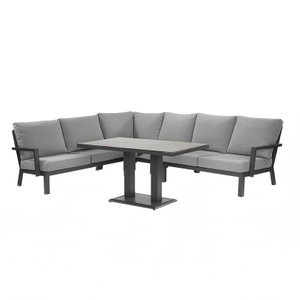
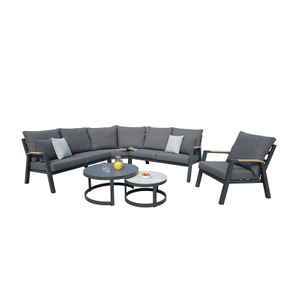
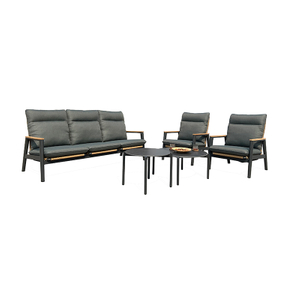
What happens if traditional frames fail your lifestyle test? You might discover the tight-back ergonomics do not work for your family. The high reupholstery costs might exceed your long-term budget. In these cases, you need a modern pivot. We highly recommend evaluating an Arbor Sofa Set as a strategic alternative. Modern sets provide comparable structural elegance. However, they utilize modular or loose-cushion designs.
Sofa Style
Primary Structural Feature
Best Fit For...
Camelback
Tight-back with a central peak
Formal rooms needing vertical visual lift.
Cabriole
Continuous, unbroken curve
Spaces needing soft, romantic boundaries.
Chesterfield
Uniform height with heavy tufting
Libraries or studies needing heavy visual weight.
Arbor Sofa Set
Modular framing with loose cushions
High-traffic daily lounging and scalable setups.
These loose cushions lower your Total Cost of Ownership significantly. You can simply unzip and wash the covers. You can easily replace degraded foam inserts. These features better accommodate daily, high-traffic lounging. You get aesthetic appeal without sacrificing modern convenience.
The Buyer’s Checklist: Evaluating New vs. Vintage Frames
You need a systematic approach to buying a camelback. Follow this checklist to avoid expensive logistical and financial mistakes. Clearance and delivery constraints often ruin installation day. Buyers frequently miss a critical logistical error. You must measure doorway clearance for the highest peak of the hump. Do not just measure the arm height. The hump needs adequate clearance through every tight hallway and stairwell turn. A 40-inch peak will not clear a standard 36-inch angled doorway easily.
When sourcing vintage pieces, you must conduct a thorough frame integrity assessment. Old frames hide numerous structural failures. Perform these specific checks:
Check for cracked rails: Inspect the primary wooden support beams underneath the sofa. Look closely for hairline fractures or splitting wood near the joints.
Test loose corner blocks: Push firmly on the frame from the sides. The sofa should not wobble or shift. Loose blocks mean the wood glue has failed.
Evaluate spring suspension: Sit heavily on different sections. Listen for uniform, silent spring performance. Squeaks indicate failing internal metal ties.
Finally, perform lifecycle costing to determine your reupholstery ROI. Provide yourself a realistic framework for the cost of ownership. The signature curves complicate the entire upholstery process. Fabric matching generates significantly more waste. This happens especially frequently with patterned fabrics. The upholsterer must perfectly center the pattern on the peak. The labor hours required for a tight-back camelback remain exceptionally high. Reupholstering this piece costs much more than fixing standard box-cushion sofas.
Conclusion
We can summarize the shortlisting logic quite easily. Choose a camelback sofa if your space needs a strong architectural focal point. It works beautifully when you prioritize formal, upright seating. It breaks up boxy, modern rooms effectively.
Take these specific next-step actions before finalizing your purchase:
Measure your primary traffic pathways and doorways for peak clearance.
Request fabric swatches matching your intended aesthetic, choosing between clubby leather or homey linen.
Determine if you want a prominent hump for drama or a subtle hump for transition.
Compare the long-term maintenance costs against transitional options before you buy.
Evaluate modular solutions for heavy family use if the camelback feels too restrictive.
FAQ
Q: Can a camelback sofa work in a minimalist, modern room?
A: Yes, it works incredibly well through the principle of juxtaposition. Use a frame featuring a very subtle hump. Choose solid, neutral upholstery without heavy textures. Pair it alongside bold contemporary accessories. This breaks up straight lines beautifully without ruining the minimalist aesthetic.
Q: Why is reupholstering a camelback sofa more expensive?
A: Reupholstery costs more due to the highly skilled labor required. Craftsmen must tightly stretch fabric over the undulating crest perfectly. Furthermore, aligning patterns over these complex curves generates significantly higher fabric waste than covering standard straight-lined sofas.
Q: Are camelback sofas suitable for everyday family use?
A: They offer incredible durability thanks to their solid tight-back structure. However, they provide formal upright support rather than deep, sink-in comfort. This ergonomic reality makes them far less suitable for casual family movie rooms or relaxed daily lounging.
Table of Content list