- Home

What Are The Disadvantages of Rattan Furniture?
Views: 0 Author: Site Editor Publish Time: 2026-04-24 Origin: Site


Rattan undeniably dominates today's bohemian, coastal, and mid-century modern design trends across social media platforms. Its organic texture brings instant warmth and visual interest to any room. However, a stark reality check often catches enthusiastic buyers completely off guard. Natural rattan requires strictly controlled indoor environments, meticulous maintenance routines, and exceptionally careful handling to survive daily use. Far too often, consumers place delicate natural pieces outdoors, leading to rapid decay and significant financial loss. We aim to provide a transparent, skeptical-friendly breakdown of rattan’s practical limitations. You will learn how to calculate true Total Cost of Ownership (TCO) and navigate environmental restrictions effectively. By understanding these inherent material flaws, you can avoid costly mismatched purchases and confidently select the right furniture for your living spaces.
Key Takeaways
Weather Vulnerability: Natural rattan is highly susceptible to mold in humidity and cracking under direct UV exposure; it is strictly an indoor or covered-patio material.
Maintenance Overhead: The woven crevices act as dust and spill traps, requiring specialized vacuuming and brushing rather than simple wipe-downs.
Comfort and Structural Limits: Without high-quality upholstery, natural rattan is rigid, offers limited load-bearing capacity (often maxing around 100kg/220lbs per seat), and is prone to pet damage.
The Synthetic Solution: High-Density Polyethylene (HDPE) rattan over powder-coated aluminum frames effectively neutralizes most natural rattan disadvantages for outdoor applications.
1. Structural and Environmental Limitations
Natural rattan possesses inherent physical vulnerabilities. These material realities drive up replacement costs over time.
Extreme Weather Susceptibility
Moisture & Mold: Natural rattan acts just like a sponge. It absorbs ambient moisture from the air. Exposure to rain causes immediate swelling. Even high-humidity indoor environments, such as bathrooms or unventilated sunrooms, invite mold spores. The natural cane eventually succumbs to structural rot. You cannot reverse this biological degradation once it begins.
UV Degradation: Direct sunlight poses an equally severe threat. The sun dries out the natural cane rapidly. The material loses its natural oils, bleaches out, and becomes exceptionally brittle. Under normal body weight, these dried-out strands will eventually snap.
Fragility and Weight Constraints
Load-Bearing Limits: Unlike solid wood or steel frames, natural rattan flexes. It has a distinct breaking point. Manufacturers often warn users about a strict load-bearing limit. A standard natural rattan seat maxes out around 100kg (220lbs). Sudden physical impact easily snaps the inner core. You must never drop heavily into a rattan chair.
Vulnerability to Pets: Pet owners face a constant battle. The highly textured weave naturally attracts cats. They use the furniture as an expensive scratching post. Dogs frequently chew on the protruding woven ends. Pets can quickly unravel intricate, hand-woven pieces in a matter of days.
The "Dust Trap" Maintenance Reality
Woven furniture guarantees one frustrating reality. The tiny gaps inevitably accumulate dust, food crumbs, and pet dander. You cannot easily wipe away this debris.
You cannot clean natural rattan using harsh chemical sprays.
You must never use heavy water pressure or steam cleaners.
You need meticulous maintenance routines, including soft brush vacuum attachments.
You must apply boiled linseed oil periodically to prevent over-drying.
Common Mistake: Many buyers try to scrub rattan crevices using wet, soapy cloths. This forces moisture deeper into the porous core, triggering hidden mold growth.
2. Hidden Comfort and Health Considerations
Beyond physical durability, buyers often overlook ergonomic realities. Natural materials also carry surprising biological drawbacks.
Rigidity Without Upholstery
Bare rattan offers minimal ergonomic give. Sitting on an unpadded woven chair for extended periods feels stiff and uncomfortable. The textured surface leaves temporary imprints on bare skin.
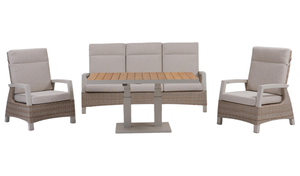
When evaluating a primary seating investment like a Rattan-woven Backrest Sofa Set, you cannot rely on the weave alone. High-density foam cushions become mandatory. You also need performance fabrics, such as Sunbrella, to ensure longevity. Adding these premium soft furnishings significantly increases your initial purchase cost. Buyers must factor this upholstery requirement into their total budget from day one.
Allergenic Potential
Because natural rattan remains porous and incredibly difficult to deep-clean, it harbors microscopic allergens. Dust mites thrive in the dark, inaccessible woven crevices. Pollen settles deep within the fibers. Microscopic mold spores multiply during humid seasons.
This poses a hidden risk for households managing severe allergies or asthma. You cannot sanitize natural rattan the way you can wipe down a leather sofa or wash a fabric slipcover. Highly sensitive individuals often report increased sneezing or respiratory irritation when bringing vintage rattan pieces into their homes.
3. Aesthetic Limitations and "Trend Fatigue"
Rattan enjoys massive popularity online. However, it carries distinct design risks. Over-styling remains a serious danger.
The "Pinterest Fail" Overcrowding Risk
Rattan features a highly dominant, visually noisy texture. Placing too much rattan in one single space quickly feels chaotic. A room filled entirely with woven furniture looks overly rustic or visually dated. It easily becomes a "Pinterest fail."
Designers recommend strategic balancing. Rattan requires visual contrast. You must mix it alongside smooth metals, sleek polished woods, or plush upholstery. It serves best as a proper accent piece rather than a room's foundational material.
Inflexibility in Redecorating
Natural rattan proves notoriously difficult to alter later. Painting or staining natural rattan often destroys its organic appeal. Paint rarely adheres well to the flexible cane. It leads to constant, unsightly flaking over time. Heavy sealants reduce the material's breathability, which accelerates internal rot.
This inflexibility locks the buyer into one specific color palette. If your design tastes evolve from a rustic coastal look to a sleek modern aesthetic, you will likely need to replace the furniture entirely.
4. Natural vs. Synthetic (PE) Rattan: The Commercial Fix
Manufacturers recognized these inherent drawbacks. They engineered a highly effective solution. However, this solution introduces its own unique trade-offs.
Understanding Synthetic (Resin/PE) Rattan
Modern factories construct synthetic rattan using advanced polymer lines. The industry refers to this as techno rattan or poly rattan. Artisans weave these durable plastic strands over structural frames.
Pros: Synthetic rattan is 100% waterproof. It resists severe UV degradation. Mold cannot grow on the plastic fibers. When paired with a strong metal frame, it easily supports heavier weight loads than its natural counterpart.
Cons to Weigh: It carries a heavier physical weight. You lose the authentic organic touch and natural scent. Premium High-Density Polyethylene (HDPE) commands a higher upfront cost. You must strictly avoid cheap PVC rattan, which inevitably cracks and peels after one summer.
The Metal Frame Dependency
To solve the load-bearing issues of natural cane, synthetic rattan relies entirely on internal metal structures. The weave hides this frame, but the frame dictates the furniture's lifespan.
Buyers must verify the frame material before purchasing. Powder-coated aluminum is absolutely essential. Aluminum resists rust naturally, and the powder coating adds extra protection. Conversely, cheap iron frames will inevitably rust. Rust water bleeds through the plastic weave, permanently staining your patio.
Feature
Natural Rattan
Synthetic (HDPE) Rattan
Water Resistance
Extremely Low (Absorbs moisture)
100% Waterproof
UV Tolerance
Poor (Dries and snaps)
Excellent (Fade resistant)
Maintenance
High (Brushing, oiling, vacuuming)
Low (Hose down with water)
Weight Capacity
Limited (~100kg/220lbs)
High (Dependent on metal frame)
Best Application
Indoors, Climate-controlled rooms
Outdoors, Exposed patios, Gardens
5. TCO and Decision Framework: Should You Buy Rattan?
Smart buyers evaluate ROI drivers, utilize shortlisting logic, and finalize purchasing criteria based on data rather than aesthetics alone.
Cost vs. Lifespan Analysis
Cheap natural rattan appeals to budget-conscious shoppers. It offers a low upfront cost. However, it suffers from an incredibly high replacement rate. If misused outdoors or in a busy household, natural rattan typically survives only 1 to 3 years. You pay repeatedly to replace broken pieces.
Premium synthetic rattan requires a higher initial investment. Yet, it delivers a remarkably low maintenance Total Cost of Ownership (TCO). High-quality HDPE pieces boast a 10 to 20-year lifespan under harsh outdoor conditions.
Material Type
Initial Investment
Estimated Lifespan
10-Year Replacement Cycles
Long-Term TCO
Cheap Natural Rattan (Outdoor Use)
Low ($)
1 - 3 Years
3 to 5 Times
Extremely High ($$$$)
Premium Synthetic Rattan (HDPE)
High ($$$)
10 - 20 Years
Zero
Moderate/Low ($$)
Evaluation Checklist for Buyers
Run through this strict checklist before finalizing your purchase:
Placement: Is the furniture going outdoors? Follow a simple rule. Never buy natural rattan for uncovered outdoor use. Only select HDPE synthetic weaves for patios.
Usage Intensity: Is this a daily-use family Rattan-woven Backrest Sofa Set or a low-traffic bedroom accent chair? High-traffic primary seating requires robust internal frames and premium upholstery.
Household Dynamics: Are there large pets or young children residing in the home? Claws, teeth, and sudden physical impacts quickly destroy natural cane. Choose synthetic resin if you need high impact resistance.
Conclusion
Rattan is not an inherently flawed material. It remains simply highly situational. When placed in the wrong environment, it deteriorates rapidly. When forced to bear heavy daily traffic without proper cushioning, it breaks and causes discomfort. However, when utilized correctly, it provides unmatched organic beauty.
Restrict your natural rattan purchases to indoor accent roles. In a controlled climate, its eco-friendly and lightweight properties truly shine. For heavy-duty patio lounging or primary living room seating, you must pivot your strategy. Invest exclusively in premium synthetic weaves. Pair those weaves with robust soft furnishings. This calculated approach offsets the comfort and durability risks, ensuring your furniture investment lasts for decades.
FAQ
Q: How long does rattan furniture realistically last?
A: Well-maintained indoor natural rattan realistically lasts 5 to 10 years. If placed in direct sunlight or humid areas, lifespan drops to 1-3 years. Conversely, premium synthetic PE rattan placed outdoors easily lasts 10 to 20+ years.
Q: What is the difference between rattan and wicker?
A: Rattan is an actual physical material derived from tropical climbing palms. Wicker refers strictly to the style of weaving. Artisans can create wicker furniture using natural rattan, bamboo, willow, or synthetic plastics.
Q: Can I leave natural rattan in the rain if it is treated?
A: No. Clear varnishes and water-repellent sprays offer only temporary humidity protection. They do not provide true waterproofing. If left in the rain, treated natural rattan will eventually absorb moisture, swell, grow mold, and rot completely.
Table of Content list